
Thursday, September 17, 2026



News and Views from the Global South
Combating Desertification and Drought
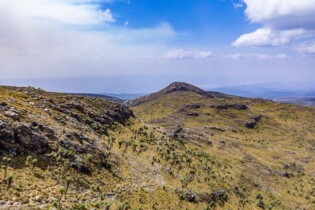
Africa’s Rangelands Are the Frontline of Resilience – COP17 Showed Why
Across the Kenya-Tanzania rangelands, communities have long understood a reality that the global community is increasingly recognising: healthy rangelands support livelihoods, wildlife, water resources and local economies. They are among Africa's most important natural assets and a foundation for resilience in a changing climate.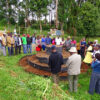
Africa Has the Answers to Its Food Security Challenges. What It Needs Is the Architecture to Act on Them
As leaders gather in Kigali for the Africa Food Systems Forum, they face an urgent question: why do so many proven agricultural innovations still fail to reach the farmers and communities that need them most?
The Drylands Dividend: The Smart Investment for Powering a Water-Scarce World
Open a can of something fizzy and the reason the sugar doesn’t separate immediately is gum arabic, tapped by hand from acacia trees across the Sahel. Spray on perfume and the reason the scent is still there at dinner is frankincense, a resin cut from Boswellia trees on the dry escarpments of the Horn of Africa. The fat that gives a chocolate bar its snap may well be shea, gathered and pressed by women in the parkland belt of West Africa. The cashmere jumper came from goats that can only be raised on cold, dry rangelands.
Africa’s Pastoralists Need More Than COP17’s $1.2 billion Rangelands Pledge
When the rains fail across Tanzania’s northern Maasai Steppe, herders drive their cattle farther in search of pasture and water.
GEF Proposes $140 Million Program to Strengthen Drought Resilience
For pastoralists in Arvaikheer — a village in Mongolia’s dry central plains — rain can determine whether there is enough grass for cattle to roam, whether waterholes are replenished and whether families make it through another dry season. But as climate change makes rainfall increasingly unpredictable, even a wet season may no longer provide water and pasture needed to sustain people and livestock.
Indigenous Peoples Call for Meaningful Influence in Climate Discussions — Nia Tero
Indigenous communities have long advocated for the environment through the lens of their traditional knowledge systems and cultures. But much more work needs to be done to translate their presence into influence.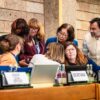
Nairobi Biodiversity Talks Set the Stage for Key COP17 Decisions
Despite record participation in global biodiversity reporting and planning processes, countries remain off track to meet the world's 2030 biodiversity goals, according to discussions that concluded this month at two key meetings under the Convention on Biological Diversity (CBD).
As Mongolia Hosts COP17, Pastoralists Demand Space to Move, Survive and Restore
After moving more than 6,000 km across Eurasia, the Silk Road Caravan has reached Mongolia with stories from pastoralists whose livelihoods are increasingly threatened by drought, degraded land and shrinking access to grazing areas.
The Earth Is Burning — And We Are Still Choosing to Let It
I have spent my life on an island. From the granite hills of Mahé, one can watch the sun rise over an ocean that has fed, protected and defined the Seychellois people for centuries.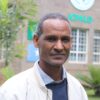
Why Pastoral Production Requires Regional Coordination, Harmonised Policy
At the 64th sessions of the Subsidiary Bodies (SB64) under the UNFCCC in Bonn, Germany, the Local Communities and Indigenous Peoples Platform (LCIPP) underscored the importance of ethically and equitably incorporating indigenous values and knowledge and local knowledge systems such as pastoralism into climate policies and actions ahead of the 31st Conference of Parties on climate change (COP31).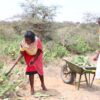
Invasive Prickly Pear Turned into Food, Clean Energy Source
An international academic partnership is helping turn one of Laikipia County’s most destructive and invasive plants, the prickly pear cactus (Opuntia stricta), into a source of food security and clean energy while also helping end perennial resource conflict in the region.
Inside GEF’s Blended Finance Push: Turning Public Money Into Private Capital Leverage
For most of the Eighth Global Environmental Facility (GEF) Assembly last month, the atmosphere inside Samarkand’s sprawling Congress Centre echoed a growing confidence of global environmental policymakers.
Central Asia Bets on a New Water–Land Pact to Survive Environmental Degradation
As ministers, diplomats and development officials assembled in Samarkand Congress Centre for a ceremonial family photograph, the mood carried unusual symbolism. Behind the smiles and formalities stood a region confronting a harder reality: rivers are shrinking, soils are tiring, temperatures are rising, and the old ways of managing land and water are no longer working.
GEF Pushes Innovation, Blended Finance Ahead of the Eighth Assembly
As the Global Environment Facility (GEF) steps into the starting blocks of its next financial cycle, the Interim CEO Claude Gascon reflects on what he termed a “moment of transition and delivery".
World Environment Day, 2026

2025 was one of the three hottest years ever recorded. The years from 2015 to 2025 were the hottest eleven years on record.

Delegates Push for Greater Accountability, Community Inclusion as GEF Crosses Major Environmental Milestones
While the Global Environment Facility (GEF) said its eighth replenishment cycle (GEF-8) was about to exceed environmental targets for biodiversity protection, marine conservation, ecosystem restoration, and reducing greenhouse gas emissions, governments and civil society groups called for stronger safeguards to ensure that local communities, Indigenous Peoples, and smaller implementing agencies are not left behind as funding mechanisms become more complex.
GEF Council Welcomes New Green Pledges, Highlights Old Access Barriers
The 71st Council meeting of the Global Environment Facility (GEF) opened today amid a sharp divide, with donor nations urging broader and increased funding commitments, while developing countries called for more equitable and accessible pathways to environmental finance.
“The Heat Is No Longer Distant: A Global Climate Reckoning“
‘As record heat sweeps the world, the climate crisis is no longer a warning for the future, but a reality of the present.’
From Seed to Canopy: How a GEF-Funded Smallholder Project is Restoring the Environment, Building Livelihoods
As 52-year-old Alice Onyango walks through her farm in Siaya county, Kenya, you can tell she is proud of her trees, as some tower over her, providing her with shade, while others seem ready to provide her with fruit for the market.
‘Do More With Less’: GEF CEO Claude Gascon on Speed, Scale and Reform
As governments prepare for the Eighth Assembly of the Global Environment Facility (GEF) – scheduled to be held from May 30 to June 6 in Samarkand, Uzbekistan – the stakes are unusually high.
Ambitious Great Green Wall Shows Slow, Steady Progress in Strengthening Landscapes, Improving Livelihoods
In 2021, Gadeja Shehu and about a hundred farmers in Garbadu village, Zamfara State in northwestern Nigeria, were invited by officials of the National Agency for the Great Green Wall to plant trees across a large stretch of land in their community.Next Page »


Today, some two billion people depend on ecosystems in dryland areas, with 90 percent of them living in developing countries. But the pace of arable land degradation is accelerating – now estimated at 35 times the historical rate -- impacting biodiversity, availability of clean water and food security, as well as exposing vulnerable communities to the harsh impacts of climate change. As the only legally binding international agreement linking environment and development to sustainable land management, the United Nations Convention to Combat Desertification (UNCCD) works to improve the living conditions of people in the drylands. IPS looks at local solutions being implemented around the world, from restoring soil productivity and mitigating the effects of drought, to projects that empower communities to manage their dryland resources more effectively.

The Week with IPS

Tracking global progress towards a sustainable world
