Languages
Tuesday, April 21, 2026



News and Views from the Global South
Trade & Investment
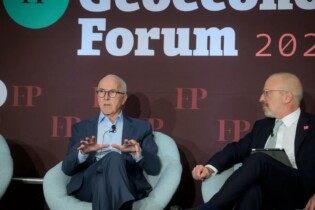
Global Shocks Push Geoeconomics to the Center Stage at Foreign Policy Forum
As war in the Middle East ripples through global markets, policymakers, economists, and industry leaders gathered in Washington this week to agree that economics is no longer separate from geopolitics. It is now its core instrument.
Africa’s Future Depends on Innovation, Data, and Frontier Technologies
Across the continent, GDP has risen on the back of more workers, more capital and a commodity super-cycle, rather than through genuine gains in productivity and innovation. Too little labour has moved out of subsistence agriculture into higher-productivity manufacturing and modern services.
Explainer: How the GEF Funds Global Environmental Action
The Global Environment Facility, widely known as the GEF, plays a central role in financing environmental protection across the world. It supports developing countries in tackling climate change, biodiversity loss, land degradation, pollution, and threats to ecosystems.
Shipping Industry Seeks Certainty as Experts Back Strong Net-Zero Framework
As global shipping braces for another round of high-stakes negotiations, a volatile mix of rising fuel costs, geopolitical tensions and deep political divisions is testing the fragile consensus around a proposed Net-Zero Framework (NZF) aimed at decarbonising one of the world’s most polluting industries.
Civil Society Launch a Campaign Against Extractive Industry Exploitation and Land Grabs
Over 800 households in Ikolomani Constituency in Kakamega County, Western Kenya, fear eviction to pave the way for a British firm, Shanta Gold Limited, to begin extracting gold valued at Sh683 billion ($5.29 billion) on an estimated 337 acres of residential and agricultural land.
The Political Economy of Bangladesh’s LDC Graduation
Bangladesh is scheduled to graduate from the least developed country (LDC) status in November this year after more than half a century. Bangladesh joined the UN club of LDCs in 1975 and consistently met all three graduation criteria – per capita Gross National Income (GNI), human asset and economic vulnerability – since 2018.
Ugandan Farmers Sue EACOP in London in Last Minute Effort to Stop Crude Oil Pipeline
Environmental activists and farmer groups opposed to the construction of the East African Crude Oil Pipeline (EACOP), the world's longest heated oil pipeline, are mounting a last-ditch legal effort meant to stop its construction in a suit they plan to have filed in London, UK, believing that it stands a chance to stop the controversial project despite being at the 78 percent completion stage.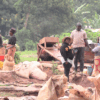
Artisanal Miners in Western Kenya Move Away From Mercury
They call this land Bushiangala. Gold has been mined here for nearly a century. In 1931, colonial prospectors arrived after traces were found in the nearby Yala River, setting off a rush that changed this quiet corner of western Kenya.
UNECA Warns Africa Risks Remaining Uncompetitive, Urges AI Adoption
Africa must move swiftly to harness data and frontier technologies such as Artificial Intelligence (AI) to drive its economic growth and make the continent globally competitive in the digital economy, a senior official at the United Nations Economic Commission for Africa (ECA) has told policymakers.
War in Iran, Middle East Threatens Global Agrifood Systems
The current conflict in Iran and the Middle East region threatens to disrupt the global energy and agri-food sectors, as the closure of the Strait of Hormuz affects oil and fertilizer exports for farmers during critical harvest seasons.
As East Africa’s Migratory Fish Vanish, a Food Security Crisis Surfaces
By the time the auction begins at Nangurukuru fish market in Tanzania’s southern Lindi region, the crisis is already visible. Wooden canoes that once returned from the Rufiji River with heavy catches now bring only a fraction of what they used to. Traders scan for the long-whiskered catfish that once defined the market but find none.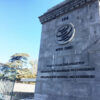
What the US Really Wants from MC14 in Yaoundé
As trade ministers gather in Yaoundé, Cameroon, for the WTO’s 14th Ministerial Conference (MC14) on 26–29 March 2026, the preparatory process has produced a dense fog of competing reform proposals, draft ministerial statements, and work plans.
Africa’s Minerals Boon, Cautious Optimism Amid Geopolitical Disruptions
Africa’s eye on minerals as the be-all-and-cure-all for the continent’s development agenda is being tested by geopolitical gamesmanship as global superpowers jostle to carve new spheres of influence.
Caribbean Civil Society Gathered in Jamaica to Strengthen Resilience Amid Global Shifts
Civil society groups from across the Caribbean met in Jamaica in February 2026 for a landmark regional conference, with development leaders urging stronger governance, digital readiness and deeper partnerships to adapt to a shifting and increasingly complex geopolitical landscape.
Financing Africa’s Biodiversity Conservation With Dwindling Donor Support
As the global community marks 2026 World Wildlife Day today (March 3), this year's focus is on Medicinal and Aromatic Plants: Conserving Health, Heritage and Livelihoods. However, beneath these celebrations, a difficult question emerges: who will bear the cost of conservation when traditional donor funding becomes uncertain and in the face of climate change?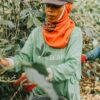
Climate Change Is Coming for Your Morning Coffee
Your morning cup of coffee could soon cost more, thanks to climate change, which is raising the heat on the production of the world's most loved beverage.
Russia Assessing the Benefits of WTO Membership
Despite consistent criticisms over its operations down the years, Russia still finds it difficult to leave the World Trade Organization (WTO), and instead assessing the opportunities and broad benefits of membership. WTO is not just an organization, but a multilateral bridge for strategic trade engagement and securing results-oriented partnerships. Certainly, unlocking and accelerating trade initiatives should be the key focus in the changing world.
A Business Necessity: Align With Nature or Risk Collapse, IPBES Report Warns
Business can still remain profitable while protecting the environment but invest in nature-positive operations, says a landmark report by the Intergovernmental Platform on Biodiversity and Ecosystem Services (IPBES), which finds that global companies have contributed to the escalating loss of biodiversity.
To Fix the Rupture, Trade is not Enough
Will trade be enough to navigate the current waves of chaos and disorder that are underpinning the ongoing rifts among competing powerful and hegemon nations and the rest?
Support Science in Halting Global Biodiversity Crisis—King Charles
British Monarch King Charles says science is the solution to protecting nature and halting global biodiversity loss, which is threatening humanity’s survival.
Explainer: Why Nature Is Everyone’s Business
Our food, fuel, and fortunes come from nature, but as these resources are turned into profits, the balance between exploiting and replenishing the planet is ever more precarious. Global businesses impact nature through mining, manufacturing, processing and retail operations. At the same time, nature impacts business operations because there is a loss of biodiversity and extreme weather events such as droughts, floods, and high temperatures.Next Page »


The Week with IPS

NEXT STOP - SDGs
Tracking global progress towards a sustainable world
Tracking global progress towards a sustainable world
