Languages
Tuesday, April 21, 2026



News and Views from the Global South
Green Economy
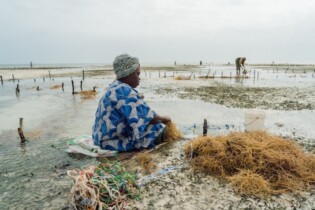
Explainer: How the GEF Funds Global Environmental Action
The Global Environment Facility, widely known as the GEF, plays a central role in financing environmental protection across the world. It supports developing countries in tackling climate change, biodiversity loss, land degradation, pollution, and threats to ecosystems.
Tanzania, Mozambique and Malawi Launch $7.12 Million GEF Project to Protect the Ruvuma Basin
At dawn, the Ruvuma River moves quietly through a vast wetland along the border between Tanzania and Mozambique. Its muddy waters appear calm, disturbed only by drifting logs and the occasional ripple.
As Biodiversity Loss Grows, Rome Talks Urge Nations to Step Up Action
Governments meeting in Rome last week acknowledged that global efforts to protect nature are still not moving fast enough, even as biodiversity loss continues to affect ecosystems, livelihoods, and economies worldwide.
World’s Oceans Hit Record Heat in 2025, at Great Economic and Social Costs
In 2025, global ocean temperatures rose to some of the highest levels ever recorded, signaling a continued accumulation of heat within the Earth’s climate system and raising deep concern among climate scientists. The economic toll of ocean-related impacts—including collapsing fisheries, widespread coral reef degradation, and mounting damage to coastal infrastructure—is now estimated to be nearly double the global cost of carbon emissions, placing immense strain on economies and endangering millions of lives.
In Kenya, Smallholder Farmers Push Back Against Corporate Control of Agriculture
For the past two years, Samuel Ndungu, a smallholder farmer, has been growing organic food and supplying it to the local market in Githunguri, just outside Nairobi.
End of Year Video 2025
 Multiple shocks defined 2025: conflict, climate breakdown and shrinking democracy.
Multilateral institutions were tested as never before.
Multiple shocks defined 2025: conflict, climate breakdown and shrinking democracy.
Multilateral institutions were tested as never before.

Rescued from Fire: the World in 2025
Our traditional “year-ender” usually kicks off with a grim litany of world disasters and crises over the past 12 months, highlights IPS partners and contributors and culminates in a more positive-sounding finale. This time I’d like to begin on a more personal note intended also as a metaphor.
Farmers Earn While Reviving Native Forests Through a Blockchain-Powered App
For years, Morris Onyango had been trying to reforest his degraded land on the shores of River Nzoia, in Siaya county, 430 kilometers from Kenya’s Capital, Nairobi. But every time he planted trees on his farm, his efforts bore little fruit, as floodwaters would not only wash away his tree seedlings but also fertile topsoil on his land.
Bonn to Belém: Three Decades of Promises, Half-Delivered Justice, and Rights-Based Governance Is Now Inevitable
COP30 in Belém is not just another annual climate meeting; it is the 32-year report card of the world governance architecture that was conceived at the Rio Earth Summit of 1992. And that is what report card says: delivery has been sporadic, cosmetic and perilously disconnected with the physics of climatic breakdown.
Beyond Buzzwords: COP30’s Opportunity to Deliver on Sustainable Food Systems
The language of agricultural sustainability changes like the seasons—from “climate-smart” to “regenerative,” “agroecological,” and “nature-positive.” Each term reflects good intentions, but the growing list risks duplication, confusion and delays.
Hollow Promises or Hope?
COP30 Brazil – Moment of Truth for the Planet
COP30 Brazil, though shadowed by the absence of many world leaders, remains a pivotal milestone in the global fight against climate change, tasked with building on the Paris Agreement’s momentum. Yet the glaring lack of commitment, coupled with withdrawals from the accord, casts a grim shadow over the future. The planet continues to warm, and scientists warn that current targets may not prevent a catastrophic temperature spike. While the summit’s focus on implementation not just new promises—is a welcome shift, it’s clear: words alone won’t cool the Earth.

The Top Climate Leaders Are Now in The Global South
When world leaders now gather in Belém, Brazil for the UN climate conference, expectations will be modest. Few believe the meeting will produce any breakthroughs. The United States is retreating from climate engagement. Europe is distracted. The UN is struggling to keep relevant in the 21st century.
Defending Democracy in a “Topsy-Turvy” World
It is a bleak global moment—with civil society actors battling assassinations, imprisonment, fabricated charges, and funding cuts to pro-democracy movements in a world gripped by inequality, climate chaos, and rising authoritarianism. Yet, the mood at Bangkok’s Thammasat University was anything but defeated.
New Climate Goal: To Quadruple Sustainable Fuels
Quadrupling the production and use of sustainable fuels by 2035 is the goal of a new international initiative to drive energy transition and mitigate the climate crisis, which will be launched during Brazil's climate summit in November.
From Reforestation to Low-Emission Food, Climate Action Starts with Seeds
When you think of climate action, images of wind farms, solar panels, bicycles or electric vehicles may come to mind. Perhaps lush forests or green landscapes. What you may not think of is the humble seed.
An Overdose of Renewables, New Energy Risk in Brazil
Wind and solar power sources, essential for the energy transition to mitigate the climate crisis, have become a risk of power outages in Brazil.
Mexico Experiments With Residential Solar Panels, But They Are Still Insufficient
Over the past four months, Mexican researcher Nicolás Velázquez has paid around US$23 for electricity, thanks to the photovoltaic system installed in his home in the northern city of Mexicali.
Banks Embed Climate Risk, Gender and Sustainability in Finance Products
As climate shocks intensify across East Africa, from failed rains in Kenya’s arid north to devastating floods in Tanzania’s coastal belt, the region’s banks are emerging as unlikely but powerful players in the resilience race.
Green Jobs on the Rise in the Arab Region
In the Arab region, a thought-to-be oil oasis, green jobs constitute 29 percent of energy sector roles, and 23 percent of the oil and gas sector. These numbers signify a push towards sustainable business and practices, with the Arab region striving to get away from oil, in their advancement towards the completion of the SDGs on time for 2030.
Solar-Powered Fish Farming Feeds Indigenous Communities in the Peruvian Amazon
"Our organization is showing that it is indeed possible to move toward energy transition and not depend on oil," said Elaina Shajian, president of the Regional Coordinator of Indigenous Peoples of San Lorenzo (Corpi-SL), in the Peruvian Amazon.
Mining on the Rise as Clean Energy Demands Shifts Global Commodity Exports
Two-thirds of the developing world, or ninety-five out of 143 economies, are dependent on commodities for export value, making up 60 percent of their merchandise exports. For the least developed world, this number rises to 80 percent, leaving entire nation's revenue vulnerable to price swings, fiscal shocks, and evolving trade compositions. Hidden behind the numbers lies a deeper transformation, one disrupting fossil fuel trade, triggering a higher reliance on mineral exports, particularly on mining essential for green technologies.Next Page »


The Week with IPS

NEXT STOP - SDGs
Tracking global progress towards a sustainable world
Tracking global progress towards a sustainable world
