Languages
Thursday, September 17, 2026



News and Views from the Global South
Humanitarian Emergencies
ETHIOPIA: ‘Reporting on Abuses Shouldn’t Be Treated as a Threat to National Interest’
CIVICUS discusses renewed conflict and a growing crackdown on independent media in Ethiopia with Yonas Kedir, Editor-in-Chief of the independent news outlet Addis Standard, who was recently abducted and detained by government forces.
Bangladesh Must Face Its Quiet Crisis of Internal Displacement
Bangladesh is rightly praised for saving lives during cyclones and floods. Early warning systems, cyclone shelters and community mobilisation have turned once-catastrophic disasters into emergencies in which evacuation is often possible. But behind that success lies a quieter national failure: millions of people are being uprooted inside the country, often more than once, without a clear path back to secure homes, land or livelihoods.
Killing of Environmental Defenders Reflects Power Struggle Over World’s Resources
At least 124 land and environmental defenders were killed around the world in 2025 while protecting forests, rivers, farmland and Indigenous territories, according to a new report by Global Witness that warns violence against activists remains widespread even as recorded killings have declined from previous years.
Renewed Hostilities In Yemen Inflame Displacement and Regional Risks
In recent days, the humanitarian situation in Yemen has deteriorated sharply following a new escalation of hostilities between the Iran-backed Houthi rebels and the Saudi-backed Presidential Leadership Council (PLC). This follows four years of relative stability, marking the most severe resurgence of violence since the collapse of the United Nations (UN)-mediated ceasefire in October 2022.
September 11 and the End of the American Dream
The Day That Changed Everything
On 11 September 2001 I was in New York, on one of my frequent visits to the United Nations, to which I was tied by a consultancy contract. That morning I woke up late, around eleven, sleeping off the jet lag of the flight from Italy. I was staying at the Hyatt Park, today the Millennium. A hotel a few metres from the Glass Palace, built to serve the world of the United Nations.
Will the General Assembly Continue to be Subservient to the P-5 Refusing to Challenge the Nominee for UN Chief?
As the race for the election of a new Secretary-General (UNSG) gathers momentum, the spotlight is on the 193-member General Assembly, the highest policy making body at the United Nations, which has refused to assert itself and continues to play a subservient role in the elections of UNSGs.
At Hammarskjöld’s Grave, Sixty-Five Years After Ndola
Late in August I stood at Dag Hammarskjöld’s grave in Uppsala. It is a quiet place, a long way from New York and from the wars the United Nations exists to prevent.
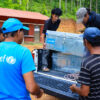
Humanitarian Needs Grow as Nepal Recovers from Catastrophic Floods
Two weeks after devastating floods struck Nepal, communities across the country are still struggling to meet basic needs as humanitarian efforts continue. The disaster, triggered by a glacial collapse, has become one of Nepal’s deadliest in recent years, leaving widespread destruction in its wake.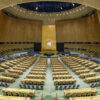
The Lighter Side of Politics at the UN General Assembly
When over 130 world leaders arrive in New York for the high-level segment of the General Assembly next week-- it will be rare to hear hard-hitting, headline-grabbing political statements from the podium.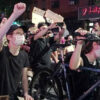
US Plans to Restrict Foreign Journalists Trigger Rising Protests
First, it was the mass deportations of undocumented aliens, then a crackdown on liberal-minded academics from prestigious US Universities, and now, restrictions on foreign journalists based in the US.
Lawmakers Need to Grapple With the ‘Human Story’ of the Aged, Youth, Women and Girls when Making Policy
"As parliamentarians, we should understand that behind every demographic indicator is a human story,” Kamikawa Yoko, MP Japan and Chair of AFPPD, reminded lawmakers in her opening address to the Asian Forum of Parliamentarians on Population and Development (AFPPD) annual conference held in Kuala Lumpur, Malaysia.
UN and Partners Work to Stabilize Health and WASH Systems in Venezuela Following Deadly Earthquakes
Two months after devastating twin earthquakes struck northern and central Venezuela on June 24, the humanitarian community has been on the frontlines, delivering lifesaving aid and focusing efforts on sustainable paths for rehabilitation.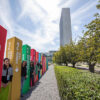
Development Goals Falter as Civil Society Is Shut Out
When the UN High-level Political Forum on Sustainable Development (HLPF) ended in New York in July, it took two recorded votes for states to pass a ministerial declaration that, until recently, would have been adopted without controversy. Uruguay, speaking for the Group of 77 developing countries plus China, pushed through the deletion of a reference to the agreement reached at the COP28 climate summit. Israel forced a vote on a paragraph about self-determination for people under occupation. Russia dissociated itself from the passage on peace and security. The wrangling revealed the extent to which the consensus that in 2015 saw all 193 UN states agree the Sustainable Development Goals (SDGs) – a common blueprint to end poverty, tackle climate change and build accountable institutions by 2030 – has been eroded.
The USA and Dictatorship – Gödel’s Loophole
Observing some of the changes over the last year and a half in the Government of the USA, one question that comes to mind is whether the greatest democracy in the world turning into a dictatorship? And, if so, how is this possible in a country with one of the most articulate and thoughtful constitutions ever written –a constitution which clearly sets out checks and balances precisely to avoid undue concentration of power.
Beyond the Death Penalty Debate: Human Dignity and Justice in Japan
A symposium examining Japan’s death penalty through the lens of human dignity was held on September 5 at Joseph Hall of St. Ignatius Church in Yotsuya, Tokyo.
Trump’s “Comprehensive” Gaza Peace Plan a Cover for Genocide
It is nearly a year since the UN Security Council (UNSC) adopted Resolution 2803 on 17 November, 2025, endorsing President Trump’s 20-point framework ostensibly designed to end the war in Gaza and create a roadmap for long-term stability. It is not clear what progress has been made. In August 2026 The Jerusalem Post reported “the IDF continues almost daily strikes in Gaza”, killing more than 1,200 Palestinians since the US-brokered ceasefire deal came into effect, seizing more territory, and continuing to restrict the movement of people and goods into and out of Gaza. Nickolay Mladenov, the UN High Representative on the Board of Peace, wrote in early August 2026 that “two days of strikes across Gaza have killed civilians and destroyed medical supplies that people depend on”. Ironically, this genocidal strike happened only a few days after a US-brokered Hamas disarmament deal, which Trump called, “a monumental step” towards peace and security.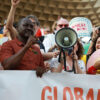
UNGA 81: A United Nations at a Turning Point
The 81st session of the UN General Assembly (UNGA81) opens tomorrow at a particularly important moment for multilateralism. The UN80 reform initiative has entered what the Secretary-General describes as a decisive phase. Member States are selecting the next Secretary-General. The 2030 Agenda is entering its final four years, while conversations about what should follow it are beginning.
Nuclear Victims’ Experiences Must Be at the Heart of Global Efforts for Assistance and Remediation
More and more, global disarmament discussions are encompassing the humanitarian and environmental impacts of the testing and use of nuclear weapons, as it becomes clear that the legacy of nuclear weapons leaves its mark on multiple generations.
Nepalese Experts, Victims Contemplate the Future After the Flood
That day, Subash Tamang was mining sand along the banks of the Trishuli River near the Trishuli Hydropower Project, working alongside his wife, brother, sister-in-law, and two other family members. Suddenly, he noticed water gushing down from above the hydropower site. His first thought was that the dam had burst.
WHO Announces New Ebola Vaccine Guidelines for the DRC
While Uganda announced the end of its Ebola outbreak last week, the Democratic Republic of Congo (DRC) continues to battle its deadliest Ebola outbreak to date. As of September 1st, there have been over 6,000 cases, including over 3,000 deaths, with Ituri standing as the most affected province.
Families in Desperate Search for Victims of the ‘Himalayan Tsunami’ in Nepal
On Sunday afternoon, Mingma Tamang, 29, rushed into the TU Teaching Hospital’s emergency ward, where a rescue team had just brought in an injured person in the Rasuwa flash flood – but she soon left grim-faced.Next Page »


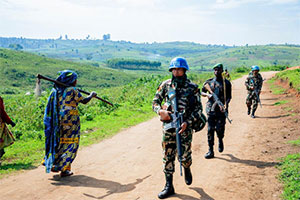 MONUSCO Peacekeepers and FARDC Soldiers Patrol Fataki Area. Credit: UN Photo/Jorkim Jotham Pituwa
Conflict, human rights violations, natural disasters, and famine have been at the forefront of concerns for humanitarian organizations. The escalation of humanitarian crises has led to over 239 million people in need of humanitarian assistance at the start of 2026, as estimated by OCHA’s Global Humanitarian Overview. The 2025 humanitarian appeal received only $12 billion, the lowest funding in over a decade, which has left 24 million fewer people reached in comparison to 2024. Conflict has remained the primary driver of crisis.
Humanitarian emergencies massively impact progress towards the Sustainable Development Goals (SDGs), adversely affecting economic development, inequality, education, planetary well-being, and poverty. Millions of people are faced with reduced access to essential services, including shelter, food, healthcare, and access to clean drinking water. UN Organizations such as UNHCR and the United Nations Children’s Fund (UNICEF) are committed to providing direct relief to affected communities when state governments cannot.
The United Nations 2024 Summit of the Future discussed measures that will be taken to reduce global inequality and promote peacekeeping efforts around the world. The recent UN Climate Change Conference (COP30) in Belém, Brazil, agreed to mobilize $1.3 trillion annually for climate action by 2035, operationalize the loss and damage fund, and triple adaptation finance. However, a fossil fuel transition commitment was not secured, despite climate change and the greenhouse effect being major contributors to humanitarian crises worldwide.
Countries across the world have also rallied to end humanitarian crises, as witnessed in conflicts such as Palestine and Ukraine. IPS is committed to providing relevant and in-depth reports of humanitarian emergencies around the world and their implications.

The Week with IPS

NEXT STOP - SDGs
Tracking global progress towards a sustainable world
Tracking global progress towards a sustainable world