Languages
Thursday, September 17, 2026



News and Views from the Global South
Energy
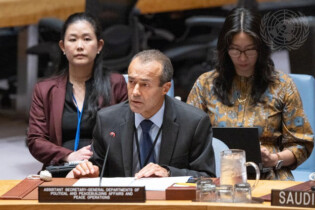
Renewed Hostilities In Yemen Inflame Displacement and Regional Risks
In recent days, the humanitarian situation in Yemen has deteriorated sharply following a new escalation of hostilities between the Iran-backed Houthi rebels and the Saudi-backed Presidential Leadership Council (PLC). This follows four years of relative stability, marking the most severe resurgence of violence since the collapse of the United Nations (UN)-mediated ceasefire in October 2022.
Remembering Fidel Castro, a Hero of the World’s Oppressed People
The 13th of August marked the 100th birthday of Cuba’s revolutionary leader Fidel Alejandro Castro Ruz - in short Fidel Castro. Amidst an intensified US siege and the threat of invasion, Cubans commemorated their dear leader’s centenary birth anniversary with events that included an International Book Fair, art exhibitions, concerts and gatherings of delegates from left-wing organisations across the continent.
Impending UNIFIL Exit Pushes Lebanon Toward Uncertainty
Since the collapse of the ceasefire between Israel and Lebanon announced in June, the humanitarian situation in Lebanon has deteriorated sharply. Marked by high casualties, immense destruction to civilian infrastructure, and widespread displacement, access to essential services has become increasingly strained as the United Nations Interim Force in Lebanon (UNIFIL) is scheduled to end its operations by the end of the year.
Rising Trade Values Mask the True Cost of Global Supply Chain Disruptions
Global goods trade reached approximately USD 13.7 trillion in the first half of 2026, up 12.5 percent from the same period in 2025, while services grew 10.5 percent, together adding USD 2 trillion to global trade. While these figures point to continued expansion, much of the increase reflects rising prices rather than stronger trade volumes.
Malawi Bets on Battery Storage to Climate-Proof Its Fragile Power Grid
For years, Malawi's electricity supply has been at the mercy of droughts, floods and cyclones that have repeatedly exposed the vulnerability of a power system heavily dependent on hydropower.
Saudi Arabia, Türkiye and Pakistan Forge Mutual Defence Pact, as Iran Pursues New Shipping Framework
In Makkah, the Kingdom of Saudi Arabia, the Republic Türkiye, and the Islamic Republic of Pakistan agreed to the framework for a joint defence agreement where an attack on any of the three states shall be regarded as an attack against them all.
The Earth Is Burning — And We Are Still Choosing to Let It
I have spent my life on an island. From the granite hills of Mahé, one can watch the sun rise over an ocean that has fed, protected and defined the Seychellois people for centuries.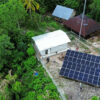
Asia’s Energy Progress Is Great, But Must Pick Up Pace
In much of the Asia-Pacific region, energy is a success story. Electricity access has greatly increased and the use of clean cooking fuels is now widespread. The region has kept pace with the rest of the world in adopting renewable energy. Many countries have made energy efficiency gains; the Republic of Korea is one of those in the lead worldwide. Progress has continued even in the face of recent energy crises sparked by the war in Ukraine and conflict over the Strait of Hormuz.
U.S.-Iran War Escalates Amid Growing Fears of Regional Instability and Rises In Arbitrary Executions
Over the past several weeks, the humanitarian landscape in the Middle East has deteriorated significantly, exacerbated by escalating security concerns and serious human rights violations. In late July, the United Nations (UN) highlighted a sharp uptick in hostilities between the United States and Iran, alongside growing concerns over wider regional instability.
Saudi Arabia Forms Multinational Red Sea Defence Alliance as U.S.-Iran War Threatens Global Shipping
As the United States and Iran continue to escalate with military strikes across both fronts, the conflict took a new turn with Saudi Arabia becoming militarily involved on July 29, following coordinated airstrikes with U.S. Central Command according to the Saudi Ministry of Defence.
Accepting What It Cannot Control, CARICOM Focuses on What It Can
From wars that drive up fuel prices to supply chain disruptions, inflation and increasingly frequent climate disasters, Caribbean leaders say many of the forces shaping the region's future lie beyond their control.
Who picks up the tab for AI’s unbridled genius?
For the last few years, Artificial intelligence has been making increasingly intrusive demands for our attention. It burst onto the scene like a child prodigy, enthralling us with feats of brilliance. With consummate ease, it removed drudgery from our tasks and began helping us achieve our personal and workplace objectives.
Ongoing Need for Humanitarian Assistance in the Occupied Palestinian Territory
On Monday July 20, a team from the United Nations Office for the Coordination of Humanitarian Affairs (OCHA) visited two displacement sites in Gaza where they found two family tents decimated by domestic fires. This incident is indicative of the increasing frequency of domestic fires in Gaza.
U.S.-Saudi Nuclear Agreement Opens Door to Civilian Nuclear Cooperation, with One Major Caveat
On Wednesday, July 22, the U.S. Secretary of Energy, Chris Wright, and Saudi Arabia’s Minister of Energy, HRH Prince Abdulaziz bin Salman bin Abdulaziz signed a civilian nuclear cooperation agreement, best known as a 123 agreement, as well as an accompanying bilateral safeguards agreement, according to the U.S. Department of Energy and the Saudi Ministry of Energy.
The Houthis Don’t Need to Close the Bab el-Mandeb Strait to Strangle the Suez Canal
With regional friction between Iran and the Gulf monarchies escalating, Houthi leadership in Yemen has proclaimed a total maritime blockade against all vessels linked to Saudi shipping. While this declaration does not constitute a verified military obstruction of the Bab el-Mandeb Strait, it significantly heightens the risk of volatility at the Red Sea’s southern gateway, potentially severing the primary arterial link to the Suez Canal.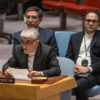
Food and Transport Costs through Strait of Hormuz Remain High, Burdening Vulnerable Economies
Prior to the latest round of hostilities between the United States and Iran, freight traffic had been increasing in the Strait of Hormuz, and negotiations were underway for a new agreement to fully restore trade through this channel.
Global Value Chain Trade Reaches Historic Highs, Despite Push for Reshoring
Despite rising geopolitical tensions, trade restrictions and calls to bring production back to domestic shores, the global economy remains more interconnected than it may appear. Trade through global value chains (GVCs) reached historic levels in 2024, according to a new report from the Organisation for Economic Co-operation and Development (OECD).
Communities vs. Datacentres
Few things unite Donald Trump’s most ardent supporters with the Democratic Party’s progressive wing, but datacentres are one of them. Across the USA, communities are joining forces across the political divide to oppose developments few want but governments seem determined to impose.
Renewed Hostilities in the Strait of Hormuz Threaten to Compound Global Supply Chain Costs
A continuation of hostilities within the Strait of Hormuz is once again threatening one of the world's most critical supply chain arteries, posing another wave of disruption which could choke the global energy, shipping and commodity markets. With roughly a quarter of global seaborne oil trade transiting through the Strait, alongside significant flows of liquefied natural gas and fertilizers, further constraints on commercial traffic could send new cost pressures cascading through supply chains that have yet to absorb the full effects of the earlier conflict.
Full Effects of Strait of Hormuz Disruption May Not Be Felt Until Second Half of 2026
The full economic impact of the disruptions in the Strait of Hormuz may not become clear until the second half of 2026, warns the United Nations Conference on Trade and Development (UNCTAD).
Western Imperialist Unity Split by Rival Priorities
Trump insists the West must unite on his terms against the Rest, particularly China and Iran. Europe, however, wants greater Trump support for Ukraine’s Zelensky regime to replace Putin’s leadership of Russia.Next Page »


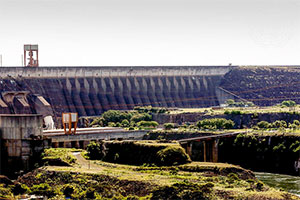 UN Power Plant, Paraguay. Credit: UN Photo/Evan Schneider
Energy has posed a great challenge for economies around the world. As global energy consumption skyrockets throughout the years, so does the need for sustainable solutions. The Sustainable Development Goals are essential in providing people with access to safe, affordable, and sustainable energy sources that minimize harm on the planet. Progress towards these goals opens the door for an advancement in modernization for communities on a global level and allows for a potential mitigation of tensions between nations.
The UN’s Summit of the Future in 2024 offered new initiatives that are being taken to achieve these goals, including a decreased reliance on fossil fuels, a switch to renewable energy sources, and improved climate financing.
IPS is well positioned to provide relevant, insightful, and compelling analysis of recent updates and measures being taken around the world to achieve a cleaner future.

The Week with IPS

NEXT STOP - SDGs
Tracking global progress towards a sustainable world
Tracking global progress towards a sustainable world
