Languages
Thursday, September 17, 2026



News and Views from the Global South
Development & Aid
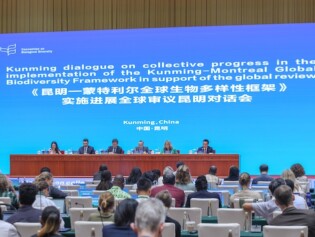
Ahead of COP17, UN Biodiversity Chief Urges Urgent Realignment of Finance with Nature Goals
The world may have enough money to protect nature. The bigger problem, according to the head of the UN Convention on Biological Diversity (CBD), is that too much of it is still being spent on activities that destroy it.
ETHIOPIA: ‘Reporting on Abuses Shouldn’t Be Treated as a Threat to National Interest’
CIVICUS discusses renewed conflict and a growing crackdown on independent media in Ethiopia with Yonas Kedir, Editor-in-Chief of the independent news outlet Addis Standard, who was recently abducted and detained by government forces.
Bangladesh Must Face Its Quiet Crisis of Internal Displacement
Bangladesh is rightly praised for saving lives during cyclones and floods. Early warning systems, cyclone shelters and community mobilisation have turned once-catastrophic disasters into emergencies in which evacuation is often possible. But behind that success lies a quieter national failure: millions of people are being uprooted inside the country, often more than once, without a clear path back to secure homes, land or livelihoods.
African Farmers Demand Affordable Finance as Governments Fall Short on Funding
Agriculture remains underfunded in Africa as governments struggle to deliver on decades-old promises to dedicate 10% of national income to agriculture.
Killing of Environmental Defenders Reflects Power Struggle Over World’s Resources
At least 124 land and environmental defenders were killed around the world in 2025 while protecting forests, rivers, farmland and Indigenous territories, according to a new report by Global Witness that warns violence against activists remains widespread even as recorded killings have declined from previous years.
One Man’s Quest to End Female Genital Mutilation (FGM) in Mali
In Mali, an estimated nine out of ten women and girls have undergone female genital mutilation (FGM). And for years, Sidi Haidara, a father and recognized leader in his community, believed the practice was simply part of life.
Renewed Hostilities In Yemen Inflame Displacement and Regional Risks
In recent days, the humanitarian situation in Yemen has deteriorated sharply following a new escalation of hostilities between the Iran-backed Houthi rebels and the Saudi-backed Presidential Leadership Council (PLC). This follows four years of relative stability, marking the most severe resurgence of violence since the collapse of the United Nations (UN)-mediated ceasefire in October 2022.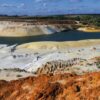
What’s Special About Negotiating Agreements for Mining Critical Minerals?
“Critical minerals” are critical in the eyes of firms and governments in industrialized countries because they are indispensable for products such as modern automobiles, AI, computers, drones, and many other consumer and defense products.
September 11 and the End of the American Dream
The Day That Changed Everything
On 11 September 2001 I was in New York, on one of my frequent visits to the United Nations, to which I was tied by a consultancy contract. That morning I woke up late, around eleven, sleeping off the jet lag of the flight from Italy. I was staying at the Hyatt Park, today the Millennium. A hotel a few metres from the Glass Palace, built to serve the world of the United Nations.
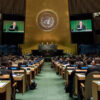
Will the General Assembly Continue to be Subservient to the P-5 Refusing to Challenge the Nominee for UN Chief?
As the race for the election of a new Secretary-General (UNSG) gathers momentum, the spotlight is on the 193-member General Assembly, the highest policy making body at the United Nations, which has refused to assert itself and continues to play a subservient role in the elections of UNSGs.
Global Survey Finds Deep Crisis of Trust as Majority Say Economic System Favours the Rich
An international survey released by Earth4All has found a growing crisis of trust in governments, widespread anger over inequality, and strong public support for major economic reforms, suggesting that many people across the world believe current political and economic systems are failing to serve ordinary citizens.
A Spectre is Haunting Europe — the Spectre of Ultra-Nationalism
During summer months there is a certain news drought. Nevertheless, this year social media has been crowded with news from wars in the Middle East and Ukraine, while customary tales about grisly murders have not been neglected. In Sweden it is election year and summer reporting has been supplemented by a debate about “hate speech against ethnic groups”. If individual tragedies connected with murders upset people, many seem to be indifferent to the fact that entire population groups are targeted by politicians. Swedish social media is overloaded with outcries about “Muslim” immigration and concerns about Sweden becoming “Islamized” and in danger of being transformed into a new Afghanistan.
Investment in Irrigation Systems Is Vital in Preparing for the Next Climate Shock
When the African continent experiences erratic rains, crops fail, leaving millions of people facing hunger.
International Trade Theory Not Developmental
Most free trade advocates falsely claim that comparative advantage ensures developmental gains from trade liberalisation. Mainstream trade theory does not promise that partial trade liberalisation guarantees optimal international specialisation.
Central Asia Marks 20 Years of Its Nuclear-Weapon-Free Zone With Renewed Call for Disarmament
Twenty years after five Central Asian states signed a landmark treaty banning nuclear weapons across their region, their foreign ministers have used the anniversary to warn that faltering arms-control agreements, nuclear modernization and deepening international mistrust are placing global security under growing strain.
At Hammarskjöld’s Grave, Sixty-Five Years After Ndola
Late in August I stood at Dag Hammarskjöld’s grave in Uppsala. It is a quiet place, a long way from New York and from the wars the United Nations exists to prevent.
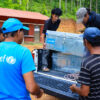
Humanitarian Needs Grow as Nepal Recovers from Catastrophic Floods
Two weeks after devastating floods struck Nepal, communities across the country are still struggling to meet basic needs as humanitarian efforts continue. The disaster, triggered by a glacial collapse, has become one of Nepal’s deadliest in recent years, leaving widespread destruction in its wake.
The Lighter Side of Politics at the UN General Assembly
When over 130 world leaders arrive in New York for the high-level segment of the General Assembly next week-- it will be rare to hear hard-hitting, headline-grabbing political statements from the podium.
Afghan Men Quietly Resist Taliban Ban on Girls’ Education
Many wonder why men in Afghanistan do not protest when women’s rights are trampled upon. In reality, many are rebelling behind the scenes, for instance, by helping their daughters get an education.
US Plans to Restrict Foreign Journalists Trigger Rising Protests
First, it was the mass deportations of undocumented aliens, then a crackdown on liberal-minded academics from prestigious US Universities, and now, restrictions on foreign journalists based in the US.
Lawmakers Need to Grapple With the ‘Human Story’ of the Aged, Youth, Women and Girls when Making Policy
"As parliamentarians, we should understand that behind every demographic indicator is a human story,” Kamikawa Yoko, MP Japan and Chair of AFPPD, reminded lawmakers in her opening address to the Asian Forum of Parliamentarians on Population and Development (AFPPD) annual conference held in Kuala Lumpur, Malaysia.Next Page »


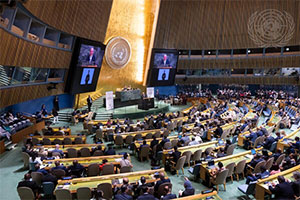 2026 High-level Political Forum on Sustainable Development. Credit: UN Photo/Eskinder Debebe
In 2015, the United Nations and its Member States adopted the Sustainable Development Goals (SDGs) in an effort to make the world a more sustainable and peaceful place for future generations. Progress on the 17 SDGs has been uneven, and inequality persists across the globe. 10 years after adoption, the 2025 UN SDGs Report revealed that only 35% of the SDG targets are on track, with more than half moving too slowly, and 18% moving backwards from the 2015 baseline. Poverty remains one of the world’s most pressing issues, with hunger, violence, and inequality impeding the opportunities for all people to achieve success. In September 2024, the United Nations Summit of the Future introduced a new goal: to eradicate global poverty by 2030, ensure universal rights to basic services, and increase the overall standard of living in terms of industrialization, economic well-being, citizen health, and literacy. Furthermore, recent shifts in United States foreign aid policy – notably, major budget cuts to USAID and the termination of thousands of development programmes– have severely threatened vital lifelines of financial aid to impoverished communities around the world. Additionally, the United States’ withdrawal from the Paris Climate Agreement has undercut international efforts at sustainable development. With the upcoming 2030 deadline, the UN Secretary-General has called for urgent multilateralism across six priority areas: food systems, energy, digital connectivity, education, jobs and social protection, and climate and biodiversity. IPS sheds light on marginalized communities that struggle on a daily basis to survive and have their stories heard and respected.
Updated by Yilan Batista and Shuli Wong August 2026

The Week with IPS

NEXT STOP - SDGs
Tracking global progress towards a sustainable world
Tracking global progress towards a sustainable world
