



Building engineering systems (MEP) in the premium hospitality segment are a critical element in ensuring safety, comfort, and uninterrupted operation of facilities. The operation of hotels and resorts located in high-altitude regions and areas with extremely low temperatures presents particular challenges, where thermal loads increase, transitional modes become more complex to manage, and the likelihood of equipment failure rises.
This article examines practical engineering approaches to the design, commissioning, and operational management of HVAC systems, power supply, building automation, and fire safety systems. Special attention is given to redundancy strategies, predictive monitoring, and downtime minimization at high-end facilities.
1. Engineering Systems as the Foundation of Hospitality Service Quality
Modern high-end hotels operate as a complex of interconnected engineering subsystems, whose stability directly affects guests’ perception of service quality.
Even short-term deviations in microclimate parameters, power interruptions, or increased noise levels can be perceived as a decline in service standards.
Therefore, the operational performance of engineering systems includes not only technical parameters but also service-related metrics:
- stability of temperature conditions
- recovery time after incidents
- acoustic comfort
- local controllability of engineering zones
- predictability of equipment performance under varying loads
In premium hospitality infrastructure, the engineering team effectively manages not only equipment but also the overall user experience.
2. Operation of HVAC Systems in Low Temperatures and High-Altitude Conditions
In regions with temperatures reaching −35°C, the risks increase of:
- freezing of the heat transfer medium
- ice formation on heat exchangers
- degradation of ventilation equipment efficiency
- disruption of drainage regimes
- increased time required for equipment to reach nominal capacity
High-altitude conditions additionally affect heat exchange processes and ventilation parameters, requiring adjustments in balancing modes and automatic control systems.
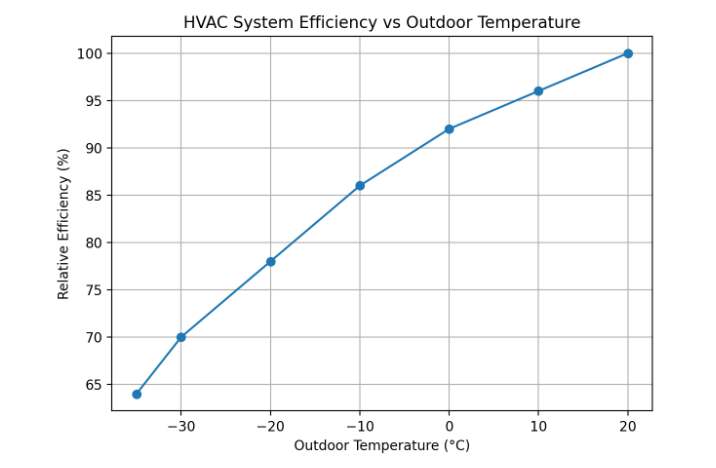
Figure 1. Impact of outdoor temperature on the energy efficiency of HVAC systems
3. Power Supply Redundancy and Failure Management
Uninterrupted power supply is a mandatory requirement for the operation of hotel complexes. Critical loads include:
- elevator systems
- fire safety automation
- server rooms
- pumping stations
- dispatching and security systems
Practice shows that the effectiveness of redundancy is determined not only by the presence of backup power sources but also by the correctness of load transfer logic.
The use of redundancy schemes such as N+1 or N+2 significantly increases the resilience of engineering infrastructure and reduces the likelihood of cascading failures.
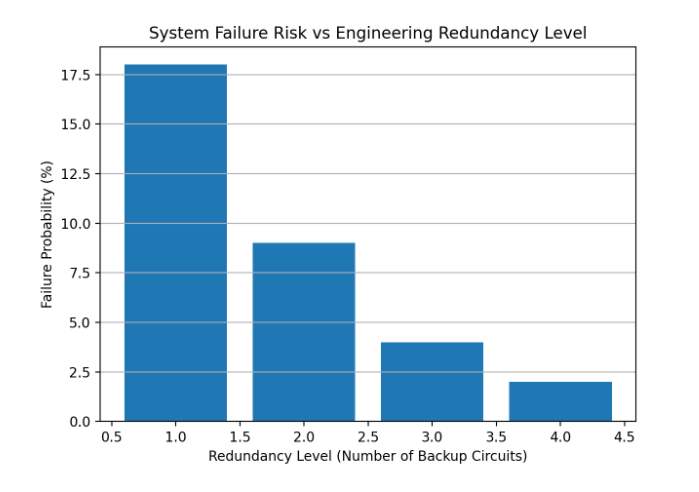
Figure 2. Reduction in the probability of engineering system failures with increased levels of redundancy
4. The Role of Building Management Systems (BMS) in Enhancing Reliability
Modern BMS solutions enable a transition from a reactive maintenance model to predictive operational management.
Key functions include:
- real-time parameter monitoring
- analysis of equipment degradation trends
- management of emergency operation scenarios
- integration with fire safety systems
- optimization of energy consumption
When properly configured, a BMS becomes a strategic reliability management tool rather than just a dispatching system.
5. Commissioning as a Tool for Reducing Hidden Defects
Comprehensive commissioning makes it possible to identify installation, automation, and system balancing errors before full-scale facility operation begins.
A structured commissioning process includes:
- verification of compliance with design solutions
- functional testing of equipment
- integrated operation scenarios for subsystems
- parameter adjustment and system balancing
- preparation of operational documentation
A systematic approach to commissioning significantly reduces the likelihood of failures during the first years of operation.
Conclusion
The operation of MEP systems in premium hospitality infrastructure—especially in extreme climate conditions—requires an integrated engineering approach that combines reliable design, disciplined commissioning, and predictive operational management.
Key resilience factors include:
- proper redundancy of engineering systems
- implementation of intelligent automation systems
- integration testing
- maintenance planning
- criticality management of subsystems
The application of these approaches ensures consistent service quality, enhances operational safety, and reduces financial risks in infrastructure projects.
References
- ASHRAE Handbook — HVAC Systems and Equipment.
- CIBSE Commissioning Codes.
- NFPA 13 / NFPA 72 Fire Protection Standards.
- ISO 41001 Facility Management Systems.
- International Energy Agency — Building Energy Efficiency Reports.
