
Thursday, October 15, 2026



News and Views from the Global South
Q&A: 'If You Feed the Land, It Will Feed You Back'
Interview with UNCCD Executive Secretary Luc Gnacadja
- Luc Gnacadja, who took over as Executive Secretary of the United Nations Convention to Combat Desertification (UNCCD) last October, is a man with a mission – a mission that goes beyond explaining that his job is not to battle deserts.
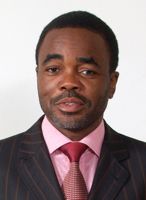
Luc Gnacadja Credit:
Gnacadja served as Benin's minister of environment, housing and urban development and as the successful CEO of a consultancy firm before UN Secretary-General Ban Ki-moon appointed him as head of the UNCCD secretariat based in Bonn. In an extensive interview with IPS European director Ramesh Jaura, Gnacadja said the global framework offered by the UNCCD could serve as "a platform to address the important issue of climate change and soil."
Some excerpts from the interview:
IPS: What would you describe as the highlights of UNCCD's accomplishments since you took charge of its secretariat?
Luc Gnacadja (LG): These have been challenging times for the whole team because I was blessed with receiving the UNCCD 10-year strategic plan and framework from the COP (conference of parties comprising all countries that have ratified the convention) last September in Madrid. The challenge ahead of us was to first of all completely grasp what it means to have a new strategy.
When you are called to take a ten-year trip you have to find out whether you are fit, whether your infrastructure is the right one before starting the journey. We started a corporate review to ascertain where we are and where we go from there. From there we tried to assess what could be so to say the 'new software' to put in place. Because what brought you here may not take you there. We also started working with the subsidiary bodies of the Convention, mainly the Committee for the Review of the Implementation of the Convention, CRIC, and the CST, Committee on Science and Technology, for their medium-term strategies as well in the whole framework of the 10-year strategy plan.
IPS: The Convention has entered the second decade. But what did the UNCCD achieve in the first decade since entering into force on December 26, 1996?
LG: There have been tremendous achievements – and I really commend the work of my predecessor (Hama Arba Diallo) because he with the team managed to make it the largest of the UN conventions. This convention has been ratified by 193 parties. No other UN Convention has such a large number of ratifications. It is a huge achievement because if you look back at the Rio summit (June 1992) no one could imagine that this will be achieved. But we achieved that. We also believe that a lot has been done in the advocacy field. Challenges started with bringing parties to agree on how to implement the convention. That's why I believe that the first decade has been quite a good one because before the 10-year strategy begins to be implemented all parties (to the convention) are on the same page.
IPS: You said 193 parties (countries and regional organisations) have ratified the convention. And yet most of the people think it is an African convention. How would you explain that?
LG: You know about paradigms. You only see what your paradigms allow you to see. Let us call it even stigma. Since the Rio summit UNCCD has carried a stigma because the convention had been advocated by African countries because they were the first to suffer the most from drought and they were insisting that drought and land degradation are not well recognised as global threats. They were successful in bringing the international community to agree on that. But still, since then it is seen as an African convention.
There is no gainsaying the fact that the convention focuses on Africa which is most vulnerable to the threats of land degradation leading to desertification. But Africa is not the only continent where land degradation is taking place. Land degradation is taking place in Europe, Asia and Central America. As percentage of the land affected, Central America is one of the most vulnerable, the most affected. But still Africa is in the forefront.
Unfortunately we still need to work on that field, to bring the developed countries to acknowledge that over the past many decades mankind has created a vicious circle by degrading the atmosphere and the land. And now the atmosphere is worsening the land degradation. The land degradation is worsening the atmosphere degradation. And the challenge ahead of us is not just to look at the atmosphere and say we must face climate change. Soil can make a difference in addressing climate change and we must focus on both land and climate change to address it. Organically managed soils can convert carbon dioxide from a greenhouse gas into a food-producing asset. Soils contain more carbon than is contained in vegetation and the atmosphere combined. Non-agricultural soils carbon sequestration has the potential to substantially mitigate global warming and climate change.
What we need to do is to move away from our old and irrelevant paradigms and look at things how they are and tackle them. I am calling upon all decision-makers at all levels to really not to forsake the land. Land cannot be taken for granted. Land is valuable. If you feed the land it will feed you back.
IPS: Everyone seems to know what climate change means. But if you mention desertification people quite often mix it up with the romance of the desert. What is your experience?
LG: Is it not striking that people are much more aware of the atmosphere than the food they eat and the clothes they wear? Combating land degradation is about caring for the planet earth, that keeps clothing us, feeding us. I must admit that from the start those who baptised the convention were right about its significance but unfortunately the name is a confusing one. Because desertification sounds like deserts. And quite often the impression may arise that what we are doing is even combating the deserts. My stand is to say that this convention is about land degradation first and all the processes leading to worsening of the land, and through advocacy to tell the public that it is about our food, it is about our crops, it is even about our habitat.
A few weeks ago we were all talking about the food crisis. And we also talked about the bio-fuels or the agro-fuels. We see that all this is about land. Unfortunately we have not yet been successful in bringing people to look at those global challenges, including what we call the environmental migrants or refugees to look at them and even the conflict in different places. You know eight conflicts out of ten are in the drylands.
Drylands cover approximately 41 percent of the globe's land surface where more than 2 billion people, a third of the entire world population, live. It is here – where the soils are especially fragile, vegetation is sparse and the climate is particularly unforgiving – that desertification takes hold. The challenge for the secretariat is really to put more effort in the field of awareness raising and education. I am putting a lot of emphasis on science and knowledge and knowledge brokering, and knowledge brokering leading of course to awareness raising of the general public.
IPS: What are the salient features of the second decade plan?
LG: The plan has four major strategic objectives. Number 1, to improve the livelihood of the African population. Number 2, to improve the productivity of the affected eco-systems. Number 3, and that's my favourite because it is where the paradigm shift resides, to generate global benefit. And number 4, to mobilise resources through partnerships.
Number 3 is emphasising 'from the local to the global'. What we are doing is generating global benefit through combating land degradation, desertification and drought. Therefore we should not look at UNCCD as part of cooperation with some far away people or countries. It is starting right next door to us, even with ourselves. Through science and technology we must be able to put in place indicators, baselines to monitor progress at all levels of our objectives. The challenge therefore is first of all to bring this process to be much more science and technology friendly, to be able to build global agreement on baseline standards and indicators to monitor, and using that information for awareness raising and advocacy.
UNCCD is the sole multilateral environmental agreement on land and soil degradation that supports affected countries in monitoring and assessing biophysical and socio-economic trends pertaining to desertification or land degradation and mitigation of the effects of drought.
IPS: We know that until the IPCC came up with threatening forecasts climate change was not taken that seriously. It was not a part of the development strategy. But last year everybody started talking about it, pressure is mounting as we come closer to Copenhagen. Would you say that you need some international grouping of experts to press home the significance of this convention, of the need to combat desertification?
LG: I agree with your comment on the role of IPCC (Intergovernmental Panel on Climate Change) to show the fact that climate change is not a hoax. Our number one priority will be on science and technology. In fact it will be bringing scientists to agree on a minimum of scientific facts that demonstrate how land degradation or desertification is not only linked with climate change but also with sustainable development, and that it is at the root of many of today's global challenges.
We need some kind of an IPCC for land and soil issues. We also need voices that will speak on behalf of this process, voices that will take the message very far, voices that will have, let me call it the aura and the influence, and will therefore commit themselves to see it as a global challenge. We need it and are looking for it to commitment of key players in all fields. I would welcome such a commitment. It will be like serving the voiceless.
 Print
|
Print
|



Pictures for this story
This story includes downloadable print-quality images -- Copyright IPS, to be used exclusively with this story.


