
Sunday, October 4, 2026



News and Views from the Global South
Q&A: What the Most-Seen Photographs Say
Interview with film director Errol Morris
- No matter how familiar they become, the photographs depicting abuse at Abu Ghraib prison never seem to lose their ability to shock.
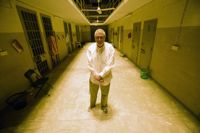
Errol Morris Credit: Sony Classics
'Standard Operating Procedure', the new film by veteran director Errol Morris, is the fruit of meticulous research into the ill-treatment of Iraqi detainees. Featuring numerous interviews with military personnel who served at Abu Ghraib, it leaves the viewer in little doubt that the cruelty captured on the camera of often inexperienced soldiers was authorised at the highest levels in Washington. Nevertheless, no officer above the rank of staff sergeant has served time as a result of the scandal.
Morris, who won an Oscar in 2004 for his documentary 'The Fog of War' (about Robert McNamara, the U.S. defence secretary in the 1960s) spoke to IPS Brussels correspondent David Cronin.
IPS: Why did you decide to make a film about Abu Ghraib? Errol Morris: I'm very interested in photographs. And these photographs have been seen by more people than any other photographs in history.
I have become increasingly aware that photographs are almost always taken out of context and that they become a vehicle for propaganda among other things. In this story, I decided to try to uncover what the photographs are really showing and to find out something about the people who took them.
IPS: Was it difficult to convince people who had served at Abu Ghraib to speak to you? EM: These were among the most difficult interviews I have ever tried to get. Many of these people went to jail. Others were worried that they could reveal something that would have them sent to jail.
Janis Karpinski, the brigadier-general (who commanded three large prisons in Iraq) was in many ways the easiest. She had just published a book and was on the lecture circuit.
IPS: One of the striking things about your film is how naive many of the interviewees come across. Do you think they were ill-equipped to run a prison in a war-zone? EM: That is almost an understatement. We're essentially talking about kids. Lynndie England (one of those convicted by court martial for her involvement in the abuses) was only 20 years old.
That's also true of the whole army: it was understaffed, under-equipped and undersized. People had little or no chance to do the job they were assigned to do.
One of the sad stories – that's not part of my movie – is that from the very beginning, the administration refused to listen to anyone saying their policies made no sense, or even if they did make sense, were not being realised in a way that made for a successful outcome.
IPS: You obviously spoke at length with Sabrina Harman, the military 'specialist', who either took many of the photographs or appears in them. One of the things people were most offended about by some of these pictures is how Harman is smiling and giving the thumbs-up sign, rather than the abuses she documented. EM: I would agree with you. One of the things that is so interesting is that people seem more appalled by the smile and her thumbs-up than any of the actual things going on.
IPS: Harman claimed that she took the pictures in order to provide proof that the abuses occurred. Do you think that genuinely was her motive? EM: The central question of the whole movie is: 'is she for real?; can we believe what she's telling us here?' Here's my two cents worth of opinion: people are complex. We like to think that villains are pure villains and heroes are pure heroes. But rarely in life are there pure villains or pure heroes.
At times Sabrina seems clueless and heartless; at other times, deeply compassionate. I like the fact she is complex.
IPS: Near the beginning of the film, you suggest quite convincingly that Donald Rumsfeld, the former secretary of defence, approved of the abuses. Yet you do not include interviews with figures from the Bush Administration. Why is that? EM: There are plenty of people out there assigning blame to (President George W.) Bush, (Vice-President Dick) Cheney and Rumsfeld. There is an extensive amount of documentation on the policies of the Bush Administration on detention and torture.
I was telling a different story. Perhaps it's less political, perhaps it's more political. But it's a more disturbing story about people. I am asking a question to the audience about what would you do if placed in this environment? I don't think it's an easy question to answer.
IPS: The non-fiction films that have been most successful in commercial terms in recent years have been by people like Michael Moore and Morgan Spurlock. They have brought comedy techniques into their work, whereas your new film contains almost no laughs. What are your thoughts about the state of documentary-making at the moment? EM: I would say that in the U.S. people are in denial, they would like this war to go away and they don't want to deal with it. But that doesn't mean one shouldn't make movies about it. You can't always be asking 'what will be a success at the box office'? You should make movies because you feel compelled to make them.
IPS: Will you be taking any role in the U.S. presidential election? EM: I would love to be involved. I have been sending money to (Democratic candidate Barack) Obama for the past six months or so. It is very important that he wins the election in November.
IPS: Are you concerned by how his comments on foreign policy – on questions like Iran and Israel – appear to be sounding an increasingly hawkish note? EM: I'm trying to ignore the day-to-day dealings of the elections. They are a kind of nightmare.
I think I know enough about Obama. I was recommended the book he wrote about his father (Dreams from My Father). The book is extraordinary.
IPS: Can the damage that Abu Ghraib has done to America's image ever be repaired? EM: These pictures destroyed the concept we had of ourselves. People wanted to believe this was a war to bring democracy. The pictures challenged all of these firmly held beliefs.
These photos have stained our reputation and our image and I don't know if it is ever going to be the same again.
If Obama becomes president, it will be an important step in the right direction. I hope he is going to find a way out of Iraq, to give Iraq back to the Iraqi people and to stop these policies. But how long will it take to repair the damage? Your guess is as good as mine.
 Print
|
Print
|



Pictures for this story
This story includes downloadable print-quality images -- Copyright IPS, to be used exclusively with this story.


