
Wednesday, October 14, 2026



News and Views from the Global South
CANADA: Gov’t Slow to Defend Guantanamo’s “Child Soldier”
Am Johal
- He remains the youngest prisoner still languishing in the U.S.-run detention centre at Guantanamo Bay, Cuba. While Australia and Britain have fought to have al Qaeda-linked detainees who were respective citizens of their countries returned home to face domestic legal processes, the Canadian government has not done the same for its own citizen, Omar Khadr.
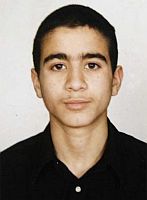
Omar Khadr Credit: Khadr Family
But the court-ordered release of a 2003 interrogation conducted by the Canadian Security Intelligence Service (CSIS) is now reigniting the debate in Canada about its responsibilities to this young man amidst accusations of racism and double standards. The interrogation video is accessible from news websites and has made international headlines.
It is once again leading to increased criticism of the Canadian government for its role in aiding and abetting violations of the laws of war. The U.S. prosecutors have countered with an obscure legal position of arguing that Khadr was an illegal combatant.
Khadr was only 15 at the time of his capture and is the only Western-based detainee remaining in Guantanamo Bay under U.S. military confinement. The Canadian government has not asked for repatriation despite pleas from human rights organisations and Opposition parties in Parliament.
Dr. Michael Byers, Canada Research Chair in Global Politics and International Law at the University of British Columbia, told IPS, “The release of these interrogation tapes confirms that the authorities are talking to someone who was a child who was subject to sleep deprivation and other tactics by the U.S. military. I sincerely hope that the tapes will resonate with the Canadian public in a way that will push the government to change their approach to this issue.”
Byers added that the Canadian government’s refusal to intervene follows with Prime Minister Stephen Harper’s willingness to prioritise a relationship with U.S. President George W. Bush over fundamental human rights and Canada’s historic role in championing the rights of its own citizens in jurisdictional matters.
“The Harper government has shown a consistent pattern of placing its faith in the Bush administration over human rights issues such as this one and others including the refusal to push for clemency of Canadians on death row. Canada also extradited Robin Long, a U.S. war resister, who did not want to take part in possible war crimes. This is a very different role than Canada played during Vietnam,” said Byers.
In comparison to British and Australian detainees who have either been repatriated or given special consideration, Canada has done very little, according to critics like Byers and organisations such as Human Rights Watch and Amnesty International.
Khadr’s defence attorneys claim that the Canadian government acted illegally by sending its counsel and CSIS agents to Guantanamo Bay to interrogate Khadr, and then turned their findings over to the military tribunal prosecutors to help convict Khadr. The Foreign Affairs department also had advance knowledge of the interrogation and has been criticised for not doing more to repatriate Khadr and for not being more forceful in the earlier days of Khadr’s detainment.
In 2007, the Federal Court of Appeal ordered the Canadian government to turn over its records related to Khadr’s time in detention after Judge Richard Mosley found that it was now apparent that Canada had violated international law.
The government appealed to the Supreme Court of Canada in 2008, arguing that Khadr was just looking for information and that disclosing their records, which showed differing accounts of the Afghanistan firefight, would jeopardise national security.
On May 23, 2008, the Supreme Court of Canada ruled unanimously that the government had acted illegally by contravening Section 7 of the Charter of Rights and Freedoms, and ordered the videotapes of the interrogation released.
This weekend, former Canadian Prime Minister Paul Martin also called for Khadr to be returned to Canada.
In May 2008, Senator Romeo Dallaire, a former general who served in Rwanda with the U.N. mission, told a parliamentary subcommittee that if Canada doesn’t act to protect human rights in the case of Omar Khadr, the country is no better than terrorists.
“The minute you start playing with human rights, with conventions, with civil liberties, in order to say that you’re doing it to protect yourself and you are going against those rights and conventions, you are no better than the guy who doesn’t believe in them at all,” he said.
David Crane, a U.S. prosecutor of Sierra Leone’s war crimes, also spoke out forcefully in January 2008 for Canada to intervene.
“This is the first time in history that a child has been prosecuted for war crimes,” said Crane. “This is just horrific. I think it reflects badly on the way the world should go in its protection of children. We should be seeking out and trying to, as the U.N. has done in many initiatives, to stamp out child soldiers.”
Crane, a professor at Syracuse University College of Law, said he believes Canada’s international reputation as a protector of human rights has been diminished substantially due to its support of the U.S. prosecution of Khadr. “I’m just not sure why the Canadian government, which was tremendously important in my work in West Africa, they were incredibly supportive, is not making a bigger deal of this.”
Opposition Foreign Affairs critic Bob Rae, told the Canadian Press this month, “He was brainwashed and sent in to fight NATO troops. I think we all recognise that’s deeply troubling to Canadians. We have our troops there, obviously it’s deeply troubling to all of us. The issue is not that. The issue is, isn’t it appropriate for Canada to take responsibility for Mr. Khadr?”
Steve Staples, president of the Rideau Institute on International Affairs, an independent research, advocacy and consulting organisation, told IPS, “I think it’s appalling that the government is indifferent on this issue since it has such large ramifications. Canada could learn from other countries that are allies of the U.S. and demand that Khadr be brought back to Canada. There is clearly a question of proper process and we clearly need to get to the bottom of this quickly.”
 Print
|
Print
|




