
Tuesday, October 13, 2026



News and Views from the Global South
Q&A: ‘WSF Is As Much a Cultural Struggle As a Political One’
Interview with Boaventura de Sousa Santos
- The movement against capitalism, injustice and oppression requires a strong convergence of social organisations that have fully accepted their differences, said sociologist Boaventura de Sousa Santos, who predicted serious future difficulties for World Social Forum (WSF) meetings.
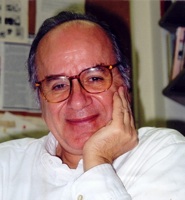
Boaventura de Sousa Santos Credit:
De Sousa Santos is a professor at the University of Coimbra, in Portugal. He earned his doctorate in sociology of law at the Yale University in the U.S., and is a visiting professor at the University of Wisconsin-Madison.
In his prominent public life he has vigorously defended strong social and civic movements as essential for participative democracy. He is a distinguished active participant in the WSF – founded in 2001 by social movements and other civil society organisations opposed to the present direction of globalisation.
IPS: Do you think it was a good idea not to hold an international meeting of the WSF this year, but to hold local events all over the world, with the risk that poses in terms of dispersion, loss of identity and loss of momentum in the coming years?
BOAVENTURA DE SOUSA SANTOS: Every political movement must walk at the pace of its activists and leaders. In the case of the WSF, what really counts today is the pace of the organisations and movements that are part of the International Council (IC).
For years, some organisations have been saying that the energy they invest in organising and preparing for the WSF prevents them from working properly on their specific action agendas, and that it would be preferable to hold a global WSF meeting every two years. This option has now achieved consensus in the IC.
I see this year’s plan as further evidence that the Forum is capable of experimentation, and so I think it’s not a bad idea. It will allow us to identify and assess another dimension of the WSF which has been little exercised so far: it’s capability to coordinate disparate activities that are widely dispersed.
I see it above all as an opportunity for new forms of growth and for reinventing its identity. The important thing to bear in mind is that the WSF is happening this year, but in a new and extremely decentralised format. I would personally be satisfied if a decision to hold the WSF every other year were to arise from the evaluation of this year’s Global Day of Action – Jan. 26.
I foresee new short-term challenges, and I believe that the Forum, while maintaining its basic philosophy, may be about to go through deeper changes.
IPS: What changes, for example?
BSS: Coordinating with other trans-national initiatives, and learning from and with them. I’m thinking of the vast popular education movement, and “The Other Campaign” by the Mexican Zapatistas (EZLN), both of which have enormous virtues. The specific case of “The Other Campaign” is a new way of building counter-hegemony, a new political culture and a new policy on alliances.
IPS: The IC is divided over whether to carry on as an open forum, or to formally assume political positions in the name of the WSF, based on consensus. Some of those who advocate taking positions are concerned about a certain amount of stagnation and lack of direction if this isn’t done.
BSS: All new political initiatives face two specific difficulties: the language they use belongs more to the past than to the future, even when the reverse appears to be true; and its participants are divided between their past experience and the will to innovate.
The novelty of the WSF is its new way of organising with the goal of creating a new political culture. That’s why I would define the WSF as a counter- hegemonic form of globalisation rather than as alter-globalisation – as implied by its rallying call, “Another world is possible”. It is as much a cultural struggle as a political one, in which the cultural component has a much slower maturing process than the political one.
The logic of these two struggles sometimes clash. The idea of the WSF as a space for meeting and debate leans more towards the cultural dimension, and that of the WSF as an activist movement tends to emphasise the political dimension. But the polarisation of these two ideas is an inheritance of past thinking on the left – a thinking which doesn’t comprehend that open space is itself a movement – a space on the move.
Then again, both sides conceive decision-making processes in a Eurocentric way – their idea is that to adopt concrete political action it is necessary to decide – and that will never be possible by consensus. Indigenous peoples decide by consensus, and on that basis are organising prodigious movements in Latin America. However, is it possible to imagine the same thing happening in movements and organisations that have grown up in a Western culture, although they belong to the global South?
I am in favour of the WSF deciding on political action as long as this is done by consensus, and in areas where a low degree of conflict can be expected. The WSF is creating the conditions for politically confrontational global actions, but I don’t believe that the Forum itself should undertake them, because such actions need to be deeply rooted locally and nationally and the Forum can’t guarantee that.
IPS: Isn’t there a problem of representation and even democracy within the WSF, since social movements made up of millions of activists in many countries have the same right to speak as local non-governmental organisations with only a few members?
BSS: The WSF is not a parliament, nor a political party. Our concepts of representation and democracy are based on organisations. Debates about this issue would be very useful, as we would then be thinking about new ways of political organising and legitimacy.
For instance, how would a world parliament or a global political party function? The historical role of the WSF is to open that debate, and not to conclude it. The problem with the WSF is that it isn’t truly global in terms of its participants, nor in its themes or its political orientations. But a future combination of the WSF as a meeting and as a Global Day of Action might be a promising solution.
IPS: Given the dramatic nature of climate change, might the WSF be obliged to change its priorities, its central themes?
BSS: Without a doubt. What’s important is that the WSF should not deal with the topic in the style of Al Gore – that is, as a problem that has nothing to do with global capitalism, with indigenous and peasant movements, with the issues of land and water, with discrimination against women.
Debates about climate change are the new frontier in building counter- hegemony. They are a way of demonstrating to ordinary citizens that society as we know it will not survive.
IPS: The impact of the WSF seems to have diminished after the novelty of the first few meetings. What does it need to exert greater influence on politics, people’s lives and societies?
BSS: The WSF had a major surprise effect which made it very popular, and well-known even among its adversaries – hence the initial curiosity of the big media. The problem is that the surprise effect cannot be repeated. Once it has run its course, the impact of the Forum is long-term, and the media lose interest. Besides, it’s seen as potentially dangerous and therefore to be silenced.
But it would be wrong to be demoralised by the silence of the media, or to think that their silence indicates a loss of importance. On the contrary, it’s the potential importance of the Forum that is the cause of the silence.
IPS: Studies of the participants’ profiles have shown that the WSF is composed of an intellectual élite, with a majority holding university degrees and belonging to the middle classes. Doesn’t that contradict the ideals of social inclusion and changing the world?
BSS: Progressive change has rarely come about by actions taken only by people who are excluded. The great struggles have always resulted from alliances between more oppressed and less oppressed groups and those who, without being directly oppressed themselves, acted in solidarity with the excluded because they felt it was unjust that their wellbeing should be based on the suffering of the oppressed.
Intellectuals are facilitators in the expression and analysis of experiences and actions on different scales – local, national, regional and global – which combine different agendas for change, such as those of indigenous people, women, peasants, human rights and the environment.
 Print
|
Print
|



Pictures for this story
This story includes downloadable print-quality images -- Copyright IPS, to be used exclusively with this story.


