
Saturday, October 10, 2026



News and Views from the Global South
Q&A: "No Cookie-Cutter Solution to Sanitation Crisis"
Interview with Sim Jae-Duck, Korean legislator and sanitation activist
- As the United Nations finalises plans to launch the "International Year of Sanitation 2008" in mid-November, South Korea is leading a global campaign to help resolve one of the world's most neglected health issues.
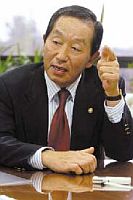
Sim Jae-Duck Credit: World Toilet Association
"Toilets are essential places in our daily lives," Sim said in an interview with IPS U.N. bureau chief Thalif Deen. "Still, an appalling 40 percent of the world's population lives without any toilets or proper sanitation, causing enormous losses to human lives due to the spread of water-borne diseases."
He said it is "unfortunate" that there are no international organisations that deal specifically and exclusively with issues relating to sanitation. "It is time for nations to jointly establish such an organisation," said Sim, who is also a member of the Korean National Assembly.
"We are also leading a campaign for culture-conscious toilets," he added.
Excerpts from the interview follow.
IPS: The United Nations says that sanitation – described as the world's "silent humanitarian crisis" – is one of the most neglected of the eight Millennium Development Goals (MDGs). At the current rate of progress, do you think the goal of halving the people without proper sanitation can be reached by 2015, the deadline set by the U.N.?
SJD: I would like to answer the question based on my personal experience. Two things should be done in order to improve sanitation and toilets. First, people's perception about toilets should be changed. Second, both the private and public sector should provide financial, technical, and more importantly humanitarian support, for issues relating to sanitation and toilets. Unfortunately, except for a very few countries, progress has been slow because both local and central governments have not paid much attention. I believe that achieving the goal of reducing by 50 percent the number of people without proper sanitation (by 2015) is not going to be easy.
IPS: The lack of proper sanitation is not only a problem for developing nations but also for advanced industrial countries both in North America and Western Europe. Since you have done a survey of sanitation facilities both in the U.S. and Europe, do you think some of these countries still lag far behind Asian nations such as Korea and Japan?
SJD: Korea, the U.S and Western Europe have similar levels of toilet facilities. But contrary to your thoughts, some public toilets of developed countries like the U.S. or countries in Western Europe are poor and badly maintained. I presume it is caused by people's lack of attention towards managing toilets. And some public toilets of developing countries are well managed and well maintained. I believe the key is "attention and care". Korea was provided with an opportunity to improve its public toilets when the country was preparing for the 1988 Seoul Olympics and 2002 Korea-Japan World Cup. Now, more people are interested in toilet matters and oftentimes we can see how people's perceptions have changed. In this way, Korea can be a good example for countries with poorly managed public toilets. As far as Japan is concerned, I can say that Japan has demonstrated a higher level of sanitation in many aspects.
IPS: As one of the pioneers of the so-called "toilet revolution" in Korea – where you established eco-friendly and user-friendly toilets in Suwon city – do you think these toilets can be replicated in other parts of the world? If so, is Korea willing to provide the technical know-how and funding needed by the world's poorer nations?
SJD: It is not desirable to adapt the Suwon city model in every city. There is no cookie-cutter solution. Suwon city has eco-friendly and user-friendly toilets. However, toilets should incorporate the region's tradition, culture and customs. The financial support should come from governments, corporations and charity organisations. WTA [the Seoul-based World Toilet Association, which Sim chairs] will be able to provide limited financial support and help build exemplary toilets which regional governments or central government can refer to. However, WTA cannot provide toilets to the whole region. WTA will use its know-how and technologies and focus on building a tailored toilet model which suits well to the region and promotes such cases. WTA will also help research the current state of the region. This will help build a more efficient toilet tailored to suit different peoples and different cultures. When the region finds out the appropriate toilet model, WTA will aid in providing the toilet facilities to the region and introduce the toilet model.
IPS: Do you hope to expand the World Toilet Association after the upcoming international conference in Seoul in November? What are the primary objectives of this conference? How will it help to resolve the current sanitation crisis worldwide?
SJD: WTA's main purpose is to help people change their perceptions about toilets. Our theme is: "Toilet Revolution, Changing the World." This change applies to both developing and developed countries. As you quoted in your article, sanitation is a problem "swept under the carpet". Now it's time to bring the issue on to the table. I hope people can freely and openly talk about toilets and acknowledge its importance. I think the very first step starts from changing the misperception that toilet is a taboo subject and something linked with an unpleasant nuance. My thoughts are to make the toilet issue high on the health agenda. This will enable policy makers to change their minds, and eventually put toilets as a priority on national and local government budgets. WTA will also establish a network with international organisations like the UN, NGOs, governments, and corporations in order to provide hygienic, eco-friendly, and culture-conscious toilets. In a nutshell, WTA will lead the way in changing people's perception.
 Print
|
Print
|




