Wednesday, October 21, 2026



News and Views from the Global South
RIGHTS: Small Town a Microcosm of U.S. Racism
Haider Rizvi
- A controversial legal case involving a small group of teenagers has sparked a new wave of protests against racist bias towards African Americans in schools and courtrooms.
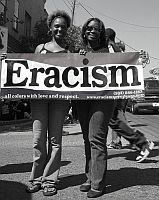
Students and activists rally in Jena, Louisiana. Credit: Everett Taasevigen
Civil rights defenders contend that the boys, now widely known as the “Jena Six,” did not deserve the extraordinarily harsh charges brought for the offence, and were themselves the victims of institutional racism.
One of the boys, Mychal Bell, 17, was originally charged with attempted murder, convicted of aggravated second degree battery and faced up to 15 years in jail. The decision has since been vacated on the grounds that Bell should have been tried as a minor because he was 16 at the time of the incident. He will be retried in juvenile court.
The other five face similar charges. The boys spent many months in jail before thousands of dollars were raised for their bail. Bell is still in jail.
“It is still the Jim Crow era in Jena,” said Kerry McLean of the National Lawyers Guild (NLG), the nation’s first racially-integrated bar association, alluding to the racially discriminatory laws enforced in U.S. southern and border states until 1965.
The story of the Jena Six began almost a year ago when three black high school students sought respite from the sun under a tree in the schoolyard, which was unofficially reserved for whites. The next day, three nooses were hanging from the tree – a symbol that invoked the widespread lynching of African Americans by whites that occurred before the Civil Rights Movement.
In response to black students’ complaints, the school principal recommended that the culprits be expelled, but the local school board reduced their punishment to three days suspension from classes. That caused resentment among black students who decided to sit under the tree once again. The boys were reportedly threatened by district attorney Reed Walters.
Black families in Jena have stated that the noose incident was followed by a series of threats and violence against black students. However, the district attorney took action only when a white student named Justin Barker was beaten by Mychal and his friends.
According to the FBI, a white supremacist website later posted the addresses of five of the Jena Six and the telephone numbers of some of their families “in case anyone wants to deliver justice”.
Although Mychal and the others were unarmed, the prosecutor insisted that they be tried for attempted murder, claiming that Bell’s sneakers were a “deadly weapon”. Baker reportedly received treatment at a local hospital and was discharged the same day.
Civil rights defenders say the charges sought against Jena Six were disproportionate to the offence and reflected the racial prejudice of an-all white jury, white judge and white prosecutor. One of the seated jurors was reportedly a high school friend of the victim’s father.
Data from the Urban League and U.S. Justice Department show that the average African American male convicted of aggravated assault – the charge against the Jena Six – serves 48 months in prison, one-third longer than a comparable white man. And an African American male who is arrested is at least three times more likely to go to prison than a white male convicted of an identical crime.
“The situation in Jena makes it apparent that racism continues to thrive in the U.S. criminal system,” said Annu Befu of the United People of Colour Caucus. “It continues to treat us as second-class citizens.”
The African American online community played a key role in gaining national and even international attention for the case, with one group of group of black bloggers organising a campaign that eventually gathered 220,000 signatures and raised 130,000 dollars for the Jena Six.
“Ten years ago this couldn’t have happened,” the civil rights leader Rev. Al Sharpton was quoted in the Chicago Tribune. “You didn’t have the Internet and you didn’t have black blogs and you didn’t have national radio shows. Now we can talk to all of black America every day.”
By September, the growing Internet buzz had sparked the interest of the national media and influential rights groups like Amnesty International.
“All-white juries trying black defendants after racist violence and counter-violence were things we hoped were now part of the past in the United States,” said Kate Allen, British director of Amnesty International. “However, this case appears to be a disturbing throwback.”
In a letter sent to the U.S. Justice Department, Amnesty called for an “urgent review” of Bell’s case and said it was concerned about the allegations that his trial was unfair.
The influential American Civil Liberties Union (ACLU) has raised a similar demand with state and federal authorities. Recently, ACLU lawyers filed a motion to move the case to federal court, stating that it “raises serious questions about a possible double-standard for whites and blacks.”
“From racial profiling to unequal treatment in school to potential misconduct by authorities, the Jena Six case causes great concern,” said Marjorie Esman, executive director of the ACLU’s Louisiana chapter, adding that her group had been on the ground working with family of the Jena Six since March.
The ACLU has filed “an open records request” in Louisiana seeking all arrest and incident reports, broken down by race.
While most Republican politicians have kept mum, a number of Democratic leaders, including leading presidential hopefuls Hillary Clinton and Barack Obama, have issued strong statements reflecting their concerns about the case.
Meanwhile, civil rights leaders have vowed to organise more protests because the presiding judge, J.P. Mauffray, has refused to release Bell on bail. While demanding Bell’s immediate release, the NLG and other organisations are also calling for an investigation and disbarment of Judge Mauffray and district attorney Walters.
“Contrary to what Walters and Mauffray may think, Jena is subject to the same constitution that the rest of the United States is,” remarked the NLG’s McLean.
“There have been numerous, brazen violations of the constitutional rights of the Jena Six,” McLean continued. “In addition to the constitutional violations, Walters and Mauffray have breached the ethical requirements of their offices. They should be made to answer for all of this.”
 Print
|
Print
|