
Saturday, October 10, 2026



News and Views from the Global South
Q&A: 'War on Terror Served Iran's Interests Best'
Interview with Tariq Ali
- Eminent writer, historian and filmmaker Tariq Ali was born in Lahore in 1943. While a student at Oxford University, he became involved in the movement against the war in Vietnam. That was the beginning of a long career in the literary arts and in peace activism that has earned him iconic status.
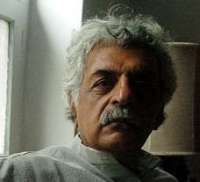
Tariq Ali Credit: Rahat Dar
When IPS correspondent Aoun Abbas Sahi interviewed Ali, who was in Pakistan recently, the writer, known for his incisive political commentaries, explained why he believed U.S. policy in Iraq and Afghanistan was doomed to fail from the start – because of the Iran factor.
IPS: Who, according to you, is the main beneficiary of the United States-led ‘war on terror’?
Tariq Ali (TA): Undoubtedly Iran. But then the Americans could not have occupied Afghanistan and Iraq and without Iran’s support. This is what no one likes talking about. Had the Iranians said, if you take Iraq we will fight you, the occupation probably would not have taken place. But the Iranians, who regarded the Taliban and Saddam Hussain as enemies, kept silent. The Americans thought, because the Iranians supported them before they went in, things would be fine. But the Iranians were opportunists. They had their own agenda and defended their own state interests – just like the U.S. defends its state interests. These state interests are now clashing and so the U.S. is threatening Iran.
IPS: Do you think that the U.S. will now launch a war against Iran to defend its national interests?
TA: I do not believe that the U.S. can launch a new war on Iran because they haven’t the troops. Secondly, if they do that they will be fighting the Iranians on three fronts – Iraq, Afghanistan and in Iran itself. So I think it is very unlikely that a war against Iran will happen.
IPS: In Afghanistan, U.S.-led NATO forces are blaming the Taliban for an increase in violence.
TA: I do not believe that big powers occupying small countries can solve any problem, even with good intentions. The Soviet intervention in Afghanistan created a mess which the Americans fully utilised. That is why the American intervention – operation freedom, as they call it – always makes me laugh. It has been a disaster. They have set up a puppet regime. They have poured in money to sustain this puppet regime. You have large-scale corruption in the country. Recent figures given by the United Nations say that the drug trade is the worst it’s ever been in the south of the country, especially in Helmand, a province controlled by British troops. So what changed in Afghanistan? You have a thin layer of politicians implanted there by the West with no real base in the country. And then you have the old American habit of shooting from the hip, dropping bombs from the air, indiscriminately killing people right, left and the centre. The result is increased resistance. I don’t like the Taliban, but if people in Afghanistan see the Taliban fighting the guys who are bombing and killing, they get attracted – it’s very simple.
IPS: You think the resistance against U.S. forces in Afghanistan and the Pakistani army in the (adjacent) tribal areas is justified?
TA: People in Pakistan who support the occupation of Afghanistan should ask themselves whether they favour Pakistan being occupied just because many people in the West regard Pakistan as a failed state? I think one has to look at alternatives other than western occupation. In my opinion, and I will argue this in public, the only way out of this mess is to first get all western troops to withdraw. A regional summit, including Pakistan, India, Russia and Iran, could then be organised to discuss a joint deal to stabilise Afghanistan as a federation. That is the way to proceed – take regional initiatives and deny the U.S. any excuse to interfere. Otherwise this will mess will carry on.
IPS: The situation in Iraq is getting worse with every passing day.
TA: That is now accepted by every serious politician in America. It’s a total and complete disaster. Before they went into Iraq some of us tried to warn them that there will be a big resistance. For the first few years the resistance was essentially fought by former units of the Iraqi army which dispersed and went into the countryside. They had set up military dumps because they knew what was going to happen. Secondly you have new groups, many of them from the Sunni areas, fighting the American army. And then you have a situation where the Shia resistance led by Muktada al-Sadr controls large parts of southern Iraq.
IPS: How important is the role of the al-Qaeda in this scenario of strong resistance against Western forces both in Afghanistan and Iraq?
TA: Al-Qaeda utilises American mistakes and disasters. It grows as a result of these mistakes … because the only solution is political, not military. Al Qaeda, instead of being reduced in size, has grown because of American military adventures abroad. You cannot defeat people just by killing. It’s not the case that all the groups in Afghanistan fighting under the Taliban umbrella, are supporters of al-Qaeda. The Taliban itself is divided and split on this question.
IPS: Are you in favour of a world without nuclear weapons?
TA: I have always been against the nuclear weapons. I have to be blunt, but I do not believe that the U.S. should determine who has and who does not have nuclear weapons. If France and Britain, tiny little countries, can have nuclear weapons, why not India, Pakistan or Iran? Israel is permitted nuclear weapons but not Iran. Ideally, no one should have nuclear weapons. But many people actually believe the only way they can defend themselves and prevent wars is to have them. Many countries also think that acquiring nuclear weapons is the only way to stop the U.S. attacking them.
 Print
|
Print
|




