Wednesday, September 2, 2026



News and Views from the Global South
TRADE: Geopolitical Imbalance the Biggest Threat, Says UNCTAD Chief
Gustavo Capdevila
- Although growth in trade offsets some of the threats to the global economy, the world’s geopolitical situation – particularly with regard to Iraq and the Middle East – “will have serious consequences,” says the head of the United Nations Conference on Trade and Development (UNCTAD).
This U.N. body is the political forum for determining the future of global trade, according to UNCTAD secretary-general Rubens Ricupero. But he stresses that the World Trade Organisation is the arena for negotiations.
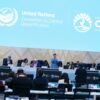
A few weeks ahead of the 11th Conference of UNCTAD, to take place Jun. 13-18 in Sao Paulo, the Brazilian-born diplomat met with a small group of journalists in Geneva and outlined the hurdles and opportunities presented by the current impasse in global and regional trade talks.
He pointed to China and India as the greatest innovators on the economic front today, and the Group of 20 (G20) developing nations opposed to farm subsidies as one of the driving forces behind the trade debate.
Ricupero said he was not worried about the outcome of the Conference, but that he was concerned about the world in general: the most serious problem, he said, lies in ”the major imbalances between the United States and the rest of the world.”
The Conference, which meets every four years, is UNCTAD’s highest decision-making body. Delegates will engage in debate to establish the organisation’s priorities and guidelines, working towards greater coherence between economic growth and development, “particularly of developing countries.”
Following are excerpts of the Geneva conversation with Ricupero:
– What real significance does this Conference have with respect to the WTO (World Trade Organisation) negotiations?
– The meeting in Sao Paulo is taking place just a little over a month before the late July deadline (for reaching a framework accord on agriculture negotiations in the WTO). That in itself will have an effect because the Conference is bringing together many trade ministers. This is the only occasion in which I see all of the United Nations countries, including non-WTO members, coming together. There is no other gathering until late July.
– Are there any effective negotiations going on right now?
– Neither the multilateral, nor the regional or bilateral talks are moving along smoothly. At this time, the FTAA (Free Trade Area of the Americas), for example, is facing the same stagnation that is plaguing the multilateral negotiations. Which is curious, because until recently everyone touted the regional accord as an alternative, as something that would replace the multilateral framework with a more dynamic process.
– Is that a result of the economic recession of the past few years?
– It’s curious that right now the real economy and real trade are in a process of major recovery after the decline that began in 2001. Which in my view shows that the problems with the negotiations in general are more political than economic.
– What are the innovative elements of this Conference?
– The strong growth of trade between developing nations, especially thanks to the growth of China, and of India as well. Increased imports by China have led to a 37 percent rise in Japan’s exports, and have bolstered intra-Asian trade, which now protects that region somewhat from the ups-and-downs of the rest of the world. China’s expansion has also had repercussions on the United States – which is selling many products to the Asian giant – and even on Europe. The effect has reached Argentina, Brazil and South Africa, as well. It is what the president of Brazil calls ”the new geography of trade,” which is one of the themes of our conference.
– So the big actor is China…
– It is the economy that has been growing the most in the world for the past 23 years. But China has not followed any of the prescriptions that are in vogue, and I’m not saying China is an example for others. But in the case of China, the gradual pace at which trade liberalisation took place was a big help. The same thing is true for India. India and China have not been integrated into the process of financial liberalisation.
– China forms part of the Group of 20. What weight does that group really have?
– Analyses often overlook that reality, which lies behind the creation of groups like the G20 or the South Africa-India-Brazil group. Because those blocs would be merely an expression of desire or will if there were not something real that gave them substance. The reality has anticipated diplomatic initiatives.
– Alliances of countries of the South have always failed…
– That is where the opportunity lies. The opportunity for the affirmation of the South. But an affirmation not in ideological terms, as in the past, based on manifestos, but with concrete developments of this kind, such as an increase in trade, attempts to unblock negotiations, the problems of global agriculture. That is where I would put the emphasis.
– Will UNCTAD be the future scenario of global trade negotiations?
– No, we have staged the Conference as a sort of theatre. Now it is up to the countries to decide what kind of play they are going to put on. It is not up to us. It entails a political discussion, the presence of the trade ministers, the understandings they reach – not the formal resolutions, because we know that any outcome in the field of formal resolutions has to be the fruit of negotiations within the WTO, the FTAA, etc, not UNCTAD. This is a political forum that allows for more open debate, that can help create the conditions for an agreement, but is not intended to be the scenario for negotiating the agreement itself.
– What are the imminent dangers for the world’s emerging economies?
– There are five potential problems I see, some already present, while others are trends extending into the future: – The geopolitical situation, which is not directly within my area of expertise. But I think the lack of a clear solution to the Iraq conflict and the conflict between Israel and the Palestinians, as well as the possibility of a continued escalation of violence will have serious consequences. -The price of a barrel of oil has climbed to 40 dollars and there is a structural tendency for prices to remain high. -A hike in interest rates. I don’t expect this increase in rates to be as radical or negative as in the early 1980s, but there is no doubt that it is an adverse factor for indebted countries. -The prices of raw materials. In some cases the changes have been positive, as in the case of copper, iron ore or soy, whose prices have improved a great deal. I think the recovery of commodities is favourable for the countries of Latin America and Africa, but is less so for the industrialised countries. -China’s decision to seek a slower pace of economic growth.
Now, these must be contrasted with the growth in trade. Part of the negative impact of these events is offset by the growth of trade. So I believe in general terms that there is no serious problem. The worst problem is geopolitical – the major imbalances between the United States and the rest of the world. And there it is more difficult to make a prediction.
– In UNCTAD’s 40 years there has been a shift in the problems affecting developing countries, which calls for new approaches.
– They have changed because when UNCTAD was founded 40 years ago the presence of developing countries in the export of manufactured goods was very limited. For that reason, the debate in the first meetings was dominated by commodities. The change is that many, if not all, developing countries have increased their participation in exporting manufactured products. In that sense they have brought about an enormous change in their position in foreign trade. But they also face other sorts of problems that perhaps did not exist in the past. One is that the increase in their manufactured exports has often occurred as a consequence of globalisation – the internationalisation, through transnational corporate giants, of their productive processes. That didn’t exist in 1964.
– Is that a positive development?
– Many countries that export manufactured goods, like China and Mexico, have benefited. But that hasn’t guaranteed them an improvement in the degree of added value in their products. That is where the question of national policies comes in. The ones that have made out better, like China, have not passively accepted globalisation. They have made the most out of its advantages, which is to let in the multinationals, but with contracts for joint ventures for a limited time, and incorporating technology transfer. And today the Chinese are competing with the very companies that were the first to go to China. Meanwhile, Mexico, for example, which has remained closely tied to the system of maquiladoras (tax-free plants that assemble foreign-made components for re-export) has not obtained that kind of benefit.
– What went wrong?
– What happened is that Mexico has lost its competitive edge with respect to China. It is China that is taking over segments of the U.S. market that used to be supplied by Mexican products. Why is that? Because China has increased the added value of its products. UNCTAD has been the only organisation that has shown – since its 2002 Trade and Development Report – that increasing manufactured exports, even goods incorporating technology, does not mean much if that increase is based solely on assembly line production, without added value.
– What is the optimal formula?
– China’s way of doing business: joint ventures. In reality, they are to last 12 years and very often the contracts are not renewed. I think that in the case of China it has worked because the Chinese have taken advantage of the 12 years to learn how to do things better than their teachers. If you have the 12 years and you don’t do what the Chinese have done, it won’t benefit you at all.
India is turning into a major exporter of services. That is not due to the reason given, that costs are low. It is because labour in India is highly skilled. The Indians don’t just set up ”call centres” (for customer service), they also conduct research.. Two million people a year graduate from India’s universities, highly skilled in mathematics. That is much more than all of the industrialised countries.
– NGOs complain that some industrialised countries are trying to undercut the UNCTAD mandate, to make this meeting fail.
– I am not worried about the success of this conference. I am more concerned about the world, not about UNCTAD. About the world, I am not optimistic.
 Print
|
Print
|