Abstract
The article analyzes the application of international quality management standards in the beauty industry.
The purpose of the work is to systematize global approaches to service standardization and to develop practical methodologies for their adaptation to salon business.
As a result of the study, the structural components of the quality system were identified, including the process approach, customer orientation, and continuous improvement.
Based on the analysis of successful international cases, a step-by-step implementation model is proposed, integrating the requirements of ISO 9001 standards and the specifics of service delivery in the beauty sector.
The practical significance of the research lies in providing salon managers with tools to increase competitiveness, manageability, and customer loyalty through the implementation of formalized procedures.
The Beauty Industry as a Sector of the Global Economy
The beauty industry represents a dynamically developing sector of the global economy, characterized by high competition and increasing consumer demands for the level of service.
Under conditions of market saturation, differentiation of offerings and the assurance of consistently high service quality become strategic tasks for salon businesses.
The relevance of the topic is determined by the need to transition from intuitive management to systematic management based on recognized international practices.
The purpose of this article is to analyze global service standards and to develop a scientifically grounded methodology for their implementation in salon processes in order to achieve sustainable business results.
Theoretical Foundations of Quality Management in the Service Sector
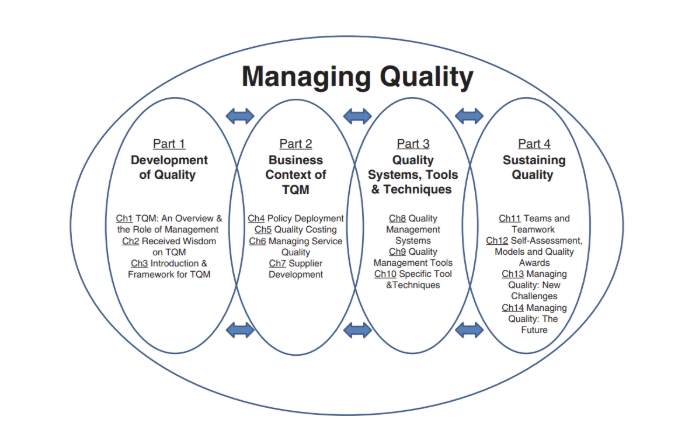
The concept of Total Quality Management is based on the principles formulated by leading theorists E. Deming and J. Juran.
Applied to the service sector, to which the salon business belongs, quality is defined as the degree of conformity of the service to the client’s expectations and requirements [1].
The international standard ISO 9001 provides a universal model of a quality management system based on a process approach.
This standard does not prescribe industry-specific requirements for the result but establishes criteria for the processes that ensure its stability.
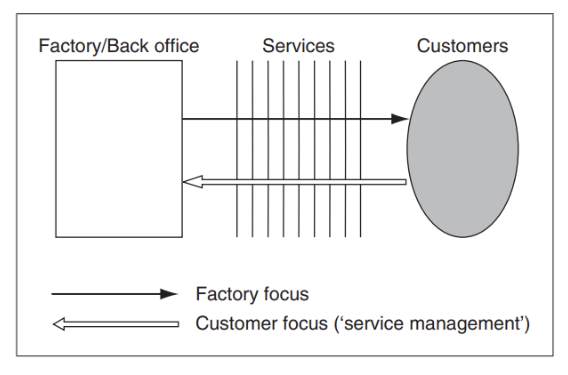
For the beauty industry, this means the need to regulate such processes as initial consultation, service performance, customer feedback handling, and personnel competence management.

Global Standards and Implementation Practices
The implementation of a quality management system in a beauty salon represents a project cycle that includes several interrelated stages.
The initial stage is the diagnosis of existing business processes and the identification of areas for improvement.
The next step is the development of the documentation base of the system: the quality policy, process regulations, job descriptions, and control checklists.
Particular importance is attached to the stage of staff training, since the final quality of the service is directly formed by the master during interaction with the client.
Research shows that salons which have implemented formalized procedures for employee training and certification demonstrate an increase in repeat visits by 20–30% [2].

Global Standards and Implementation Practices
The implementation of a quality management system in a beauty salon represents a project cycle that includes several interrelated stages. The initial stage involves diagnosing existing business processes and identifying areas for improvement. The next step is the development of the system’s documentation base: quality policy, process regulations, job descriptions, and control checklists. A particularly important stage is staff training, since the final quality of the service is formed directly by the master in interaction with the client. Research shows that salons that have implemented formalized employee training and certification procedures demonstrate an increase in repeat visits by 20–30% [2].
Global Experience Demonstrating Effectiveness
International experience demonstrates the effectiveness of integrating ISO standards with industry-specific evaluation systems. For example, the premium-class salon network Raffiné in Europe and North America publishes annual customer satisfaction reports, where key performance indicators such as the consumer loyalty index and the number of incidents are directly linked to quality objectives [3]. This approach not only allows for the monitoring of current operations but also enables strategic analysis for informed managerial decision-making.
Analysis of Results
An analysis of quality management system implementation practices reveals a stable correlation between process formalization and business performance. Beauty salons operating within standardized procedures demonstrate higher results in such parameters as client retention, average transaction value, and profitability. A systematic approach minimizes dependence on the human factor, ensuring the reproducibility of service quality regardless of the individual performer. Researchers note that the standardization of service processes creates a foundation for subsequent business scalability, including franchise models [4].
The main challenge during implementation is employee resistance, as staff often perceive regulations as a limitation of creative freedom. Overcoming this resistance requires management to conduct explanatory work, demonstrating that standards are not aimed at unification, but at ensuring consistently high results — which ultimately increases the professional status of the master and his or her economic well-being.
Metrics and Monitoring of Quality System Effectiveness
One of the most significant aspects of implementing a quality management system is the development of a metrics system for objective performance assessment. For beauty salons, it is advisable to use a balanced scorecard that includes both financial parameters and non-monetary indicators. The latter include customer loyalty index, repeat visit rate, number and structure of complaints, and the time required to correct deficiencies. Regular collection and analysis of these data make it possible to identify correlations between process quality and final business results. For example, a 15% reduction in administrative process time can increase a salon’s throughput capacity by 7–10% without expanding its physical space [5]. The system of metrics provides a basis for informed management decisions and fosters a data-driven culture rather than one based on subjective judgment.
Conclusion
The conducted research confirms that the implementation of global quality management standards is an effective tool for enhancing the competitiveness of the salon business. The developed methodology, based on adapting ISO 9001 requirements to the specifics of the beauty industry, provides a practical action algorithm for salon owners and managers. A system built on process-based management, client orientation, and a cycle of continuous improvement enables salon management to reach a qualitatively new level. The universality of the proposed model allows its application in salons of various price segments and scales — from local studios to international networks. Further research in this area may focus on the development of industry-specific metrics for the quantitative evaluation of quality system effectiveness.
References
- Dale B., van der Wiele T., van Iwaarden J. Managing Quality. – 6th ed. – Oxford: Blackwell Publishing, 2016. – 528 p.
- Grönroos C. Service Management and Marketing: A Customer Relationship Management Approach. – 4th ed. – Chichester: John Wiley & Sons, 2015. – 478 p.
- Fitzsimmons J.A., Fitzsimmons M.J. Service Management: Operations, Strategy, Information Technology. – 9th ed. – New York: McGraw-Hill Education, 2018. – 542 p.
- Lascelles D.M., Dale B.G. Quality Management: An Implementation Guide. – London: Routledge, 2017. – 312 p.
- Zeithaml V.A., Bitner M.J., Gremler D.D. Services Marketing: Integrating Customer Focus Across the Firm. – 7th ed. – New York: McGraw-Hill Education, 2018. – 610 p.
- Prajogo D.I., Sohal A.S. The multidimensionality of TQM practices in determining quality and innovation performance // International Journal of Quality & Reliability Management. – 2019. – Vol. 36, No. 1. – P. 78-94.