Why Fashion Brands Are Rethinking Their Video Production Strategy
The fashion and apparel industry runs on visual storytelling. A single compelling video can move a new collection from unknown to sold out, yet most mid-sized fashion brands are still stuck in a production cycle that is too slow, too expensive, and too dependent on agencies or freelancers who do not always understand the brand.
Seasonal campaigns demand fresh content every few weeks, social media channels need daily fuel, and product pages require video that converts — all simultaneously. Something has to give, and increasingly, that something is the traditional production model.
The Real Cost of Traditional Fashion Video Production
Ask any e-commerce manager at a fashion or footwear brand about their content production bottleneck, and the answer is almost always the same: too much time, too much money, and too little flexibility to iterate quickly. A single professional shoot for a seasonal lookbook can consume weeks of planning, a full crew, a studio rental, and a post-production timeline that makes last-minute changes effectively impossible. By the time the content is ready, the trend it was designed to capture has already peaked.
This is where AI-driven tools are changing the competitive landscape. An AI Video Editor built on modern machine learning does not replace creative direction — it eliminates the mechanical friction between a creative idea and a finished video asset.
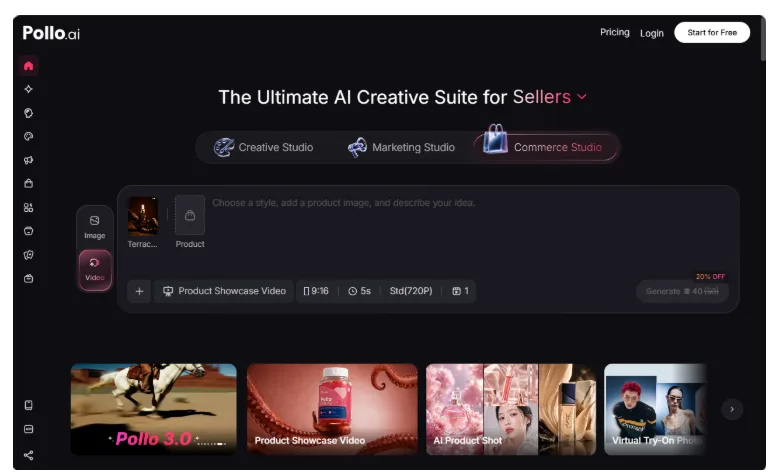

With Pollo AI, fashion marketers can input a text instruction and execute edits that would previously have required a skilled editor working for hours: removing distracting background elements, swapping a rainy outdoor setting for a sun-drenched rooftop, adjusting the apparent age or styling of a model to match a different target segment, or applying a cinematic filter that transforms a standard product clip into something that feels editorial. All of this happens within a single platform, without switching between tools or waiting for a freelancer to deliver revisions.
What Fashion and Apparel Marketers Actually Need From AI Video
The fashion vertical has specific demands that generic video tools rarely address well. Product texture matters — the way a fabric moves, the sheen of a leather finish, the drape of a silk blouse. Styling context matters — the same jacket reads completely differently in a street-style setting versus a formal occasion. Seasonal relevance matters — content produced in spring needs to feel current by the time it goes live, and atmospheric adjustments should not require a reshoot.
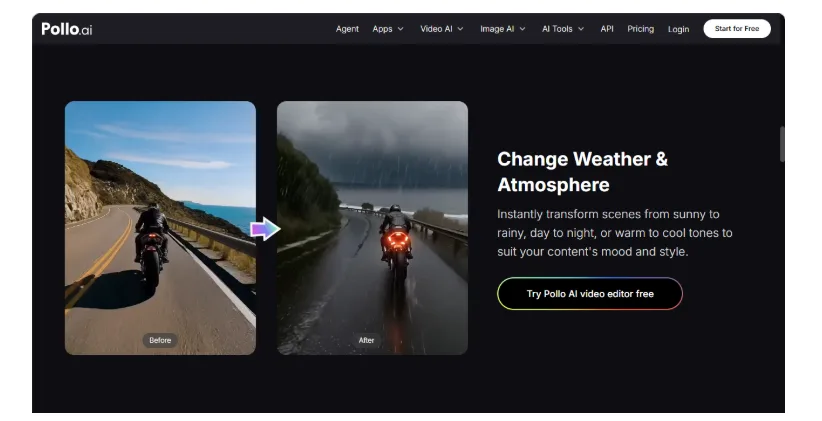

Pollo AI’s AI Video Editor addresses these needs directly. Marketers can switch between day and night scenes, add weather effects like rain or golden-hour light, generate aerial or tracking camera perspectives that would require drone operators in traditional production, and apply visual styles ranging from clean editorial to anime-influenced aesthetic — all through text-based commands. For a fashion brand managing multiple product lines across different audience segments, this level of flexibility within a single workflow is not a minor convenience. It is a structural advantage.
Step-by-Step: Producing a Fashion Product Video With AI
Step 1 — Define the Creative Brief in Text Form
Before opening any tool, write out exactly what you want the video to communicate: the product, the target customer, the mood, the setting, and the intended platform. AI video tools respond directly to the specificity of your input. A vague instruction produces a generic result; a precise creative brief produces content that feels intentional and on-brand.
Step 2 — Upload Your Source Material
For fashion content, your source material might be existing product photography, a short raw clip from a previous shoot, or a static lookbook image. Pollo AI accepts a range of input formats and uses them as the visual foundation for AI-driven editing and transformation.
Step 3 — Apply Scene and Style Modifications
This is where the AI Video Editor capability delivers its most immediate value. Use text instructions to adjust the background — replace a plain studio backdrop with a textured urban environment, for example. Apply a specific visual style that aligns with your current campaign aesthetic. Add motion effects that bring a static image to life. Each modification is executed in seconds, and multiple variations can be generated quickly so you can select the strongest option.
Step 4 — Refine for Platform and Audience
Fashion content needs to be formatted differently for Instagram Stories, TikTok, Pinterest, and product pages. Use the platform’s output settings to generate appropriately formatted versions of your final video, and apply any final adjustments — timing, cropping, atmosphere — before export.
Step 5 — Review, Iterate, and Scale
The most significant advantage of AI-driven fashion video production is the speed of iteration. If a variation does not land right, adjust the instruction and regenerate. Once you have a format that performs well, scale it across your product catalog without the cost or time of additional shoots.
Expanding Your Content Mix: From Blog to Video With Lumen5
Fashion brands that invest in content marketing — editorial features, trend guides, styling advice — often struggle to repurpose that content effectively for video-first platforms. This is where Lumen5 becomes a practical complement to your AI video toolkit.
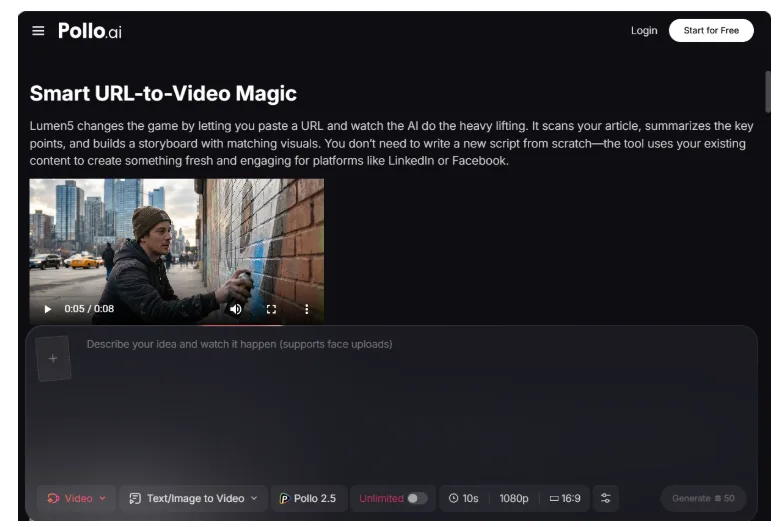

Lumen5 AI Video Generator is designed to convert text-based content — blog posts, scripts, PDFs, and web links — into professional video, automatically matching visuals and music from a large media library and building scene structures intelligently.
For a fashion or lifestyle brand publishing regular editorial content, Lumen5 can transform a trend report or a seasonal style guide into a polished video suitable for social media or email marketing — complete with AI narration in over forty languages and brand-customized templates that maintain visual consistency across all output. This is particularly valuable for marketing teams that need to maintain a high publishing frequency without proportionally increasing their production headcount.
Lumen5 works well alongside Pollo AI in a layered content strategy: Pollo AI handles the product-specific, visually precise video editing and transformation that fashion content requires, while Lumen5 accelerates the conversion of editorial and marketing copy into video format for content marketing and social distribution.
Advanced Techniques for Fashion and Footwear Brands
Once the basic workflow is established, several advanced applications become available. Product variation content — showing the same item in multiple colorways, settings, or styling contexts — can be generated efficiently by modifying a single source video rather than reshooting for each variant. Campaign localization, adjusting visual atmosphere and styling cues for different regional markets, becomes feasible without separate shoots. Trend-responsive content, adapting existing product videos to incorporate emerging visual aesthetics, can be produced quickly enough to stay current with fast-moving social media cycles.
For footwear brands specifically, the ability to generate different environmental contexts — a clean studio floor, a textured concrete surface, a natural outdoor setting — from a single source clip is particularly useful. Shoe photography is expensive and time-consuming to produce at scale; AI video transformation allows a single high-quality source asset to serve multiple content needs across multiple channels.
Conclusion: The Production Advantage Is Now Available to Every Fashion Brand
The gap between brands that can produce high-quality video content consistently and those that cannot is closing rapidly — not because production costs have dropped, but because AI tools have made the production process itself fundamentally more efficient.
Fashion marketers who integrate AI video editing into their content workflow gain the ability to iterate faster, adapt more readily to platform and trend changes, and maintain a higher publishing frequency without proportionally increasing their budget or team size. The creative vision still needs to come from you. The mechanical work of executing that vision no longer does.