Artificial intelligence is entering a new chapter in digital content production. Over the past few years, generative AI has transformed image creation, accelerated text generation, and increasingly reshaped video production. As AI video technology continues to mature, industry discussions are gradually moving beyond visual quality and model performance toward a broader issue: how can AI become a reliable part of real-world communication?
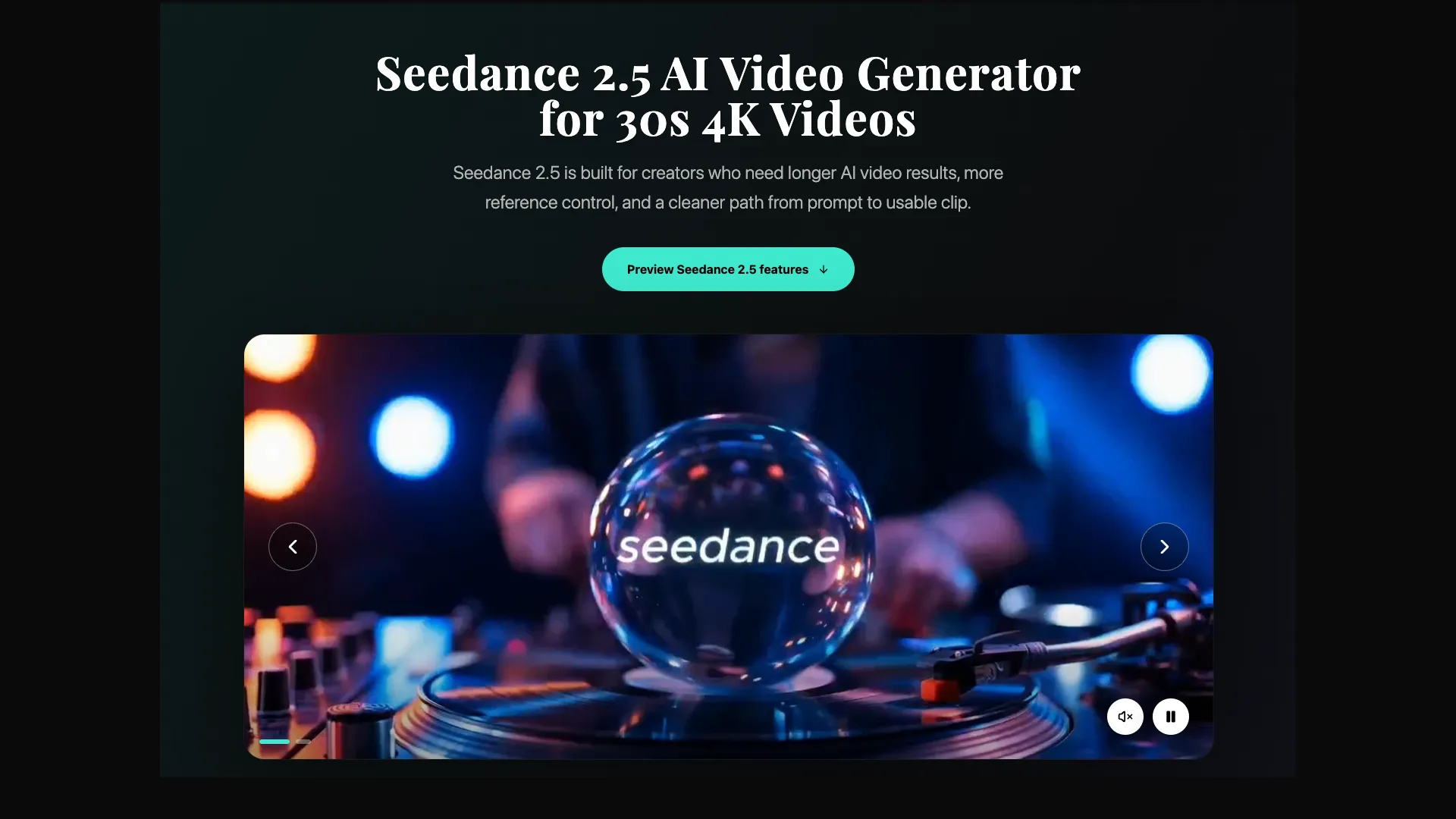
Against this backdrop, Seedance 2.5 has become part of the growing discussion around the next stage of Al video development. Although the model has not yet been officially released for public use, the expectations surrounding it reveal broader changes taking place throughout the industry. More importantly, they illustrate how the role of AI video is evolving—from generating isolated clips to supporting complete creative and communication workflows.

The Industry Is Looking Beyond Technical Benchmarks
The early development of AI video focused largely on technical milestones. Higher resolution, smoother motion, and faster generation were often viewed as the primary indicators of progress.
Those priorities are beginning to change.
Organizations now expect AI video systems to support consistency across multiple scenes, integrate reference materials more effectively, simplify editing, and fit naturally into existing production pipelines. For many users, workflow efficiency has become just as important as image quality.
This shift reflects the growing maturity of generative AI. As the technology moves closer to everyday professional use, practical value is becoming a more meaningful measure than benchmark scores alone.
Seedance 2.5 Reflects a Broader Industry Direction
While public information about Seedance 2.5 remains limited, much of the discussion surrounding the model points toward larger industry ambitions rather than individual product features.
Developers across the AI video sector are increasingly exploring longer-form content generation, stronger creative control, more flexible editing capabilities, and better integration of multimodal inputs. These objectives suggest that future AI video systems may become comprehensive production tools instead of standalone generation engines.
Rather than viewing Seedance 2.5 solely as a forthcoming release, many observers see it as part of a wider transition in how AI-generated video is expected to support professional communication.
For teams evaluating Seedance 2.5 after release, these broader industry priorities offer apractical framework: look beyond isolated demo clips and examine consistency, referencehandling, revision workflows, accessibility, and the model’s ability to support repeatablecontent production.
Expanding Access to Visual Content Creation
Perhaps one of the most important developments in AI video is its potential to broaden participation in digital storytelling.
Historically, producing high-quality video required specialized equipment, editing expertise, and substantial financial investment. These requirements often limited professional production to organizations with dedicated creative teams.
AI is beginning to change that landscape.
As production tools become more accessible, smaller businesses may create promotional campaigns more efficiently, educational institutions may produce visual learning resources with fewer technical barriers, and nonprofit organizations may communicate complex social issues through engaging multimedia content.
Greater accessibility does not eliminate the importance of creative expertise. Human judgment remains essential in developing narratives, verifying information, and understanding cultural context. Instead, AI reduces production complexity while allowing creative professionals to focus on higher-value work.
Digital Media Continues to Evolve
Media organizations worldwide are adapting to changing audience expectations.
Readers increasingly consume information through visual explainers, short-form video, and multimedia reporting. Newsrooms therefore face growing pressure to produce high-quality visual content while maintaining speed, accuracy, and editorial standards.
Emerging AI video technologies may help support these goals by assisting with educational animations, timeline visualizations, multilingual reporting, and explanatory journalism.
Success, however, will depend on how these tools are integrated into existing editorial practices rather than how quickly they generate content.
Education May Benefit From More Accessible Production
The education sector faces similar opportunities.
Schools, universities, and online learning providers continue expanding digital teaching environments while seeking more engaging methods of delivering knowledge.
AI-assisted video production could reduce the technical effort required to create instructional materials, making it easier to update lessons, localize educational content, and improve accessibility for diverse learning communities.
Rather than replacing educators, future AI systems are more likely to function as production assistants that enable teachers to dedicate more time to curriculum design and student engagement.

Innovation Must Be Matched by Responsibility
As AI-generated video becomes increasingly realistic, responsible governance becomes equally important.
Issues involving copyright protection, content authenticity, disclosure of synthetic media, and transparency will continue shaping public confidence in AI technologies.
Organizations adopting future AI video platforms will likely need governance policies that include human oversight, clear attribution practices, and ethical standards for responsible deployment.
Technical innovation alone will not determine long-term success. Trust, accountability, and transparency will remain equally significant.
Looking Ahead
The significance of Seedance 2.5 ai video generation model may extend beyond the product itself.
Although the model has not yet reached broad public availability, the conversations surrounding it highlight a wider transformation across the AI video industry. Expectations are shifting toward systems capable of supporting complete production workflows, reducing barriers to visual communication, and serving increasingly diverse applications in business, education, journalism, and public information.
Whether Seedance 2.5 ultimately achieves widespread adoption will depend on its real-world performance after release. However, its current role as a focal point for industry discussion already reflects a more important reality: the future of AI video will be defined not simply by better generation, but by how effectively these technologies help people communicate ideas, share knowledge, and create trustworthy digital content on a global scale.