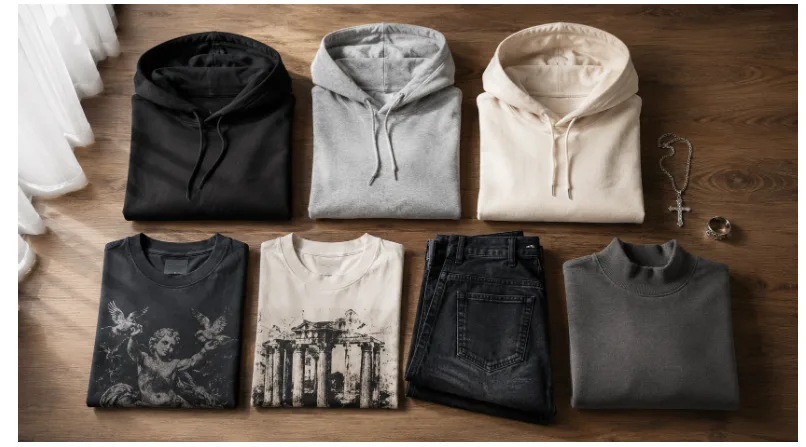

Why Most Streetwear Ends Up at the Back of the Closet
Here’s the thing nobody tells you when you start buying streetwear. Most of it dies young. You spot a hoodie in a drop, the photo looks incredible, and three washes later the print is cracking and the shoulders have gone soft and shapeless. I’ve watched it happen with pieces I paid real money for. So the goal isn’t buying more, it’s buying stuff that survives. When you shop with that filter on, your whole approach shifts. You stop chasing hype and start checking fabric weight, stitch density, and how a graphic sits on the cotton. Think about it like this: a good hoodie is a tool you use three times a week, not a poster you frame. That means it has to earn its spot every single day. And most of the noise online steers you the wrong way, toward whatever’s loud this month instead of what holds up next year. My rule is simple. If I can’t picture wearing something twenty times, I don’t buy it. That single question kills about half my impulse orders before they happen, which saves money and closet space. Quality over quantity sounds like a cliché, sure, but it’s the one habit that separates a wardrobe you love from a drawer full of regret. Because when a piece is built right, you feel it the second you put it on, and you keep reaching for it long after the trend that sold it has faded.
What Fabric Weight Actually Tells You
Let’s talk about the number most people ignore: GSM, or grams per square meter. It sounds technical, but it’s the fastest way to guess how a piece will age before you even touch it. A heavyweight hoodie usually sits around 400 GSM or higher, and that extra cotton is exactly why the shape doesn’t collapse after a handful of washes. Cheaper fast-fashion pieces cut grams to cut cost, since fabric is one of the biggest expenses in making a garment. That trade-off is invisible in a product photo but obvious the moment you wear both side by side. So when a brand actually lists fabric weight, that’s usually a good sign they’ve got nothing to hide. Take a look at the Mixed Emotion hoodie range, where the heavyweight cotton is the whole selling point rather than an afterthought. Weight isn’t everything, though. A dense fabric with weak stitching still falls apart, and a thin summer tee isn’t “bad” just because it’s light. Context matters. You want warmth and structure in a winter pullover, but breathability in a July shirt. The trick is matching the weight to the job. Once you start reading that number, you can’t unsee it, and cheap pieces start feeling flimsy in your hands instantly.
Three Checks Before You Buy Anything
Before I hit checkout on any piece, I run through the same short list every time. It takes thirty seconds and it’s saved me from dozens of bad orders. Here’s exactly what I look at, in order:
- Stitch density around stress points. Zoom in on the cuffs, collar, and hems. Tight, even stitching means the piece won’t unravel at the first hard tug. Loose or uneven stitching is a red flag that shows up fast.
- Print or graphic application. Screen prints should feel layered into the fabric, not sitting on top like a sticker. Heat-pressed rhinestones and embroidery last longer than cheap plastisol slapped on in one thin coat.
- Fit description and measurements. A real product page lists chest and length in inches, not just “oversized.” If a brand only gives you S, M, L with no numbers, you’re guessing, and guessing means returns.
Run those three checks and you’ll dodge most of the junk. None of this needs special knowledge, either. You’re just looking for signs the maker cared about the parts you can’t see in a hero shot. The brands worth your money tend to over-share these details because they know informed buyers stick around. The ones hiding the info are usually hiding something.
Mixing High and Low Without Looking Try-Hard
You don’t need a closet full of expensive pieces to look put together. The best fits I see mix one or two standout items with plain, well-made basics. A single graphic tee under a solid jacket reads sharper than head-to-toe logos. That’s because contrast draws the eye, and when everything shouts, nothing lands. So I’ll pair a bold rhinestone tee with plain black jeans and call it done, letting the one loud piece do the talking. This is where jewelry earns its keep, too. A sterling silver ring or a cross pendant adds weight to an otherwise simple outfit, which is exactly why the accessories over at Chrome Hearts get so much attention from people building a gothic-leaning look. My honest preference leans minimal. I’d rather own five pieces I reach for constantly than twenty I rotate out of guilt. Layering helps stretch a small wardrobe, since a long sleeve under a tee or a mockneck under a jacket creates new looks from the same base. And texture matters more than logos. A ribbed knit next to smooth denim next to brushed fleece gives an outfit depth that a pile of branded pieces never will. Keep it simple, let one thing pop, and you’ll look intentional instead of like a walking billboard.
Building Around a Core You Actually Wear
Now let’s get practical about what belongs in a rotation you’ll use. Start with the layers you reach for without thinking, then build outward from there. Here’s the core I’d tell anyone to nail first before chasing statement pieces:
- Two heavyweight hoodies in colors you already wear, one neutral and one with a little personality, so you’ve always got a warm layer that works.
- Three to four solid tees in cotton that softens with washing, since these do the heavy lifting under everything else.
- One pair of well-cut denim that fits your actual body, not the fit model’s. Denim anchors almost every casual outfit you’ll build.
- A mockneck or crewneck for the days a hoodie feels too casual but a jacket feels like too much. The Parke Hoodie and mockneck styles are a solid reference point for this exact middle-ground layer.
- One statement piece you genuinely love, whether that’s a graphic, a wash, or a collab, to keep the whole thing from feeling like a uniform.
Get those basics right and everything else becomes easy. New pieces slot into a system instead of floating around unworn. That’s the difference between a wardrobe and a pile. Most people skip the boring basics and blow their budget on the flashy stuff, then wonder why nothing goes together in the morning.
When Fan Merch and Designer Pieces Belong Together
Streetwear isn’t just skate brands and luxury houses anymore, and that’s a good thing. Music merch has quietly become some of the most-worn stuff in a lot of closets, mine included. A well-made tour tee carries meaning that a random graphic never will, because it ties back to a show you actually stood at or an album that got you through something. The trick is treating it like any other piece: check the fabric, check the print, and skip the blurry knockoffs. Quality fan merch uses the same heavyweight cotton and sharp printing you’d want from any brand, which is why something like the zach bryan merch hoodie lineup can sit comfortably next to your designer pieces instead of looking out of place. I mix mine constantly. A country-tour crewneck under a good jacket with clean denim reads as personal, not costume-y. And that’s really the whole point of dressing well. Your clothes should say something true about you, not just repeat whatever the algorithm pushed this week. The best-dressed people I know break the “rules” all the time, pairing a $200 designer tee with a $30 concert hoodie because both are built well and both mean something. Snobbery about where a piece comes from misses the point entirely. Build is build. Meaning is meaning. Wear what you love.
Reading a Product Page Like a Pro
Once you know what to look for, a product page tells you almost everything before you spend a cent. Start with the photos. Good stores shoot the actual piece from multiple angles, including close-ups of the fabric and any print or hardware. Blurry stock images or a single flat shot usually mean the seller is hiding wear-and-tear details. Next, read the description for specifics. Words like “heavyweight,” “brushed fleece,” or “sterling silver” tell you more than vague hype like “premium” or “luxury.” Then scan for real measurements, since those separate a serious store from a drop-shipper. The AMIRI approach to product presentation is a decent benchmark here, with the kind of detailed imagery and material notes that let you judge a piece before it arrives. Shipping and return policies matter just as much, honestly. A store confident in its product offers a clear return window, because it knows most pieces won’t come back. Vague or missing policies are a warning sign every time. One limitation worth naming: no product page can tell you exactly how something drapes on your body, so even with perfect info, your first order from a new brand is partly a gamble. Sizing charts shrink that gamble but never erase it. That’s just the reality of buying clothes you can’t try on first, and anyone who promises otherwise is overselling.
Caring for Pieces So They Actually Last
You did the work picking quality, so don’t undo it in the laundry room. This is where I see people waste good money, tossing a heavyweight hoodie in hot water and a hot dryer, then acting surprised when it shrinks and the print cracks. Cold water, inside out, and air drying whenever you can. That one habit adds years to almost anything. Prints and embroidered logos especially hate high heat, since it breaks down the bond between the design and the fabric. For knitwear like cardigans and sweaters, fold instead of hanging, because hangers stretch the shoulders over time into weird points. Denim barely needs washing at all. Airing it out between wears and washing only when it actually needs it keeps the color deep and the fit sharp far longer. Pieces built around statement details reward this kind of care, which is part of why the branded knitwear from Comme des garcons holds its look when you treat it right. Little habits compound here. A garment bag for your nicer pieces, a lint shaver for pilling, a cool iron for wrinkles instead of a scorching one. None of it is hard, and all of it stretches the life of stuff you paid good money for. Treat your clothes like they cost something and they’ll keep looking like they did.
Final Words
Building a streetwear wardrobe you love isn’t about spending the most or copying the loudest fit online. It’s about a few simple habits: check the fabric, read the stitching, buy pieces you can picture wearing twenty times, and take care of them once they’re yours. Do that and your closet stops being a graveyard of impulse buys and starts being a rotation you actually reach for. Mix brands freely, let one piece pop while the rest stay simple, and don’t let anyone tell you fan merch can’t sit beside designer gear. What matters is that a piece is built well and means something to you. Everything else is just noise you’ll forget by next season.
Frequently Asked Questions
What GSM counts as a heavyweight hoodie?
Anything around 400 GSM or above is generally considered heavyweight. That extra fabric holds structure through repeated washing, while lighter 250–300 GSM pieces feel softer but lose their shape faster.
Is it worth paying more for streetwear, or is it all markup?
Some price is hype, but construction is real. Better fabric weight, denser stitching, and proper print application genuinely last longer. Check those details rather than assuming price alone signals quality.
How do I stop shrinking my clothes?
Wash cold, turn pieces inside out, and air dry whenever possible. Heat is the main enemy of both fabric shape and printed graphics, so skipping the hot dryer solves most shrinkage problems.
Can I mix fan merch with designer pieces?
Absolutely. A well-made tour tee or hoodie built from heavyweight cotton sits comfortably next to designer items. Focus on construction and personal meaning, not on where a piece came from.
How do I judge quality if I can’t try something on?
Study the product page. Look for close-up fabric photos, specific material descriptions, and real chest and length measurements. These shrink the risk, though your first order from any new brand always carries some uncertainty.