Dating profiles create a strange little pressure. You need pictures that are current, clear, and flattering, but most people do not have a friend who follows them around taking candid photos in good light. The usual result is a collection of half-cropped group shots, old holiday photos, and one mirror selfie that has done far too much work.
That gap explains the appeal of AI profile-picture tools. A decent source selfie can be turned into a cleaner portrait or a plausible lifestyle image without arranging a shoot. The catch is obvious: dating is a trust exercise. A photo can be polished, but it should still give the person on the other side a fair idea of who they will meet. The useful question is not whether a generated image looks impressive at first glance. It is whether it still feels like an honest introduction after a few seconds.


Start with a photo that is recognisably you
A profile photo has a fairly modest job. It should make your face easy to see, suggest a little of your day-to-day life, and give someone an uncomplicated opening line. It does not need to resemble an advertising campaign. In fact, an image that looks too carefully staged can make a profile feel harder to approach.
That is why the source image matters more than the prompt. Use a recent, front-facing photo where your face is visible, your hair is close to how you wear it now, and the lighting has not erased every feature. A strong profile picture generator can improve the presentation, but it cannot make an outdated or unrecognisable reference photo honest.
Before you save a result, compare it with the selfie you supplied. Look at the small things: the shape of the eyes, the hairline, the skin tone, the way you smile, and the overall build. If a friend who knows you would hesitate, put it aside. The most convincing image is often the one that makes the fewest dramatic changes.
Choose a setting that gives the photo a purpose
Context is useful when it adds something real. A café window, a park path, a bookshop, or an outdoor table can make a profile feel more lived-in than a bare wall. It also gives a potential match something to ask about. A scene works best when you could reasonably have been there, wearing that sort of outfit, on an ordinary weekend.
There is a simple test for this. If you would feel the need to explain the image on a first date, it is probably too much. A luxury yacht, a private jet, or an implausibly cinematic rooftop may win attention, but it can also create a conversation you do not want to have. Dating photos do not need to demonstrate status. They need to make meeting you feel easy.
A varied profile benefits from a little contrast: one clear face photo, one relaxed image with a setting, and one photo that points to an actual interest. AI can help fill a gap in that set, especially when you have plenty of selfies and very few photos taken by someone else. It should not generate an entire fictional life.
Pay attention to the details people notice without naming
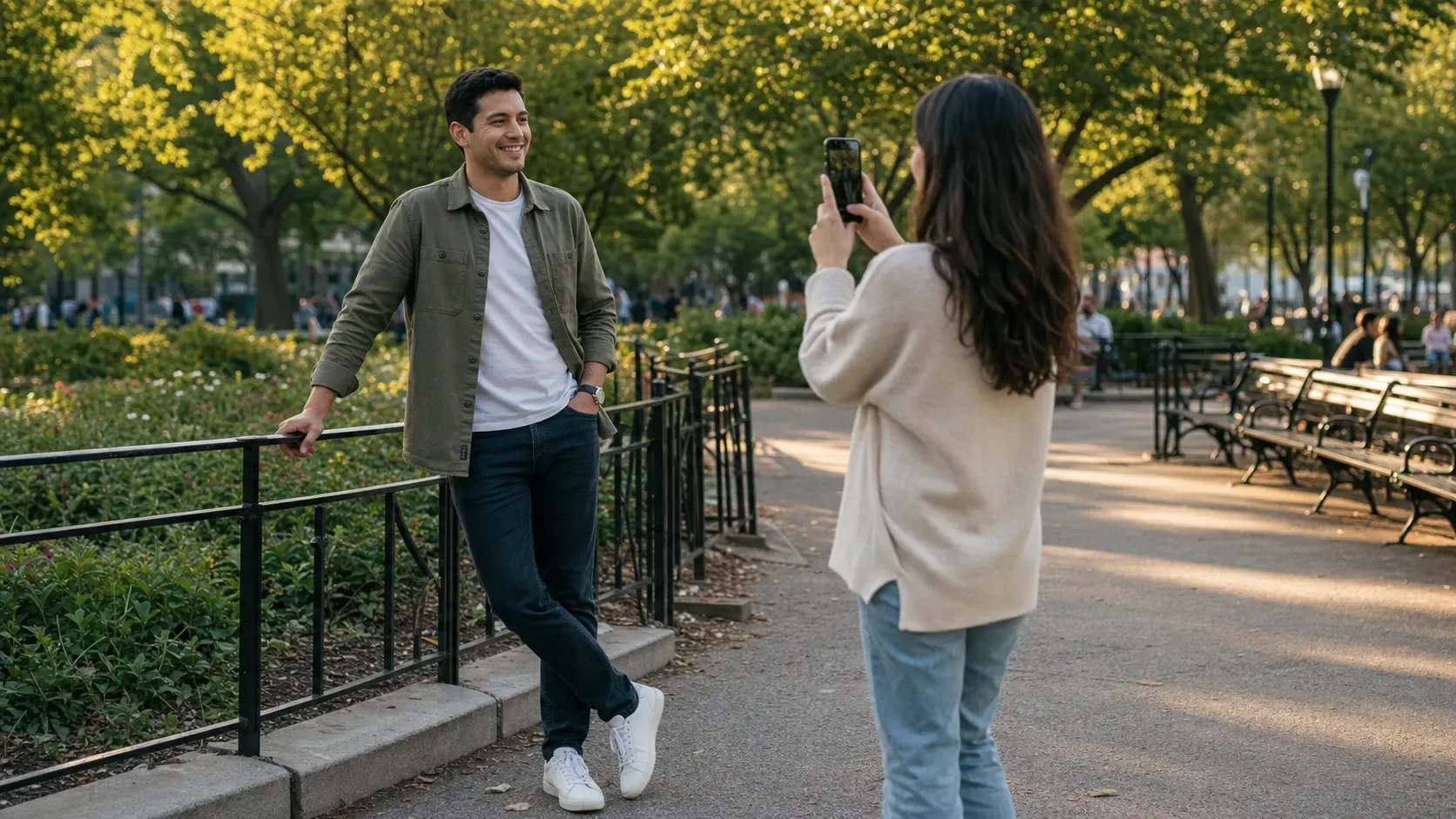
Most people can spot a strange-looking image even when they cannot explain why. It might be a hand that looks wrong, a reflection that does not follow the scene, skin that has been blurred into plastic, or lighting that lands on the face from two directions at once. These are not small details on a dating profile. They change the feeling of the image.
Use AI as a photo editor with range, not as an identity replacement
The better use case is a refresh. Maybe you have a good selfie but no clean main photo. Maybe your pictures all come from the same birthday party. Maybe you need a warmer setting that matches the way you actually spend time. In those cases, a tool can give you options you can judge with a clear head.
Start with one clear selfie and test a small number of settings, such as a café, a city street, or a simple studio portrait. The value is not the number of variations. It is having enough versions to reject the artificial ones and keep the few that still look like they belong in your camera roll.
That last part is worth stressing. A generated photo may be useful as one part of a profile, while the rest should remain ordinary, recent images of your real routines. If every photo has a different face, body shape, haircut, or level of polish, the profile starts to feel assembled rather than personal. A good result should sit comfortably beside your existing pictures.
Do a slow, practical review before adding anything to an app:
- Zoom in on hands, jewellery, glasses, teeth, and the edge of the hair.
- Check that the background fits the clothes, weather, and time of day.
- Make sure the crop leaves enough space around the face for an app’s interface.
- Keep the final edit close to photos you would be comfortable sharing with friends.
The review takes a minute and saves a lot of awkwardness. People respond better to a picture that feels relaxed than one that tries very hard to prove it is perfect.
Keep the promise of the profile small and honest
There is no prize for making a stranger believe you have a more glamorous life than you do. The point of a dating profile is to get to a conversation, then a date, with as little unnecessary friction as possible. Images that are close to reality do that job better because they lower the chance of a disappointing first impression.
Use AI to fix the practical problem: better light, a clearer crop, a setting that does not look like your bedroom wall. Keep your face, your current appearance, and your general style intact. If the final image makes someone curious to meet the same person who will walk into the café, it has done enough.