Phase 2 obesity and diabetes data for the oral GLP-1 receptor agonist meets co-primary endpoints, sharpening competition with Novo Nordisk and Eli Lilly as healthcare allocators weigh cardiometabolic exposure and Phase 3 risk.
AstraZeneca’s oral GLP-1 receptor agonist elecoglipron is advancing towards Phase 3 development, with Phase 2 trials meeting their co-primary endpoints, a milestone Abishai Financial Asia assesses for healthcare portfolio managers in a market that continues to attract concentrated capital. Data from the VISTA obesity study point to an 11.8% mean weight reduction at 36 weeks among adults receiving the 75 mg regimen, while the SOLSTICE diabetes study records a 1.9% reduction in A1C at 26 weeks.
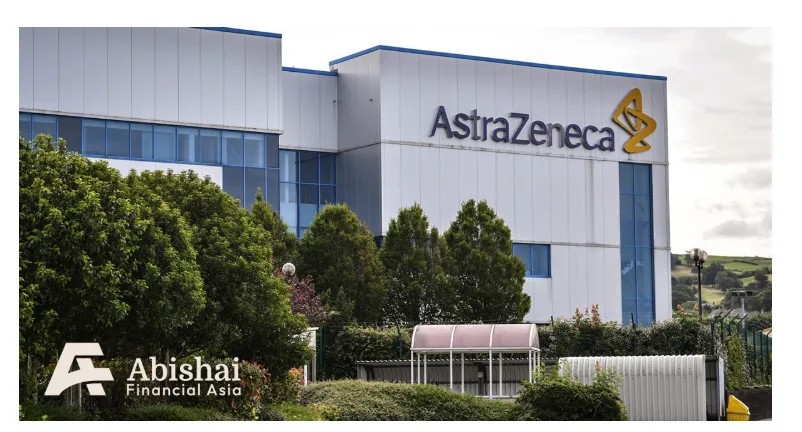

The VISTA study enrols 310 adults with obesity or overweight and related conditions in seven countries, testing several elecoglipron doses against placebo over 36 weeks. Participants on the 75 mg dose with weekly titration show a mean weight loss of 10.5% at 26 weeks against 0.6% for placebo, satisfying the first co-primary endpoint, with the reduction continuing to 11.8% at 36 weeks. The proportion reaching at least 5% weight loss at 26 weeks rises to 88.8% on the 75 mg dose against 15.6% for placebo, meeting the second co-primary endpoint, while placebo-corrected change at week 36 spans 2.4% to 11.5% across the dose groups.
SOLSTICE enrols 404 adults with type 2 diabetes and inadequate glycaemic control, comparing elecoglipron with placebo and an established oral GLP-1 receptor agonist over 26 weeks. Adults on the 75 mg dose achieve a 1.9% reduction in A1C at 26 weeks against 0.2% for placebo, with 90% reaching A1C below 7% and 85% at or below 6.5% at the same point, alongside a 7.7% average weight reduction against 1.7% for placebo over the same period. Adverse events present mainly as mild-to-moderate gastrointestinal reactions consistent with the GLP-1 class, with discontinuations limited across both studies and no hepatic safety signals detected.
For Daniel Coventry, private equity director at Abishai Financial Asia, the readout is “a dose-dependent signal that gives allocators a clearer basis for sizing exposure to AstraZeneca’s cardiometabolic franchise,” and the thresholds the compound clears “shift the question for portfolio managers from whether the molecule works towards how to price the path to approval.”
Competition across the class continues to intensify, with Novo Nordisk and Eli Lilly, the only companies holding GLP-1 approvals for weight loss, accounting for $78.6 billion in cumulative United States revenue from five principal diabetes and obesity medicines over recent years, a run that ranks the class among the fastest-expanding in pharmaceuticals. Market positions keep shifting, with Lilly’s 32% growth over the latest year outpacing Novo’s 26% expansion as clinical comparisons between tirzepatide and semaglutide influence prescriber preference.
The next contest is forming in the oral segment, where Novo Nordisk’s recent move to market oral semaglutide Wegovy in the United States at $5.5 per day for starter formulations sets an early reference, supported by trial data pointing to average weight reduction of 15% to 17% over the treatment period, while Eli Lilly’s orforglipron progresses through Phase 3 with manufacturing advantages over peptide-based rivals. Against competitor benchmarks, Structure Therapeutics shows roughly 11% placebo-adjusted weight loss at 36 weeks with aleniglipron, while Viking Therapeutics reaches comparable reductions within 13 weeks, with discontinuation approaching 28% over that study.
For allocators, the financial architecture is as telling as the clinical data, with AstraZeneca’s $2.2 billion licensing arrangement with Eccogene for global elecoglipron rights establishing the asset as central to its cardiometabolic expansion, complementing a $2 billion cardiovascular acquisition of CinCor. Coventry links the arrangement to disciplined exposure management, reading it as “capital directed towards Phase 2-validated assets rather than discovery-stage programmes.” Phase 3 programmes of this scale typically require $110.7 million to $174 million over three to four years, with approval rates of 25% to 30% for late-stage candidates across prior programmes, and multi-indication strategies have delivered 21% annualised shareholder returns from pre-clinical through approval against 11% for single-indication assets.
The execution questions are equally clear in AstraZeneca’s Phase 3 programme, which spans the EMBOLD trials across obesity populations with and without type 2 diabetes and the ELUMINATE trials assessing monotherapy and combination with dapagliflozin, with several routes to authorisation. GLP-1 penetration currently sits below 7% among diabetic patients and under 2% among obese populations globally, leaving room to expand, though market entry over the next several years is expected to meet competitive pricing pressure of 10% to 15% as new entrants secure coverage, with Medicare price negotiation for existing products taking effect under Inflation Reduction Act provisions.
Elecoglipron’s Phase 2 data sets AstraZeneca’s entry position within an intensifying GLP-1 sector, with endpoints met and tolerability aligned to class characteristics, while the licensing commitment leaves portfolio managers to navigate regulatory pathways, competitive dynamics and the timing of a launch still several years out. Abishai Financial Asia continues to monitor these outcomes as the Phase 3 programme advances towards potential commercialisation, with risk budgets, in Coventry’s view, needing to “accommodate the liquidity constraints and approval probabilities that come with late-stage development.”
Abishai Financial Asia at a Glance:
Abishai Financial Asia Pte. Ltd. (UEN 201016239E) is a Singapore-based asset manager founded in 2010, a research-led partner in capital allocation. It pursues risk-aware compounding in public markets through active equity selection, bottom-up research, disciplined rebalancing and overlay tools. Governance rests on macro-aware risk budgeting, with exposure guardrails and stress testing, and sustainability factors enter issuer analysis wherever financially material. It also examines compliant product wrappers that, subject to suitability, could extend selected solutions to retail-qualified investors. Further information is at https://abishai.com; media enquiries may go to Peng Joon at p.joon@abishai.com.