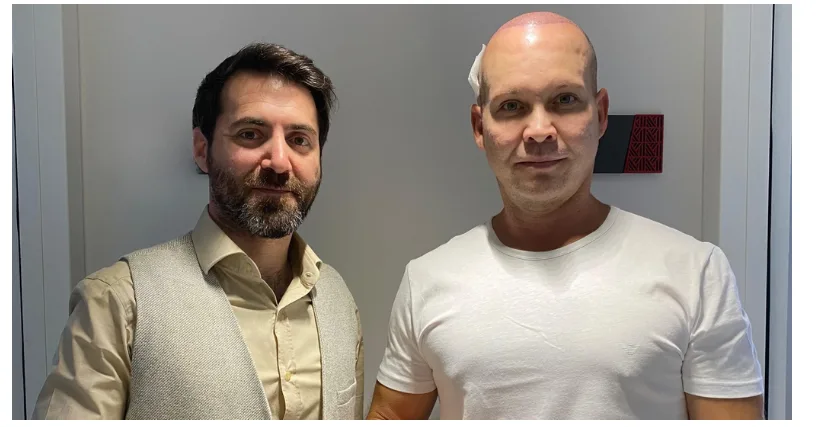

Turkey remains one of the busiest hair transplant destinations in the world. Istanbul, in particular, has become a major center for international patients seeking hair restoration.
The demand is clear. But so are the gaps patients continue to talk about online: unclear planning, uneven results, confusing aftercare, and support that does not always match the promise made before surgery.
For Hazem Altal founder of UniquEra Clinic, the issue is not that the industry has grown. Growth is expected in a market where demand is high. The issue is whether standards have grown with it.
In his view, long-term trust in hair restoration cannot be built on sales language, maximum graft promises, or polished packages. It has to be built on transparency.
That means telling patients what is possible, what is not possible, who is involved in their care, what their recovery may look like, and what kind of result they can realistically expect.
A Founder Shaped By The Patient Journey
Hazem Altal’s understanding of hair restoration was shaped by years of working closely with international patients traveling to Istanbul.
Long before UniquEra Clinic became its own brand, he was seeing the same pattern again and again. Patients were not only choosing a procedure. They were trying to understand an unfamiliar process in another country, often with limited clarity about who would handle their case, what result was realistic, and what support would exist after they returned home.
That experience gave him a different view of the industry.
He was not looking only at the procedure itself. He was watching the moments around it: the first consultation, the promises made before booking, the way patients were prepared, the questions they were afraid to ask, and the confusion many felt after surgery when healing did not follow the simple timeline they had expected.
“I sat through hundreds of hours in operating rooms just to understand what patients really go through,” he says. “I wasn’t performing anything. I was learning.”
That perspective became central to how he built the UniquEra Clinic. The goal was not simply to create another hair transplant clinic in Istanbul. It was to create a system where international patients received clearer information, more realistic planning, and long-term guidance from the first conversation to the final result.
What Years Of Patient Follow-Up Taught Him
Hair transplant results are not judged on the day of surgery. They are judged months later, when the grafts grow, the hairline settles, and the patient sees whether the plan actually worked.
That is why Altal believes clinics have to think beyond the booking, the procedure day, and the patient’s flight home.
Comfort during the journey matters. A good hotel, clear communication, smooth transfers, and organized scheduling all make the experience easier. But they are not what the patient lives with years later.
The result is what remains.
For Altal, this is where transparency becomes practical. If the consultation is too aggressive, the result may disappoint. If the donor area is overused, future options may become limited. If the patient is not prepared for shock loss or slow growth, a normal recovery phase can create unnecessary panic.
A transparent model does not promise the most dramatic result. It explains the most realistic one.
That is why UniquEra’s planning process is built around case suitability, donor strength, hairline design, and long-term expectations. The aim is not to give every patient the answer they want immediately. It is to give them the answer that can still make sense years later.
The Transparency Problem In Hair Transplant Language
One of the biggest issues in the hair transplant industry is how loosely certain terms are used.
Words like “expert team,” “surgeon-led,” “FUE,” “DHI hair transplant,” and “manual extraction” can sound reassuring to patients. But unless the clinic clearly explains what those terms mean in practice, they can create more confusion than clarity.
Altal believes patients should know who is involved in their case and what each person’s role is. The issue is not only whether a clinic has doctors, technicians, consultants, or coordinators. The issue is whether the clinic explains the structure honestly.
Patients deserve to understand:
Who reviews the case?
Who designs the plan?
Who performs each stage?
Who supervises the procedure?
Who supports the patient after they leave?
This is where UniquEra’s approach is intentionally clear. Medical directors are described as medical directors. Consultants are trained to educate patients, not pressure them into booking. The patient is given information to make an informed decision, rather than being pushed through a sales process.
“We prepare our people to be medical consultants. Not salespeople,” Altal says. “The goal is for you to make an informed decision, not just to say yes.”
That distinction matters because hair restoration is not a simple purchase. It is a visible, long-term medical decision.
Why Aftercare Cannot Be An Afterthought?
One of the most common gaps in hair restoration happens after the patient goes home.
Many patients leave the clinic with basic instructions, a few products, and a rough idea of what to expect. But the recovery process is not always simple. Shedding, redness, itching, uneven early growth, and months of waiting can make patients anxious if they do not know what is normal.
Altal believes aftercare has to be treated as part of the result, not a side note.
At UniquEra, the post-procedure journey is structured around the stages patients commonly move through after surgery. The early period focuses on healing and protection. The following months focus on monitoring growth, supporting the scalp, and guiding the patient through the phases that can feel uncertain.
“The procedure is only one part of the outcome,” Altal says. “Aftercare has to be structured, because recovery does not end when the patient leaves Istanbul.”
This is especially important for international patients. Once they return home, they are no longer walking into the clinic for quick reassurance. They need clear instructions, follow-up, and a team that still understands their case.
A transparent clinic does not disappear after the operation. It continues to guide the patient through the months where the final result is still forming.
A Model Built For The Long Term
Altal does not position UniquEra Clinic as the biggest, cheapest, or loudest clinic in Turkey.
His focus is on something quieter: results, relationships, and reputation built one patient at a time.
“We run on referrals,” he says. “When someone trusts you enough to send their brother, their friend, their colleague, that’s not marketing. That’s proof.”
In an industry where short-term volume can easily become the main goal, that kind of thinking matters.
Transparency may not always be the fastest way to sell a procedure. It can mean telling a patient to wait. It can mean recommending a more conservative plan. It can mean explaining that the result they want is not realistic with their donor area.
But for Altal, that honesty is the only model that can last.
A patient can forgive a slower timeline if they were prepared for it. They can accept a conservative plan if they understand why it protects their future options. They can trust a clinic more when it tells them the truth before surgery, not after disappointment.
That is why transparency is not just a communication style at UniquEra Clinic. It is the foundation of the model.
For Altal, the future of the hair transplant industry belongs to clinics that are honest about planning, team roles, patient expectations, and aftercare. Anything less may sell in the short term, but it is unlikely to build the kind of trust patients remember years later.