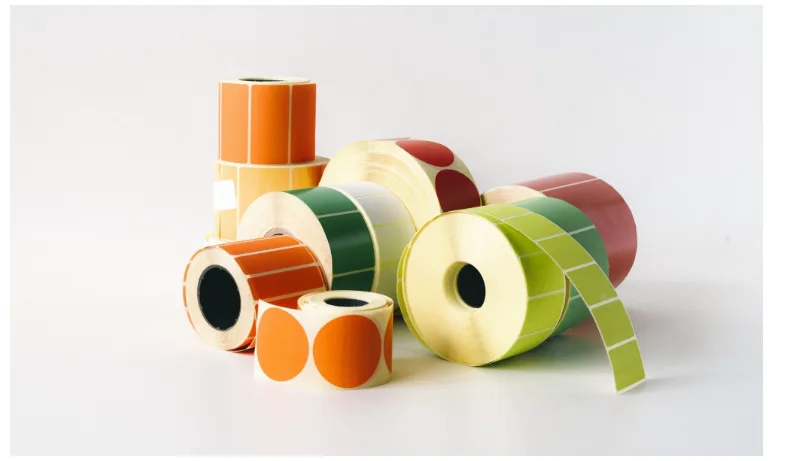

Packaging once served as a system to protect and identify a product, but now it can integrate a system of communication between a product, a company and a consumer in real time, globally. Smart label materials are contacting the packaging industry and changing its functionality from the inside.
Packaging was once a tag that stuck customers to a product. Now, it is evolving into a system that digitally stores tags and interacts with a product for the entirety of its lifecycle. This change is revolutionary and is being felt throughout the packaging industry.
What is the Future of Smart Label Materials?
RFID chips, NFC tags, QR codes and sensors are building the future of smart label materials. These modular, smart labels are evolving the act of printing product details. They are the digital equivalent of a product fingerprint.
Unlike standard printed labels, smart labels enable products to retain a unique digital identity, be tracked and even monitored for a variety of conditions.
Smart label materials have made packaging static to interactive, responsive and intelligent.
Revolutionizing the Supply Chain
Every product’s journey is long and complex and consists of a variety of industries and services ranging from manufacturing to retail. Smart Label materials are changing it all.
Businesses now have access to shipment information in real time after every scan. Scans provide shipment location details as well as shipment condition and handling history. Now shipment mysteries are solved with fully traceable digital shipment assets.
Benefits from this technology include:
- Shipment tracking in real time no matter where in the world it is
- Delays are minimized because the shipment is always visible
- Suppliers and logistics teams can work together more efficiently.
- Damaged goods and goods that are lost in shipments can now be identified with ease
There is now more visibility within a supply chain and a positive impact on supply chain inefficiency.
The Rise of Intelligent Packaging Security
Certain industries are especially vulnerable to counterfeit goods, such as fake pharmaceuticals, that jeopardize health and safety and damage good will. Counterfeit goods also damage brand reputation.
Smart Labels are security-enhanced packaging that have codes that are embedded for authentication and are virtually impossible to replicate. These codes can be verified in an instant with a smartphone.
The positive impacts of Smart Labels on packaging are:
- Authenticating products in real time at a point of purchase
- Counterfeiting goods in a global market is more difficult
- Brand loyalty and customer trust are increased
- Fortified security with a Blockchain record that cannot be altered
Traditional inventory systems rely on periodic verification and scanning of barcodes to update inventory and require staff for constant supervision. Automation and smart label technology allow for a live inventory with every item monitored and stocked.
More benefits include:
- Stock levels automatically update and sync.
- Human error in stock counts is virtually eliminated.
- Speed of warehouse operations and shipments increases.
- Patterns of stock usage improve forecasting.
Businesses can now operate with greater accuracy and reduced strain.
Packages That Speak to Customers
Smart labels are now changing packaging into an experience. Instead of being dependent upon printed information, consumers now have access to an entire layer of information in the digital realm.
Smart labels can now provide:
- Stories of the origins of a product and how it was made
- Instructions and guidelines of how to use the product and its features
- Loyalty rewards and special offers
- Portals and customer support to engage the brand
Each package is now a direct line of communication to the customer and allows the brand to have a greater level of trust and engagement.
Intelligence with a Purpose: Sustainability
The packaging industry is aiming to push for further sustainability, and in a number of ways, smart labeling is helping to push for further sustainability.
When printed documentation is replaced with digital information, a substantial amount of paper and printing are wasted. Smart labeling also aids in reducing the waste.
Some of its key sustainable benefits include:
- Improved waste from printing and paper
- Deliveries that use less energy and emit less
- Label materials and adhesives that are sustainable
- Resource management of the supply chain is made easier
When looking for smart labeling, sustainability is a key factor.
A Future of Smart Labeling with Technology Integration
The true strength of smart label material is found in its integration with modern digital systems such as the IoT, cloud technology, and blockchain technology.
Smart labels in IoT systems are a means of tracking real-time data throughout a supply chain network. Smart labels are particularly valuable for tracking temperature sensitive and hazardous goods.
The system’s improvements helped build an increasingly integrated packaging system, including features like:
- The ability to determine goods’ temperature and humidity levels even after they’ve left the system
- Automated notifications to packaging system users regarding movement, storage, and other supply chain disruptions
- Cloud storage, allowing supply chain personnel to access real-time data regardless of work location
- Supply chain integrity guaranteed by blockchain verification
An Underlying Cost Benefit
While smart labels are costly to implement, they are a worthwhile investment that improves a business’s bottom line.
Businesses benefit from the smart label system in the following ways:
- Less need for staff, particularly for those in an operations role, and a reduction in operational errors
- Decreased goods loss and damage
- Improved logistics and inventory turnover
- More precise tracking and monitoring, resulting in decreased recall costs
After some time, the value gained from the smart label system outweighs the initial system investment.
Challenges in Adoption
Despite its benefits, adoption of smart label technology still faces several challenges.
Common barriers include:
- High initial setup and infrastructure costs
- Need for technical training and system integration
- Limited adoption in small and medium businesses
- Data security and cybersecurity concerns
However, as technology becomes more affordable, these barriers are gradually decreasing.
The Future: When Packaging Becomes Fully Intelligent
The future of smart label material is moving toward fully autonomous and predictive packaging systems. Artificial intelligence will allow packaging not just to store data, but to analyze and act on it.
Future possibilities include:
- Labels that predict stock shortages before they happen
- Automatic restocking alerts for retailers
- Real-time quality monitoring during transit
- Fully AI-driven supply chain optimization
As adoption grows, smart labels are expected to become a standard feature in global packaging systems.
Final Thoughts
Smart labels have been the first major improvement in packaging for many years. Packaging is now highly sophisticated, making it possible to identify, track, and communicate the status of individual products anywhere in the world.
Smart packaging provides supply chain communication, product protection, and even interaction with retail customers in the store. The packaging world has entered into a new reality where all packaging is smart and provides immediate access to data.
Smart labels become the new global packaging standard simultaneously.