A practical 2026 look at smaller kitchen and bathroom upgrades that can make everyday water use feel a bit more considered.
Most homes waste a little water without anyone really noticing. Not in a dramatic way. It is more the everyday stuff: a tap left running while rinsing plates, a bathroom mixer that splashes everywhere, or a fitting that is awkward enough that people use more water than they need to.
In Ireland, where plenty of houses have older plumbing mixed with newer extensions and renovated rooms, the answer is not always a full refit. In fact, for many households in 2026, the more realistic option is to improve the small things first.
That might mean changing how the kitchen sink is used, choosing better fittings when something needs replacing, or simply paying more attention to the parts of the home where water is used most often.
Start With the Rooms That Work the Hardest
The kitchen and bathroom do most of the heavy lifting in a home. They are used first thing in the morning, last thing at night, and dozens of times in between.
That is why small changes in these rooms can have a bigger effect than people expect. A tap that gives better control, reaches the right part of the sink, or stops splashing around the basin can make daily routines easier while also encouraging less wasteful use.
For homeowners comparing bathroom and kitchen mixer taps, the most useful question is not just what looks best. It is how the fitting will behave in real life, with the basin, sink and plumbing already in the house.
Bathrooms: Control Matters More Than People Think
A bathroom tap that is too tall for the basin can splash water across the counter. A spout that is too short can push water against the back edge of the bowl. Neither problem seems huge on day one, but over time it becomes annoying, and it often means more wiping, more rinsing, and more water used than necessary.
That is why proportion matters. In a compact ensuite or downstairs loo, the right tap should sit neatly on the basin and let water fall into the usable centre of the bowl. It should not feel like it was borrowed from a much larger bathroom.
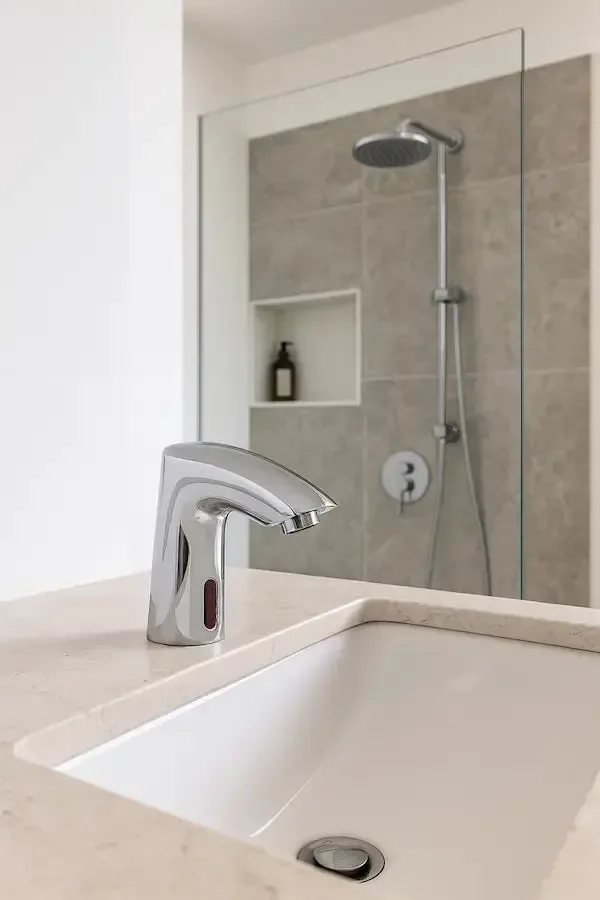
This is where water-conscious bathroom tap upgrades make sense. The phrase sounds technical, but the idea is fairly simple: choose fittings that give better control, suit the basin properly, and do not encourage splashing or overuse.

Kitchens: The Sink Area Deserves More Attention
The kitchen sink is another place where small decisions add up. Rinsing vegetables, washing pans, filling jugs and cleaning down the sink all use water in different ways. A fixed spout can work perfectly well, but it is not always the most flexible choice.
For busier kitchens, spray kitchen taps can be a practical improvement. A pull-out or spray function lets people direct water where it is needed rather than letting it run for longer while trying to angle a pan or rinse the corners of the sink.
It is not about turning every kitchen into a restaurant setup. It is just about making the sink easier to use. When a fitting works naturally, people tend to waste less without making a big effort.
Small Changes Beat Wasteful Renovations
There is another point that gets missed in conversations about sustainability: replacing everything is not always the greener option.
If a bathroom or kitchen is basically sound, keeping the layout and improving the fittings can be a more sensible route. It avoids unnecessary waste, keeps disruption down, and usually costs far less than starting from scratch.
A tap replacement, a better waste fitting, a repaired leak, or a more suitable mixer can all improve how a room works without sending half the space to a skip.
That matters in Irish homes, especially where people are trying to balance comfort, cost and practical upgrades rather than chasing a perfect showroom finish.
What to Check Before Replacing a Tap
Before buying anything, it is worth checking a few plain, practical details:
- Water pressure: Older homes and gravity-fed systems may need taps that work well at lower pressure.
- Spout reach: The water should land comfortably in the basin or sink, not too far back or too close to the edge.
- Tap holes: Replacing like-for-like is usually easier and keeps installation simpler.
- Daily use: Think about who uses the room: children, guests, older relatives, or a busy family all have different needs.
- Cleaning: A fitting that is awkward to wipe down may become a nuisance, no matter how good it looked online.
A More Realistic Way to Use Water Better
Most people are not going to redesign their homes around water use, and they probably do not need to. The better approach is usually quieter than that.
Fix what leaks. Replace what wastes water or causes constant splashing. Choose fittings that suit the size of the room. Make the kitchen sink easier to use. Pick taps that give proper control rather than just looking good in a photo.
These are not dramatic changes, but they are the sort of changes people can actually live with.
Irish suppliers such as IrishBath.ie are part of that more practical shift, offering fittings that help homeowners make smaller, more considered upgrades rather than treating every tired room as a full renovation project.
Final Thought
Cutting water waste at home does not always need new pipework, new tiles, or a full redesign.
Sometimes it starts with the fitting you use several times a day. If the tap works better, reaches properly, controls flow well and suits the room, it can make everyday water use feel easier and a little less wasteful.
For many Irish homes in 2026, that kind of small, sensible improvement is probably the most realistic place to start.