Fall wedding flowers can easily become too heavy. Burgundy, burnt orange, terracotta, gold, and deep greenery all feel seasonal, but when every floral piece uses the same strong colors, the whole wedding can start to look dark or crowded. A good fall floral plan is not about adding every autumn shade at once. It is about deciding where to use rich color and where to soften the look with cream, beige, greenery, or lighter textures.
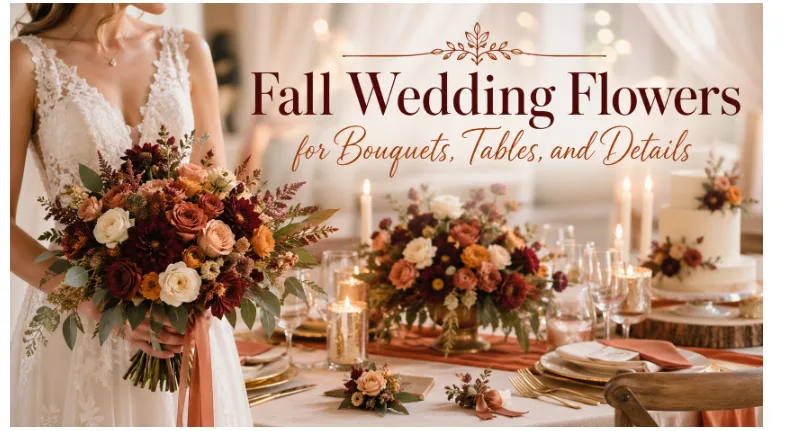

That is why couples should plan fall wedding flowers by palette and category, not by a single bouquet photo. The bridal bouquet may carry the richest colors, while bridesmaid flowers, boutonnieres, wrist corsages, cake flowers, and table pieces can repeat smaller details in a lighter way. This keeps the fall mood visible without making every arrangement fight for attention.
Start with a Fall Palette, Not a Single Flower
Before choosing individual flowers, decide how the fall palette should feel. Some couples want a warm rustic look with burnt orange, burgundy, and dried textures. Others prefer a softer autumn style built around cream, beige, sage, champagne, and muted terracotta.
A useful approach is to choose three layers: a main color, a supporting color, and a balancing neutral. Burgundy or burnt orange can be the main color. Sage, rust, or dusty rose can support it. Cream, ivory, beige, or pale greenery can keep the palette from feeling too heavy. This gives every floral piece a clear role instead of making each arrangement compete for attention.
Choose the Bridal Bouquet as the Visual Anchor
The bridal bouquet usually sets the tone for the rest of the wedding flowers. It appears in portraits, ceremony photos, detail shots, and reception photos, so it can carry more depth than the smaller floral pieces.
For a fall wedding, the bouquet can include richer shades such as terracotta, rust, burgundy, golden yellow, or mocha. But it still needs contrast. Cream flowers, soft greenery, or beige accents can give the bouquet space to breathe. Without those lighter tones, even a beautiful fall bouquet can look flat in photos.
Once the bouquet is chosen, use it as a guide rather than a template. The other flowers should echo the bouquet, not copy it exactly.
Keep Bridesmaid Flowers Softer Than the Bridal Bouquet
Bridesmaid bouquets should complement the bridal bouquet without pulling attention away from it. If the bride’s bouquet uses deep burgundy and burnt orange, the bridesmaid flowers might use more cream, blush, sage, or beige, with only a small touch of the deeper colors.
This approach also helps with dresses. Autumn bridesmaid dresses often come in warm shades like rust, copper, champagne, or dusty rose. Flowers that are too similar to the dress can disappear, while flowers that are too bold can feel distracting. Softer supporting colors usually photograph better and keep the wedding party from looking visually heavy.
Use Small Fall Wedding Flowers to Carry the Palette
Smaller floral pieces may be subtle, but they still affect the overall look. Boutonnieres, wrist corsages, and cake flowers often appear in close-up photos, so they should echo the same fall palette without repeating the bridal bouquet exactly.
Couples who want those details to feel connected can browse Rinlong fall wedding flowers to compare bouquets, boutonnieres, wrist corsages, cake flowers, and other fall accents in related colors and textures. Small pieces do not need to be dramatic; they simply need to repeat the right shade, greenery, or texture.
A boutonniere may only need one rust accent and a bit of greenery. A wrist corsage may look best with softer tones so it does not overpower the dress. Cake flowers can carry the same palette in a cleaner, lighter way.
Plan Tables and Ceremony Decor with Restraint
Fall tables can become crowded quickly if every centerpiece is full of dark flowers, heavy greenery, candles, wood textures, and gold accents. Instead, decide what should be the focus. If the flowers are rich, keep the linens, candles, and place settings more understated. If the table design already includes dark napkins, wood chargers, or warm lighting, the flowers may need more cream or greenery.
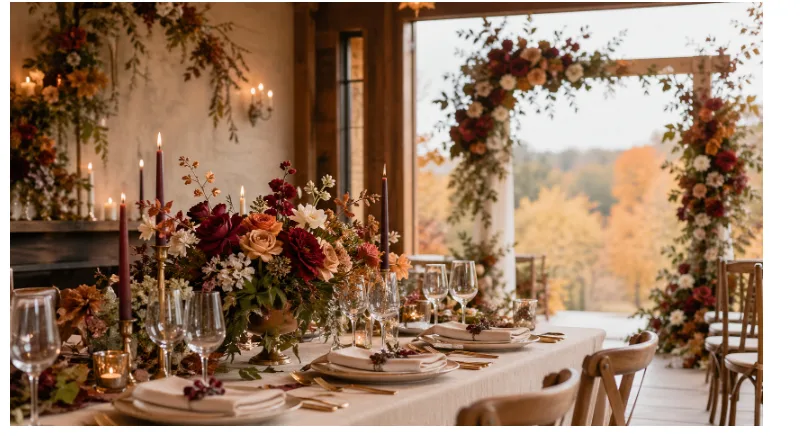

The same rule applies to ceremony decor. A floral arch or aisle arrangement does not need to use every color from the bouquet. It can repeat the main fall tone, then add softer filler flowers to keep the space open. The ceremony and reception should feel related, not copied from the same arrangement.
Compare Rinlong Fall Flowers for Wedding by Category
Before ordering, couples can review Rinlong fall flowers for wedding by category instead of choosing one bouquet first and trying to match every other detail later. The bridal bouquet, bridesmaid flowers, boutonnieres, wrist corsages, cake flowers, and table pieces should share a clear palette, even when they use different flowers.
A simple final check is to lay out the full floral list by role. Which pieces carry the strongest fall color? Which pieces soften the palette? Which pieces will appear together in photos? If every category has a purpose, the final look will look planned rather than pieced together.
Make the Final Look Seasonal, Not Heavy
Fall wedding flowers should feel warm and textured, but they do not have to be dark or overloaded. The most balanced designs use autumn colors with control: deep tones for focus, lighter shades for contrast, and greenery or texture to bring everything together.
When bouquets, tables, and small floral details are planned together, the wedding feels cohesive from the first look to the reception. That is what makes fall flowers work: not just the colors themselves, but where each color is used.