If you’ve ever struggled to squeeze an effective workout into a packed schedule, you’re far from alone. Between demanding careers, family responsibilities, and the sheer exhaustion of daily life, finding time to exercise consistently remains one of the biggest barriers to weight loss. Traditional gym sessions can eat up an hour or more, and without expert guidance, many people plateau long before reaching their goals. But what if technology could compress your workout time while amplifying results? Enter EMS—Electrical Muscle Stimulation—and AI-powered coaching, two innovations that are reshaping how we approach fat loss and fitness. EMS suits activate muscles with targeted electrical impulses, dramatically increasing workout intensity in a fraction of the usual time. Pair that with an AI coach that learns your body, adapts your training plan in real time, and keeps you accountable, and you have a powerful combination built for the modern lifestyle. In this article, we’ll explore how EMS and AI coaching work individually, why they’re even more effective together, and the practical steps you can take to harness both for efficient, sustainable weight loss.
What is EMS Technology and How It Promotes Weight Loss
Electrical Muscle Stimulation, or EMS, works by delivering low-frequency electrical impulses through electrodes placed directly on the skin or embedded in a wearable suit. These impulses mimic the signals your central nervous system sends to contract muscles, but with one critical difference—they can activate up to 90% of muscle fibers simultaneously, far more than voluntary exercise alone typically achieves. During a conventional squat, for instance, your body recruits muscle groups sequentially. An EMS-enhanced squat forces nearly all targeted fibers to fire at once, dramatically increasing the workload your muscles handle in every single repetition.
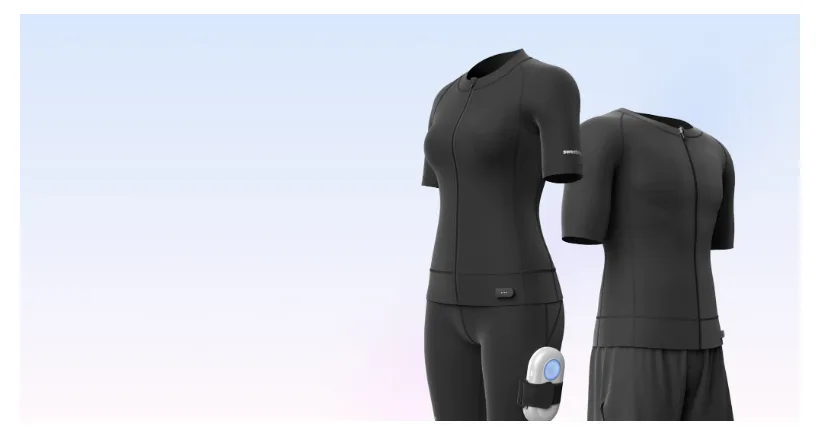

This heightened activation translates directly into greater calorie expenditure. When more muscle tissue is engaged, your body burns more energy both during and after the session, thanks to a prolonged afterburn effect known as excess post-exercise oxygen consumption (EPOC). Over time, consistent EMS training also builds lean muscle mass, which elevates your resting metabolic rate—meaning you burn more calories even while sitting at your desk. A full-body muscle stimulation suit amplifies these effects further by targeting multiple major muscle groups simultaneously, turning a 20-minute session into the metabolic equivalent of a much longer traditional workout. For anyone focused on weight loss, this combination of intensified strength training, accelerated calorie burn, and metabolic improvement makes using EMS to lose weight a uniquely efficient approach.
The Evolution of Fitness: AI Coaching and Wearable Technology
An AI coach is essentially a smart training partner that lives inside your phone or wearable device, using machine learning algorithms to build and continuously refine a fitness plan tailored specifically to you. Unlike a static program downloaded from a website, an AI coach analyzes your performance data—heart rate, calories burned, workout completion rates, recovery patterns—and adjusts your next session accordingly. If you breezed through Tuesday’s routine, Thursday’s plan gets harder. If your sleep tracker flags poor recovery, the system dials back intensity to prevent overtraining. This responsive loop means your program evolves as you do, eliminating the guesswork that causes so many people to stall.
Wearable fitness technology supercharges this process by feeding the AI a constant stream of biometric data. Modern sensors track everything from muscle activation levels and oxygen saturation to daily step counts and stress markers, giving the algorithm a comprehensive picture of your physical state at any moment. Beyond programming, AI coaches also serve as accountability partners—sending timely reminders, celebrating milestones, and offering form corrections through motion-sensing feedback. For people who can’t afford a personal trainer or prefer working out at home, this blend of real-time data tracking and adaptive intelligence delivers a level of personalized guidance that was once reserved for elite athletes.
Combining EMS and AI for Maximally Efficient Workouts
When EMS technology and AI coaching operate in tandem, they create a feedback-driven training system that’s greater than the sum of its parts. The AI coach monitors your biometric data in real time—tracking heart rate, muscle activation intensity, and fatigue markers—while the EMS suit delivers precisely calibrated impulses to the muscle groups that need the most work. Instead of following a generic program, the system identifies weak points and imbalances on the fly, redistributing stimulation to ensure every second of your session counts. This closed-loop approach means your body never gets comfortable enough to plateau, because the difficulty curve adapts the moment your performance shifts.
For busy professionals and parents who measure free time in minutes rather than hours, this synergy is transformative. A typical combined session lasts just 20 to 25 minutes yet delivers training volume comparable to a conventional 60- to 90-minute gym workout. An optimized session might begin with a five-minute AI-guided warm-up using low-level EMS pulses to prime the nervous system, followed by 15 minutes of compound movements—squats, lunges, presses—performed at moderate EMS intensity while the AI adjusts impulse strength between sets based on your real-time output. The final five minutes shift to a metabolic finisher: bodyweight circuits at elevated stimulation levels designed to spike calorie burn and maximize EPOC. Because the AI logs every session, your next workout automatically builds on the last, progressively increasing load or volume in the areas where you’re ready and scaling back where recovery data suggests caution. The result is a training plan that stays challenging, time-efficient, and aligned with your weight-loss trajectory week after week.
Practical Steps to Implement EMS and AI Coaching for Weight Loss
Turning the promise of EMS and AI coaching into real-world results starts with choosing equipment and software that work well together. Look for an EMS suit that offers full-body electrode coverage and wireless connectivity, since you’ll want it to communicate seamlessly with your AI coaching platform. Brands like sweetmyo have been developing integrated EMS suit and AI coaching ecosystems designed to streamline this setup. On the software side, prioritize an AI coach that accepts biometric inputs from multiple sources—your EMS suit, a heart rate monitor, a smartwatch—so it can build the most accurate profile of your fitness state. Once you’ve settled on your gear, the next priority is establishing clear, measurable goals. Rather than a vague target like “lose weight,” define specifics: drop a certain number of body-fat percentage points over 12 weeks, or complete three EMS sessions per week consistently for a month. Your AI coach will use these targets to generate a progressive training calendar, but the clearer your inputs, the sharper its recommendations will be.
Safety should guide every decision from day one. Never use EMS if you have a pacemaker, are pregnant, or have been advised against electrical stimulation by a physician. Start at the lowest impulse intensity and increase gradually across your first several sessions, giving your neuromuscular system time to adapt. Hydration matters more than usual because electrically stimulated muscles fatigue faster and generate additional metabolic waste, so aim to drink water before, during, and after every session. To integrate everything smoothly, dedicate your first week to calibration rather than performance—let the AI coach gather baseline data while you learn how different stimulation levels feel across each muscle group. This foundation period pays dividends later because the algorithm will have reliable benchmarks from which to scale your program intelligently.
Getting Started with Your Muscle Stimulation Suit
Before your first session, dampen the suit’s electrode pads lightly with water or apply the recommended conductive spray; dry electrodes deliver uneven impulses and can cause skin irritation. Fit the suit snugly so that every electrode sits flush against the skin—gaps reduce signal transfer and create dead zones where muscles won’t activate properly. Run the built-in impedance check if your suit offers one; this confirms that each electrode zone is making good contact. During your initial workout, keep impulse levels conservative and focus on learning which intensity setting produces a strong but comfortable contraction in each muscle group. After training, rinse or wipe down the electrode areas according to the manufacturer’s care instructions, and hang the suit to air-dry completely before storing it. Proper maintenance prevents bacterial buildup and extends electrode lifespan significantly.
Configuring Your AI Coach for Optimal Results
Open your AI coaching app and complete the onboarding profile thoroughly—input your age, weight, body composition if available, training history, and any injuries or limitations. These data points shape the algorithm’s starting recommendations, so accuracy here prevents sessions that are too easy or dangerously intense. Next, sync all wearable devices: connect your EMS suit, smartwatch, and any additional sensors so the AI receives a unified data stream. Set your preferred training days and available session length; the coach will build around your real schedule rather than an idealized one. After your first two or three workouts, review the AI’s post-session summaries to confirm that perceived effort matches the data—if the app rates a session as moderate but you felt exhausted, adjust your profile inputs or flag the discrepancy so the algorithm recalibrates. This feedback loop is what transforms a generic program into a genuinely personalized weight-loss system.
Benefits, Safety, and Key Considerations
The advantages of pairing EMS with AI coaching extend well beyond saving time. Enhanced muscle recruitment during every session means you develop functional strength faster, while the AI’s progressive overload logic ensures consistent improvement without the trial-and-error of self-programming. Many users also report higher motivation because the AI tracks visible progress—body composition shifts, increased workout capacity, session streaks—turning abstract effort into tangible data you can celebrate. The accountability factor alone helps people stick with routines longer than they would with unsupervised training.
Safety, however, demands respect. EMS is contraindicated for individuals with cardiac pacemakers, epilepsy, or during pregnancy, and anyone with a chronic health condition should consult a physician before starting. Skin under the electrodes should be intact and free of irritation; discontinue use immediately if you experience sharp pain rather than the deep contraction sensation that’s normal. On the AI side, data privacy matters—choose platforms that encrypt biometric information and allow you to control what’s stored or shared. One limitation worth acknowledging is that neither EMS nor AI coaching replaces sound nutrition; calorie balance still governs fat loss, so treat these tools as accelerators layered on top of a sensible eating plan. Finally, manage expectations around adaptation: your body will need two to three weeks before the AI has enough data to fully optimize your programming, and EMS intensity should ramp gradually to avoid excessive muscle soreness early on. Patience during this onboarding phase sets the stage for long-term, injury-free progress.
Start Your EMS and AI-Powered Weight Loss Journey Today
The convergence of EMS technology and AI coaching represents a genuine shift in how we can approach weight loss—not by demanding more hours in the gym, but by making every minute of training dramatically more productive. EMS suits recruit muscle fibers at levels voluntary exercise simply can’t match, driving higher calorie burn and faster metabolic adaptation. AI coaching layers intelligence on top of that intensity, personalizing every session based on real biometric data and evolving your program as your body changes. Together, they eliminate the two obstacles that derail most fitness journeys: lack of time and lack of expert guidance. Of course, these tools work best when paired with balanced nutrition and realistic expectations during the initial calibration period. But once the system learns your body and you learn to trust the process, the efficiency gains are hard to ignore. Whether you’re a busy professional fitting sessions between meetings or a parent training during naptime, EMS and AI coaching put advanced muscle training technology within reach—making consistent, sustainable weight loss not just possible, but genuinely practical. The smartest step you can take today is simply to start, let the technology adapt, and build momentum one 20-minute session at a time.