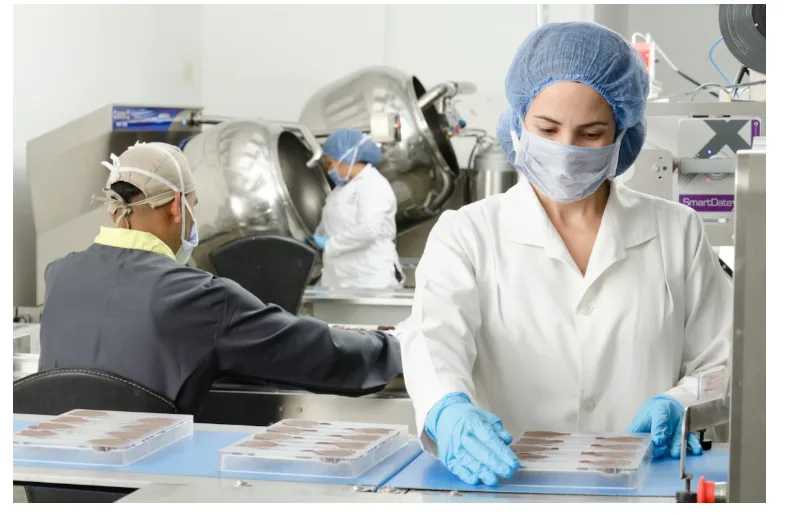

In the food industry, every gram matters. Whether a company produces snacks, bakery products, dairy items, frozen foods, confectionery, ready meals, meat products, seafood, beverages, spices, grains, or packaged dry goods, the final product must reach the customer with the correct weight, consistent quality, and reliable packaging. This is where checkweighers become one of the most important systems on a modern food production line.
A checkweigher is an automatic weighing system that measures products while they move through the production or packaging line. It checks whether each package is within the defined weight range. If a product is underweight or overweight, the system can detect it immediately and remove it from the line before it reaches the customer.
For food manufacturers, this is not only a technical advantage. It directly affects legal compliance, production efficiency, profit margin, customer satisfaction, and brand reputation. A well-designed checkweigher for food and beverages helps companies control weight accuracy without slowing down production.
Accurate Weight Control Protects Both the Customer and the Manufacturer
Food packaging is built on trust. When a customer buys a 500 g product, they expect the package to contain the declared amount. If the product is underweight, the customer may feel misled, and the company may face complaints, retailer problems, or legal risks. If the product is overweight, the customer may be satisfied, but the manufacturer loses money on every package.
This balance is one of the main reasons why checkweighers are essential in food production. They help companies keep each package within the correct tolerance range. Instead of relying only on manual checks or random sampling, manufacturers can inspect every product automatically.
This creates a more stable and controlled process. Underweight packages can be rejected before shipment, while overweight packages can be reduced by improving the filling process. Over time, this creates measurable financial value for the manufacturer.
Reducing Product Giveaway and Protecting Profit Margins
One of the most common hidden costs in the food industry is product giveaway. Many manufacturers intentionally overfill packages to avoid underweight problems. This may seem like a safe strategy, but it can become very expensive at scale.
For example, if a company gives away only a few extra grams in every package, the total loss can become significant when thousands or millions of units are produced. In high-volume food production, small weight differences create large cost differences.
A food checkweigher system helps reduce this problem by giving real-time weight feedback. Operators can see if the filling system is drifting above the target weight and make adjustments before unnecessary product loss continues. This is especially valuable for products with high ingredient costs, such as meat, cheese, seafood, nuts, chocolate, protein products, and premium ready meals.
By reducing giveaway, checkweighers help companies protect margins without compromising customer satisfaction or legal requirements.
Supporting Legal Compliance and Label Accuracy
Food products are sold with declared net weight information. This information must be accurate and consistent. If a product does not match the weight stated on the label, the company may face compliance issues, product returns, and damage to its reputation.
Checkweighers support compliance by verifying every package against defined weight limits. This is particularly important for companies that supply supermarkets, distributors, export markets, and private-label customers. Retailers often have strict quality requirements, and repeated weight errors can create serious commercial problems.
An inline checkweigher for food production helps manufacturers prove that their packaging process is controlled. It also supports internal quality assurance by providing data about rejected products, average weight, variation, and production performance.
Improving Portion Consistency Across Product Categories
Food quality is not only about taste and ingredients. Portion consistency also matters. Customers expect the same experience every time they buy the same product. A ready meal should contain the correct portion. A bakery product should match the expected size. A snack bag should feel consistent. A frozen food package should contain the right amount.
Checkweighers help create this consistency. They are useful across many food categories, including bakery, confectionery, dairy, frozen foods, ready meals, dry foods, powders, pulses, snacks, seafood, poultry, and meat products.
For example, in bakery production, weight control can help ensure that bread, cakes, biscuits, and packaged pastries meet the expected standard. In frozen foods, checkweighers help verify vegetables, seafood, meat products, and prepared meals. In dry foods, they help control rice, flour, spices, sugar, pulses, and similar packaged goods.
This makes food industry checkweighers highly flexible and valuable for different production environments.
Detecting Packaging and Filling Problems Early
A checkweigher does more than confirm the final weight. It can also help detect problems in the packaging or filling process. If packages suddenly become lighter or heavier than expected, this may indicate a filling machine issue, product flow problem, sealing error, missing item, incorrect portioning, or packaging inconsistency.
Early detection is important because small production problems can quickly become large batches of defective products. Without automatic weight control, a company may notice the issue only after manual inspection, customer complaint, or warehouse control. By then, rework and waste may already be high.
With a checkweigher, the production team can react faster. The system identifies off-weight products in real time and prevents defective packages from moving forward. This improves quality control and reduces the risk of large-scale production loss.
Increasing Efficiency on Fast Production Lines
Modern food production lines are designed for speed. Products move quickly through filling, sealing, labeling, weighing, inspection, boxing, and shipment stages. Manual weight control cannot match this speed with the same level of consistency.
A dynamic checkweigher is designed to weigh products while they are moving. This means the line does not need to stop for each product to be checked. Acceptable products continue forward, while incorrect products are rejected automatically.
This is why checkweighers are especially important for medium and high-speed food operations. They allow manufacturers to maintain production speed while improving quality assurance. The result is a more efficient line with fewer interruptions, fewer manual checks, and better process visibility.
Hygiene and Food Safety Requirements
In food production, machine design is extremely important. Equipment must support cleaning, sanitation, and safe operation. A checkweigher used in food environments should be suitable for hygienic production conditions.
Stainless steel construction, easy-to-clean surfaces, hygienic design, and reliable conveyor systems are important features. These details help food manufacturers reduce contamination risks and maintain cleaner production areas.
ERS highlights food checkweigher solutions with stainless steel construction, hygienic design, automatic rejection, and real-time production monitoring for demanding food production environments. The company also positions checkweighers as useful for weight accuracy, compliance, product consistency, customer satisfaction, and profitability in food manufacturing.
Better Production Data and Smarter Decisions
Modern checkweighers provide more than simple pass-or-fail control. They can also give valuable production data. Managers and operators can analyze weight trends, rejection rates, average weights, and process variation.
This data helps companies improve production decisions. If a product line shows frequent overweight packages, the filling system can be optimized. If underweight products increase during a shift, operators can investigate the cause. If weight variation becomes unstable, maintenance or process adjustments may be required.
In this way, a checkweigher for food and beverages becomes part of a smarter production strategy. It helps companies move from reactive quality control to proactive process improvement.
Why Food Companies Should Invest in Checkweighers
Checkweighers are essential in the food industry because they protect quality, compliance, profitability, and customer trust at the same time. They help manufacturers verify package weight, reduce product giveaway, detect underweight or overweight products, improve line efficiency, and support hygienic production.
For companies that want to increase production reliability, a checkweigher is not just an optional machine. It is a critical control point. It helps ensure that every product leaving the line meets the expected weight standard and supports a more professional packaging process.
In a competitive food market, consistency creates trust. Customers, retailers, distributors, and export partners expect reliable products. A high-quality food checkweigher system helps manufacturers meet these expectations while reducing waste and improving operational control.
For this reason, checkweighers are one of the most valuable investments for food manufacturers that want to produce accurately, efficiently, and profitably.