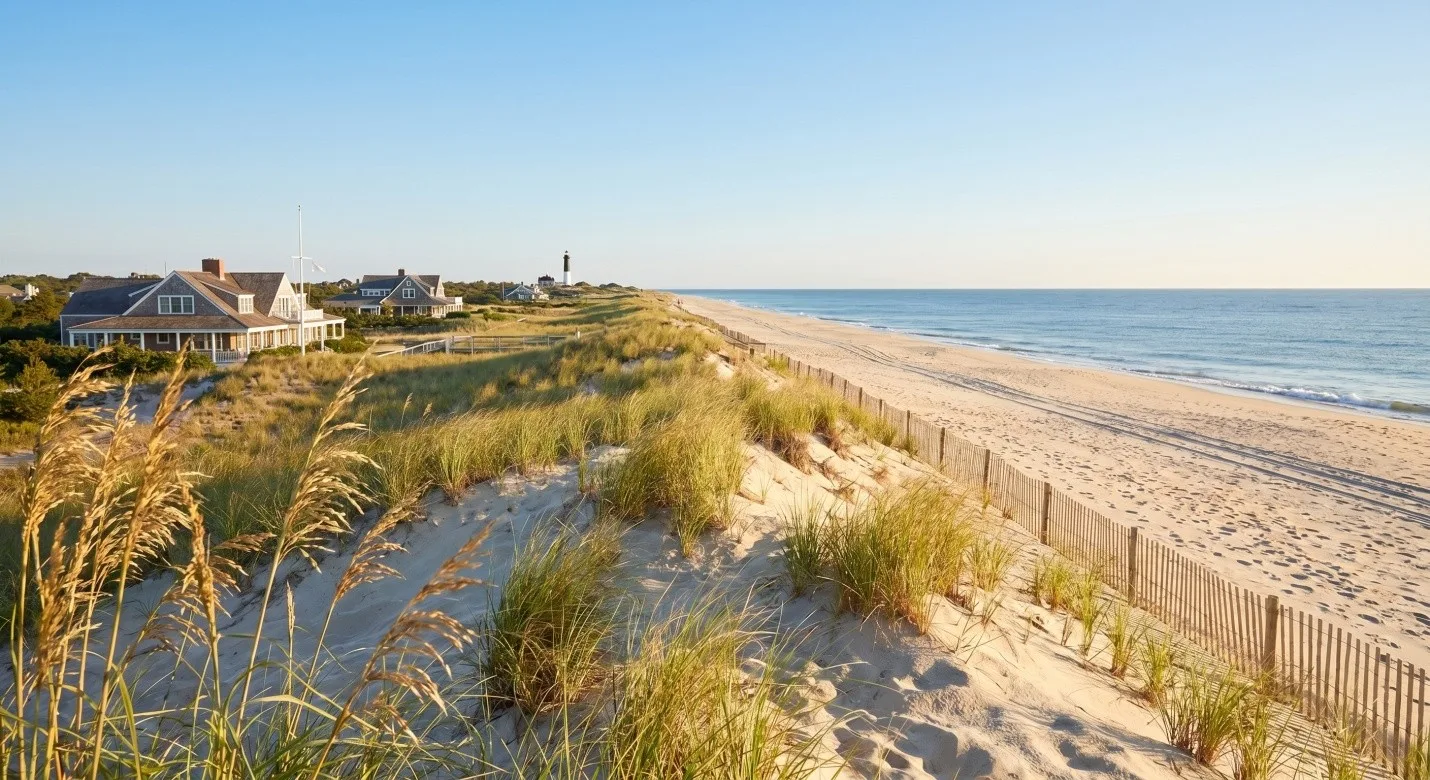

The Hamptons run along the South Fork of Long Island, roughly two hours from Manhattan when traffic cooperates. The beaches are wide, Atlantic-facing, and mostly uncrowded outside of peak July weekends. They are the obvious draw. They deserve the reputation.
The wider landscape is what tends to hold people longer. Potato fields that date back centuries, freshwater ponds separated from the ocean by thin strips of dune, and a string of village centers each with their own character. There is more to work with here than a single coastline.
The Villages and What They Offer
Southampton is the oldest English settlement in New York State. It carries that history quietly, in the scale of its estates, its wide main street, and its institutions. East Hampton runs a few miles further east and leans into the arts. The Guild Hall has been a cultural anchor since the 1930s. Sag Harbor sits on a protected bay and has a working-town feel that the oceanfront villages don’t quite replicate.
Montauk is at the far end and operates differently from the rest. It’s rougher, more outdoorsy, and the fishing culture is still genuine. A day trip out is worth building in.
Farmland, Markets, and Local Producers
The North Fork gets most of the wine press, but the South Fork has its own quiet agricultural culture. Roadside farm stands run from late spring through October. Mecox Bay Dairy outside Bridgehampton produces cheese on-site. Pike Farms in Sagaponack has been selling strawberries and sweet corn to locals for generations.
Saturday mornings at the East Hampton farmers’ market are worth organizing a morning around, especially in June and September when the crowds are lighter.
Wildlife and the Outdoor Infrastructure
The Hamptons have a strong trail and nature preserve network that most visitors miss entirely. The Long Pond Greenbelt runs through the interior of Bridgehampton and Sagaponack, a corridor of freshwater ponds, pitch pine, and oak forest covering several thousand acres.
Osprey are common above the ponds and bays from spring through early fall. Piping plovers nest on the ocean beaches. The bay side, particularly around Northwest Creek near East Hampton, offers kayaking through shallow estuaries.
For travelers using vacation rentals in the Hamptons as a base, building one or two mornings around the preserve trails or a bay-side paddle adds a dimension that the beach-only itinerary doesn’t reach.
How to Pace a Day
An early ocean walk before the beach fills. A slow breakfast at the rental. A late morning drive through farm country or into a village. A long lunch with good local produce. An afternoon back at the house. Dinner somewhere in Sag Harbor.
That rhythm works well for most of the season.
When to Visit
Late May through mid-June is the strongest window for most travelers: warm enough for the water, quiet enough on the roads, and the farmstands are just opening. Early September through Columbus Day offers comparable conditions and a sharper, cleaner quality of light.
July Fourth through August is peak season. The water is warmest, the social calendar is fullest, and the best properties book four to six months in advance. Winter is genuinely quiet and worth considering for those who want the landscape without the crowd.