It’s 7 PM on a Tuesday, and after back-to-back meetings, a rushed lunch, and a commute that somehow took twice as long as expected, the last thing you have energy for is driving to a crowded gym. Sound familiar? For millions of busy professionals, finding consistent time for fitness feels less like a challenge and more like an impossibility. The gym membership sits unused, workout plans get postponed to “next week,” and physical health quietly takes a back seat to professional demands.
This is exactly where a home gym machine changes the equation. A quality all-in-one fitness solution brings the full functionality of a commercial gym directly into your living space, eliminating commute time, wait times for equipment, and scheduling conflicts altogether. With the right home gym machine set up correctly, a productive 20-minute workout before breakfast becomes genuinely achievable — not just aspirational. This guide walks you through everything you need: choosing the right space, assembling your machine efficiently, configuring it for combined strength and cardio sessions, and building quick routines that actually fit your schedule. Let’s get your home fitness setup working as hard as you do.
What is an All-in-One Gym Machine and Why It’s Perfect for Busy Professionals
An all-in-one gym machine is a single, integrated fitness station that consolidates multiple exercise functions into one compact unit. Rather than owning separate equipment for chest presses, cable rows, leg curls, and pull-downs, this type of home gym machine combines all of these capabilities within a unified frame. Most models incorporate a weight stack or resistance system, a pulley and cable mechanism, and multiple attachment points that allow you to target virtually every major muscle group without switching between different pieces of equipment.
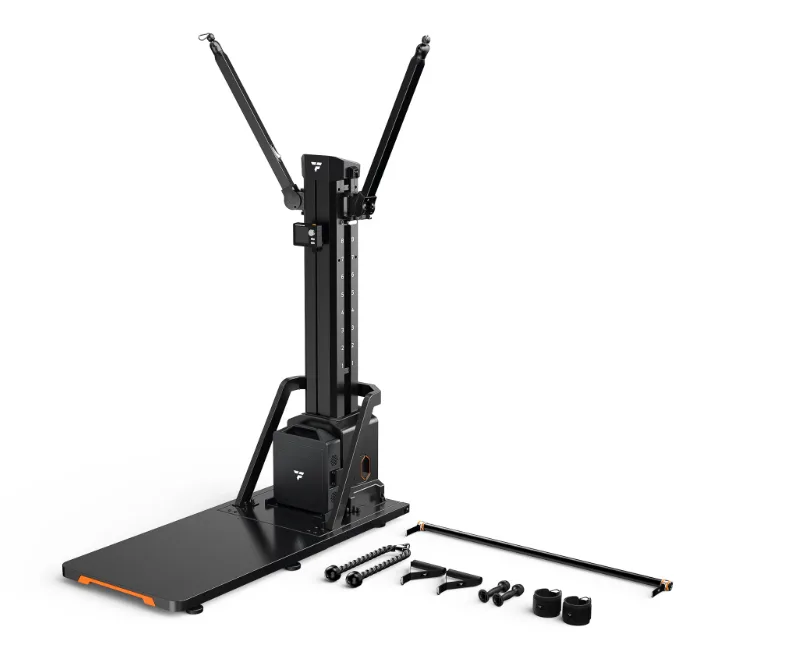

What makes this setup genuinely compelling for busy professionals isn’t just the hardware — it’s the time math. When your gym is ten steps from your living room, you eliminate the 20-minute commute each way, the locker room routine, and the frustrating wait for a bench to open up. That alone can recover 45 minutes per session. Combine that with the machine’s ability to transition quickly between exercises, and a comprehensive full-body session becomes realistic in under 30 minutes.
The space efficiency of modular fitness equipment is another significant advantage. A quality all-in-one fitness solution — such as those offered by FitTransformer — typically occupies roughly the footprint of a large desk, making it viable for apartments, spare bedrooms, or garage corners. Cost-effectiveness rounds out the case — a single machine replaces thousands of dollars worth of individual gym equipment while requiring only one maintenance routine. For professionals who need results without complexity, this is the most practical path forward.
Pre-Setup Planning: Choosing the Right Space and Tools
Before a single bolt gets tightened, smart space planning saves you hours of frustration. Start by measuring your intended area carefully — most all-in-one machines require a footprint of roughly 8 by 6 feet, but you’ll want an additional 3 feet of clearance on each active side for safe cable movement and full range of motion. Spare bedrooms, garage corners, and basement sections all work well, provided the ceiling height clears at least 7 feet for overhead exercises.
Flooring deserves serious attention. Hard concrete or hardwood surfaces benefit from rubber gym mats, which protect both the floor and the machine’s base while reducing vibration and noise — a practical consideration if neighbors or family members share walls. If storage space is limited, position the machine near a wall to keep the surrounding area open for floor exercises.
Gather your tools before opening the box: a standard socket wrench set, an adjustable wrench, a rubber mallet, a Phillips-head screwdriver, and a level are typically all you need. Keep the assembly manual accessible — ideally on a tablet or printed nearby — and have a small tray ready to hold nuts and bolts as you unpack, preventing the inevitable scramble for a missing piece mid-assembly.
Step-by-Step Assembly Guide for Your Home Gym Machine
Unboxing and Inventory Check
Before touching a single tool, clear your assembly area completely and lay down a blanket or cardboard to protect components during unpacking. Cut packaging tape carefully — a box cutter dragged too aggressively can scratch frame components. As you remove each piece, cross-reference it against the parts list in your manual, grouping similar hardware together: bolts in one tray, cables in another, attachments in a third. A missing bolt discovered mid-assembly is far more frustrating than a thorough inventory check upfront.
Assembling the Base Frame
Start with the main upright posts, connecting them to the base plates according to your manual’s sequence — order matters here because earlier bolts often become inaccessible once surrounding components are attached. Hand-tighten every bolt first before using your socket wrench to torque them down fully. This approach keeps the frame adjustable while you confirm alignment. Once the uprights are secured, use your level to verify the frame sits plumb before proceeding. A frame that’s even slightly off-axis will create uneven cable tension and premature wear on pulleys.
Installing the Adjustable Cable System
Thread cables through their designated pulley channels exactly as illustrated in the manual — skipping a pulley or routing a cable incorrectly is the most common assembly mistake and creates dangerous tension imbalances. Once routed, connect the cable ends to the weight stack carriage and test the adjustable cable system by moving the carriage through its full range by hand before attaching any weight. The movement should feel smooth and consistent with no catching or grinding. If resistance feels uneven, recheck the cable path before moving forward.
Attaching Modular Fitness Equipment
With the frame and cables complete, attach your modular fitness equipment components — lat bar, short handles, ankle straps, and any included bench — using the designated carabiner clips or quick-release pins. Test each attachment point by applying firm manual pressure before loading resistance. Store unused attachments on the machine’s built-in hooks if available, keeping them accessible for fast exercise transitions during workouts. A quick final bolt check across the entire frame confirms everything is secure before your first session.
Configuring Your Machine for Strength and Cardio Combined Workouts
Getting the most from your all-in-one machine means understanding how to shift its configuration between strength-focused and cardio-focused demands within the same session. For strength training, set your weight stack to a challenging resistance — typically 70 to 80 percent of your maximum — and select attachments that isolate specific muscle groups, such as the lat bar for pull-downs or the short handles for cable rows. Slower, controlled repetitions with heavier loads build muscle and improve functional strength efficiently.
Transitioning to cardio within the same workout requires only two adjustments: drop the resistance to a lighter setting and increase your movement tempo. Cable-based exercises performed at higher speed with lower resistance — think rapid alternating rows or continuous cable woodchops — elevate heart rate quickly and sustain it through the set. This strength and cardio combined approach, often called circuit training, eliminates the need for a separate cardio machine entirely.
To build effective hybrid routines, alternate between one strength exercise and one higher-tempo cable movement with minimal rest between them. For example, follow heavy chest press sets with 30 seconds of fast cable pulls before moving to the next muscle group. Switching attachments mid-session takes under 20 seconds with quick-release pins, so the transition never disrupts your workout rhythm. Adjust resistance incrementally as your fitness improves, using the weight stack’s numbered increments to track progress precisely over time.
Safety Checks and Maintenance for Long-Term Use
Before every session, run a quick 60-second inspection that covers the three most critical failure points: bolt tightness, cable integrity, and frame stability. Grip each upright and apply lateral pressure to confirm nothing shifts. Visually trace the cable path from the weight stack to the pulley endpoints, looking for fraying, kinking, or any section where the cable contacts metal edges abnormally. Give each attachment pin a firm tug to confirm it’s fully seated. These checks take under a minute and catch problems before they become injuries.
Monthly maintenance keeps the machine performing smoothly for years. Wipe down the weight stack guides and cable channels with a dry cloth to remove dust and chalk buildup, then apply a silicone-based lubricant to the cable where it contacts pulleys — avoid oil-based products, which attract debris and accelerate wear. Inspect the pulley wheels for lateral wobble, which signals bearing wear requiring replacement. Retorque all structural bolts every 90 days, as vibration from regular use gradually loosens fasteners even on well-assembled frames. A simple maintenance log noting inspection dates and any adjustments made helps you track the machine’s condition and anticipate part replacements before failures occur.
Quick Home Workouts Using Your All-in-One Gym Machine
The real payoff of a properly configured home gym machine comes when you build routines short enough to actually happen on a packed Tuesday evening. A 20-minute full-body circuit is the sweet spot for busy professionals — long enough to deliver meaningful results, short enough to fit between dinner and a work call. Structure your session as three rounds of six exercises, spending roughly 40 seconds on each movement with 15 seconds to switch attachments between them.
A practical circuit might look like this: cable chest press, lat pull-down, seated cable row, cable woodchop, tricep push-down, and standing cable curl. Moving through all six back-to-back with minimal rest keeps your heart rate elevated, delivering cardiovascular benefit alongside the strength work. That’s your strength and cardio combined in a single efficient block — no treadmill required.
For days when time is even tighter, a 10-minute cardio interval option works well: alternate 30 seconds of fast cable pulls at low resistance with 20 seconds of rest for the full duration. This approach spikes heart rate rapidly and sustains metabolic demand without requiring any equipment reconfiguration. Keep your two or three most-used attachments — the FitTransformer quick-release system makes this especially convenient — clipped to the machine’s hooks so you’re moving within seconds of arriving at the station. Consistency beats perfection — a focused 20 minutes five days a week outperforms an ambitious 90-minute plan that rarely happens.
Start Training Smarter, Not Harder
Setting up a home gym machine doesn’t have to be complicated, and the payoff far outweighs the one-time effort of assembly. From selecting the right space and gathering your tools, to threading cables correctly and configuring resistance for hybrid workouts, each step in this guide builds toward the same outcome: a fitness solution that works on your schedule rather than against it.
For busy professionals, the all-in-one gym machine addresses the core problem directly. It eliminates commute time, removes scheduling barriers, and consolidates an entire gym’s worth of functionality into a single footprint. Whether you have 20 minutes before a morning call or a tight window between evening commitments, your machine is ready when you are — no wait times, no detours, no excuses.
The hardest part isn’t the assembly or the workout programming. It’s simply starting. Follow the steps in this guide, get your machine set up this week, and commit to three sessions before evaluating how it fits your routine. Small, consistent efforts compound quickly. A focused 20-minute session today is worth far more than a perfect 90-minute plan that stays perpetually on the calendar. Your home gym is ready — now it’s your turn.