Picture this: it’s a sweltering summer night, and you’re tossing and turning, nose congested, eyes itchy, and your heavy comforter clinging to your skin like a second layer. For the millions of people who suffer from seasonal or year-round allergies, bedtime can feel like a battle on two fronts — fighting both relentless allergens and uncomfortable overheating that refuses to let sleep come.
The problem runs deeper than most people realize. Traditional bedding materials trap dust mites, pollen, and pet dander while simultaneously locking in heat and moisture — a combination that actively worsens allergy symptoms and fragments sleep quality. The result is a cycle of restless nights and groggy mornings that no antihistamine fully fixes.
Lightweight summer blankets offer a targeted, practical solution to this dual problem. Designed with breathable, hypoallergenic materials, they reduce allergen accumulation while keeping your sleep environment cool and dry. This article explores exactly why these blankets are a smart choice for allergy sufferers — covering the materials that matter, temperature regulation benefits, and how to choose and maintain the right blanket for genuinely restorative summer sleep.
The Allergy-Bedding Connection: Why Summer is Tough
Summer amplifies every allergy sufferer’s worst nightmare, and your bedding is often the hidden culprit. Dust mites are the most pervasive offender — these microscopic creatures thrive in warm, humid environments and feed on dead skin cells shed nightly. A single mattress can harbor millions of them, with traditional heavy blankets and comforters providing the perfect insulated habitat. Pollen, another major trigger, drifts indoors through open windows on warm nights and settles directly into thick fabric fibers. Pet dander behaves similarly, embedding itself deep into dense weaves where standard washing struggles to reach.


Heavy bedding compounds the problem in a specific, measurable way. Thick comforters trap body heat and moisture throughout the night, raising the microclimate around your body. This warmth and humidity don’t just make you uncomfortable — they actively accelerate dust mite reproduction and mold spore development. The result is a feedback loop: the more you sweat, the more hospitable your bedding becomes for allergens, and the more your symptoms flare. Nasal congestion worsens when you’re overheated, histamine responses intensify, and fragmented sleep becomes inevitable.
This is precisely why summer demands a different bedding strategy entirely. Reducing allergen accumulation requires materials that deny dust mites their preferred conditions — warmth and moisture. Hypoallergenic, breathable bedding disrupts this cycle at its source, making it far more effective than relying solely on medication.
Lightweight Summer Blankets: Your First Line of Defense
Lightweight summer blankets occupy a distinct category in bedding — they’re specifically engineered for warm-weather use, typically weighing between one and three pounds and constructed from open-weave or fine-thread fabrics that prioritize airflow over insulation. Unlike standard comforters packed with synthetic fill or down, these blankets rely on material quality and weave structure to deliver comfort without trapping the heat and moisture that allergens need to thrive.
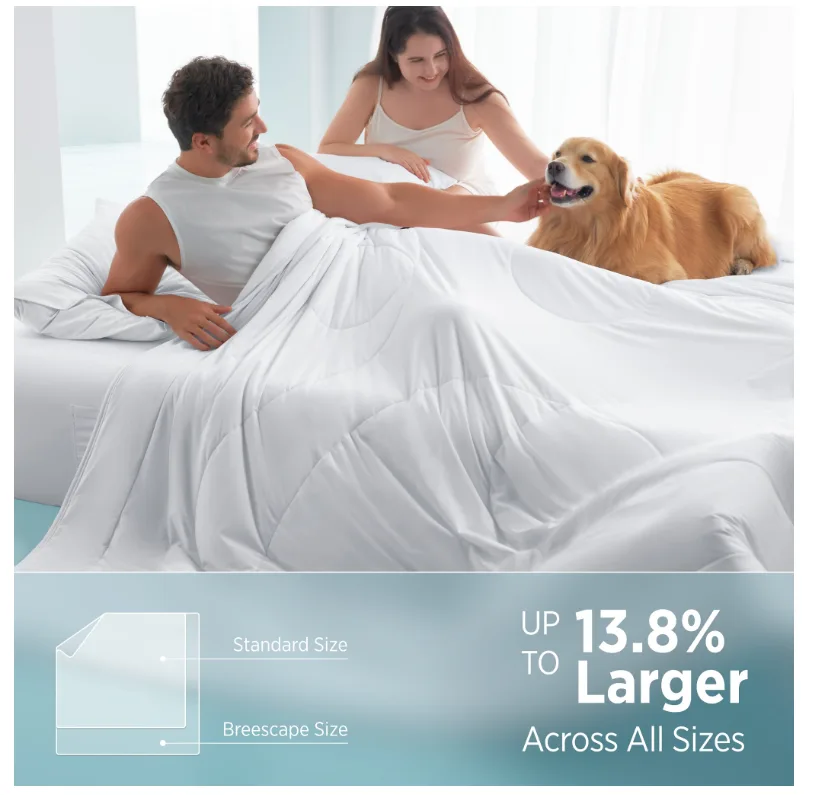

The materials at the core of these blankets make all the difference for allergy sufferers. Organic cotton is a standout choice — its natural fibers are inherently breathable, resistant to static that attracts airborne particles, and can withstand the high-temperature washing needed to kill dust mites effectively. Bamboo-derived fabrics, including bamboo viscose and lyocell, take breathability a step further with natural moisture-wicking properties and an antimicrobial quality that actively discourages bacterial and mold growth. Eucalyptus-based Tencel is another strong option, offering a silky texture with exceptional temperature regulation and a tight fiber structure that limits allergen penetration. What these materials share is a fundamental incompatibility with the warm, damp conditions dust mites require — making them a proactive barrier rather than just a passive covering.
Breathability is the mechanism that ties everything together. When a blanket allows air to circulate freely around your body, it prevents the buildup of heat and sweat that turns bedding into an allergen incubator. Moisture evaporates rather than accumulates, the microclimate stays cool and dry, and allergens have far less opportunity to embed themselves in the fabric. For allergy sufferers, this isn’t a minor comfort upgrade — it’s a structural change in how their sleep environment functions.
Key Features for Allergy Sufferers
When evaluating a lightweight summer blanket specifically for allergy control, three features deserve close attention. First, fabric breathability determines how effectively the blanket manages airflow — look for open-weave constructions like waffle or gauze patterns in cotton, or fine-knit structures in bamboo blends, both of which allow consistent air movement rather than creating a sealed pocket of warmth. Second, washability is non-negotiable. Dust mite allergens are proteins that require water temperatures above 130°F (54°C) to neutralize, so a blanket that can handle frequent hot-water machine washing without degrading is essential — avoid materials that require dry cleaning or delicate cold cycles only. Third, weave density plays a subtle but important role: a tightly woven yet breathable fabric physically limits how deeply pollen and dander can penetrate the fibers, making each wash more effective at removing what does accumulate. Certifications like OEKO-TEX Standard 100 add an additional layer of confidence, confirming that the blanket has been tested for harmful substances that could irritate sensitive respiratory systems.
Mastering Temperature Control with Temp-Regulating Bedding
Temperature regulation isn’t just about comfort — for allergy sufferers, it’s a direct line of defense against symptom flare-ups. When your body temperature rises during sleep, you sweat more, and that moisture saturates your bedding. Dust mites reproduce faster in humid warmth, mold spores find purchase in damp fibers, and your own immune response becomes more reactive when you’re overheated. Maintaining a consistently cool, dry sleep environment doesn’t just help you rest better — it actively suppresses the conditions that allergens depend on to thrive.
Lightweight summer blankets are built to manage this thermal environment in ways that heavy comforters simply cannot. Their open constructions allow warm air to escape rather than pool around your body, creating a natural convection effect that keeps surface temperatures stable throughout the night. Where a thick comforter acts like a sealed envelope trapping heat and vapor, a well-designed lightweight blanket functions more like a second skin — responsive to your body’s temperature fluctuations rather than overriding them. The practical result is fewer night sweats, less moisture accumulation in the fabric, and a microclimate that stays inhospitable to allergens from the first hour of sleep to the last.
How Temp-Regulating Materials Work
The temperature-regulating performance of lightweight summer blankets comes down to specific material behaviors working in concert. Moisture-wicking fabrics — particularly bamboo lyocell and Tencel — pull perspiration away from your skin and distribute it across a broader surface area, accelerating evaporation before dampness can settle into the weave. This keeps the fabric itself dry, which is critical because allergen accumulation is dramatically lower in dry textiles than in moisture-saturated ones. Enhanced breathability, achieved through open-weave structures or fine natural fibers with inherent porosity, ensures that air moves continuously through the blanket rather than stagnating. This airflow carries heat away from your body and prevents the localized humidity spikes that trigger both discomfort and accelerated mite activity. Together, these mechanisms maintain what sleep researchers call a thermoneutral zone — a narrow temperature range where the body can complete full sleep cycles without interruption, and where your bedding remains a clean, cool, allergen-resistant environment rather than a warm breeding ground.
The Role of BlendTek Technology in Enhanced Comfort
BlendTek technology represents a meaningful step forward in how bedding materials are engineered for allergy sufferers. Rather than relying on a single fiber’s natural properties, BlendTek combines multiple hypoallergenic materials — typically pairing bamboo lyocell with organic cotton or Tencel — in precise ratios that amplify the strengths of each while compensating for individual limitations. The result is a fabric that simultaneously delivers the moisture-wicking performance of bamboo, the durability and washability of cotton, and the smooth, allergen-resistant surface of Tencel in a single, cohesive weave. Brands like Breescape Home have incorporated BlendTek constructions into their summer blanket lines, reflecting a broader industry shift toward multi-material engineering for allergy-conscious sleepers. For allergy sufferers, this multi-material approach translates directly into a blanket that stays drier, resists allergen penetration more effectively, and maintains its structural integrity through the frequent high-temperature washes that allergy control demands. Instead of choosing between breathability and durability, or between softness and hypoallergenic performance, BlendTek-constructed blankets deliver all of these properties together — making them a practical, high-performance option for anyone who needs their bedding to work harder than standard single-material alternatives.
Lightweight Blankets vs. Full Coverage Comforters: A Comparison
The choice between a lightweight summer blanket and a full coverage comforter isn’t simply about warmth preference — for allergy sufferers, it has direct consequences for symptom severity and sleep quality. Full coverage comforters, particularly those filled with down or synthetic batting, create a dense, insulated environment that retains heat and traps moisture against your body throughout the night. That warm, humid pocket is precisely where dust mites flourish, and the thick fill makes thorough washing difficult — most down comforters require professional cleaning or specialized large-capacity machines, meaning allergen buildup between washes goes largely unchecked. Pollen and pet dander embed themselves deep into the batting layers, where standard laundering cycles simply can’t reach.
Lightweight summer blankets flip this dynamic entirely. Their minimal fill and open constructions allow heat to dissipate, moisture to evaporate, and air to circulate continuously — conditions that actively suppress dust mite activity rather than encouraging it. Most are machine washable at high temperatures, making weekly allergen removal practical rather than aspirational. The trade-off is obvious: on cold nights, a lightweight blanket won’t provide the same insulating warmth as a thick comforter. For summer use, however, this is rarely a limitation. For allergy-prone sleepers navigating warm months, the comparison tilts decisively toward lightweight options — better allergen control, easier maintenance, and a cooler, drier sleep environment that works with your body rather than against it.
Step-by-Step Guide to Choosing Your Ideal Lightweight Summer Blanket
Selecting the right lightweight summer blanket for allergy relief starts with understanding your specific triggers. Begin by identifying your primary allergens — if dust mites are your main concern, prioritize tightly woven fabrics and machine-washability at high temperatures. If pollen is the bigger issue, focus on smooth-surfaced materials like Tencel or bamboo lyocell that resist particle adhesion. This self-assessment shapes every subsequent decision and prevents you from buying a blanket optimized for the wrong problem.
Next, look for verified hypoallergenic certifications rather than relying on marketing language alone. OEKO-TEX Standard 100 certification confirms the blanket has been independently tested and found free of harmful substances and chemical irritants — a meaningful distinction for anyone with respiratory sensitivity. From there, evaluate the material’s breathability by checking the weave structure: waffle-knit and gauze cotton, open-knit bamboo blends, and fine-thread Tencel all promote airflow, while tightly packed synthetic blends typically don’t. Check whether the blanket incorporates active temperature-regulating features, such as moisture-wicking fiber treatments or phase-change material integration, which go beyond passive breathability to actively manage your sleep microclimate. Finally, read verified user reviews specifically from allergy sufferers — real-world accounts of reduced nighttime congestion, cooler sleep, and fabric durability after repeated hot washes carry far more weight than manufacturer specifications alone. Home goods retailers like Breescape Home often publish customer reviews filtered by use case, which can make it easier to find feedback from buyers with similar allergy concerns.
Maintenance Tips for Longevity and Allergy Control
Even the best hypoallergenic blanket loses effectiveness without consistent maintenance. Wash your lightweight summer blanket weekly during peak allergy season in water at or above 130°F (54°C) — this temperature threshold is what actually neutralizes dust mite allergens rather than simply dislodging them. Use a fragrance-free, hypoallergenic detergent to avoid introducing chemical irritants back into the fabric. Between washes, air the blanket out daily rather than leaving it bundled on the bed, which limits moisture accumulation and denies mites the humidity they need. For storage during off-seasons, seal the blanket in an allergen-proof zippered bag rather than leaving it in an open closet where dust settles freely. Pairing your blanket with an allergen-proof mattress encasement and pillow covers creates a comprehensive barrier system, multiplying the protective effect of each individual component and ensuring your entire sleep surface works toward the same goal.
Breathe Easier This Summer: The Case for Lightweight Hypoallergenic Blankets
Summer sleep shouldn’t be a nightly compromise between staying cool and managing allergy symptoms. Lightweight summer blankets address both challenges simultaneously — their hypoallergenic materials deny dust mites the warm, humid conditions they need to thrive, while their breathable constructions keep your sleep environment cool, dry, and genuinely restorative. From organic cotton and bamboo lyocell to advanced multi-material constructions like those using BlendTek technology, the right blanket does far more than simply cover you at night. It actively shapes the microclimate around your body, reducing allergen accumulation, limiting moisture buildup, and supporting the uninterrupted sleep cycles that recovery and wellbeing depend on.
The practical steps are straightforward: identify your primary triggers, choose certified hypoallergenic materials with verified breathability, and commit to a consistent washing routine that neutralizes allergens rather than just moving them around. Pair your blanket with allergen-proof encasements for a complete sleep system that compounds these benefits. If you’ve been relying on medication alone to manage nighttime allergy symptoms, switching to a well-chosen lightweight summer blanket may be the most impactful change you haven’t yet tried. Better sleep health this summer starts with what’s covering you.