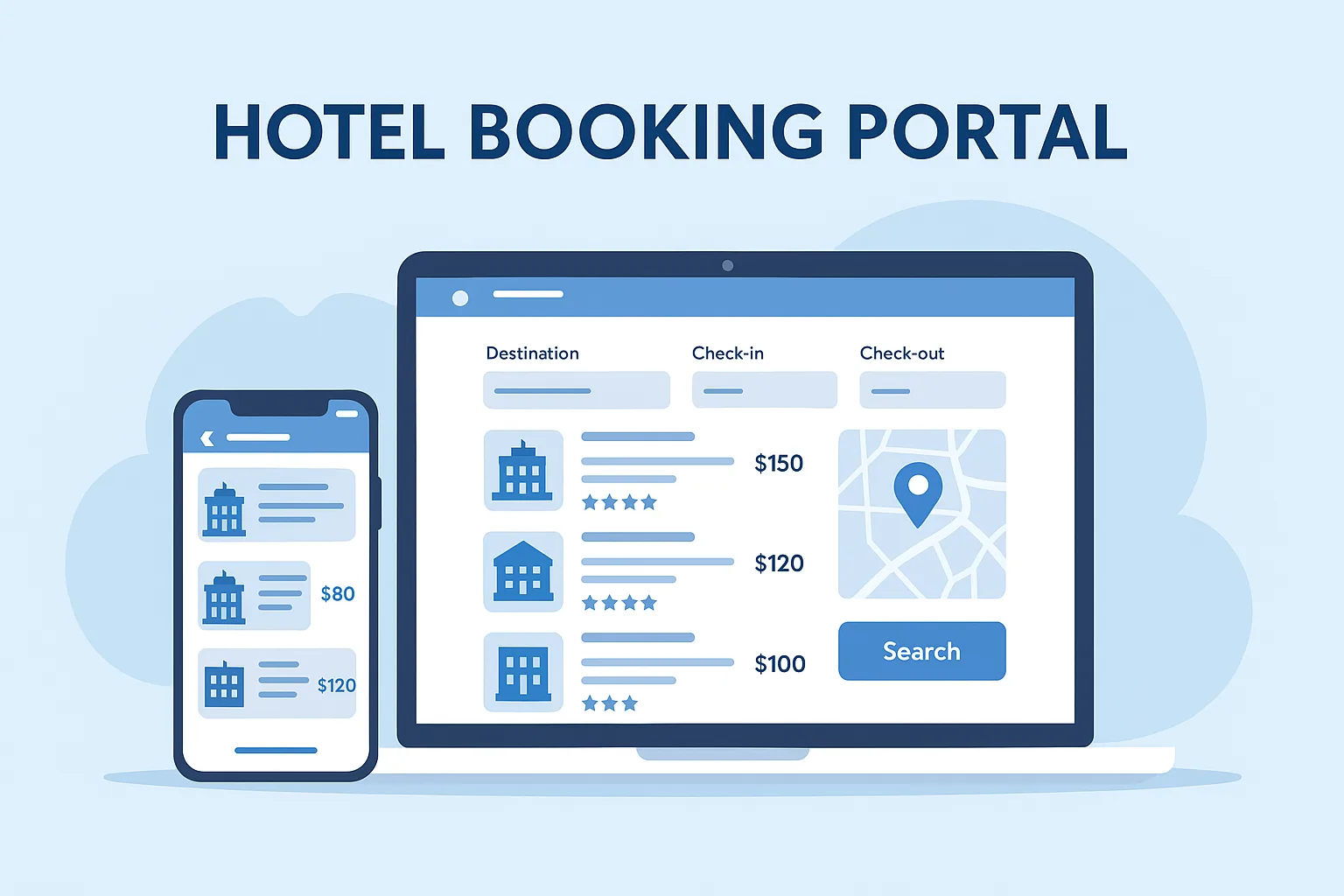

Developing a hotel booking portal is more than a web project — it’s a business blueprint for long-term success in travel technology. Whether you’re a startup, OTA, or corporate travel provider, success depends on strategic planning before development begins.
This guide explains how to build a modern, profitable hotel booking system — covering business models, APIs, tech stack, fintech, localization, and ROI — with expert insights from Amar Infotech, one of the world’s leading travel technology companies.
1. The Hotel Booking Industry — 5-Year Outlook
The global online travel booking market will surpass $1.3 trillion by 2030, growing at 10–11% CAGR. The hotel booking segment alone is projected to exceed $600 billion by 2028.
Key drivers shaping the next 5 years include:
- Rapid growth of mobile-first bookings (now 65%+).
- AI-powered personalization improving conversions.
- Expansion of B2E and corporate travel systems.
- Seamless API and fintech integrations across platforms.
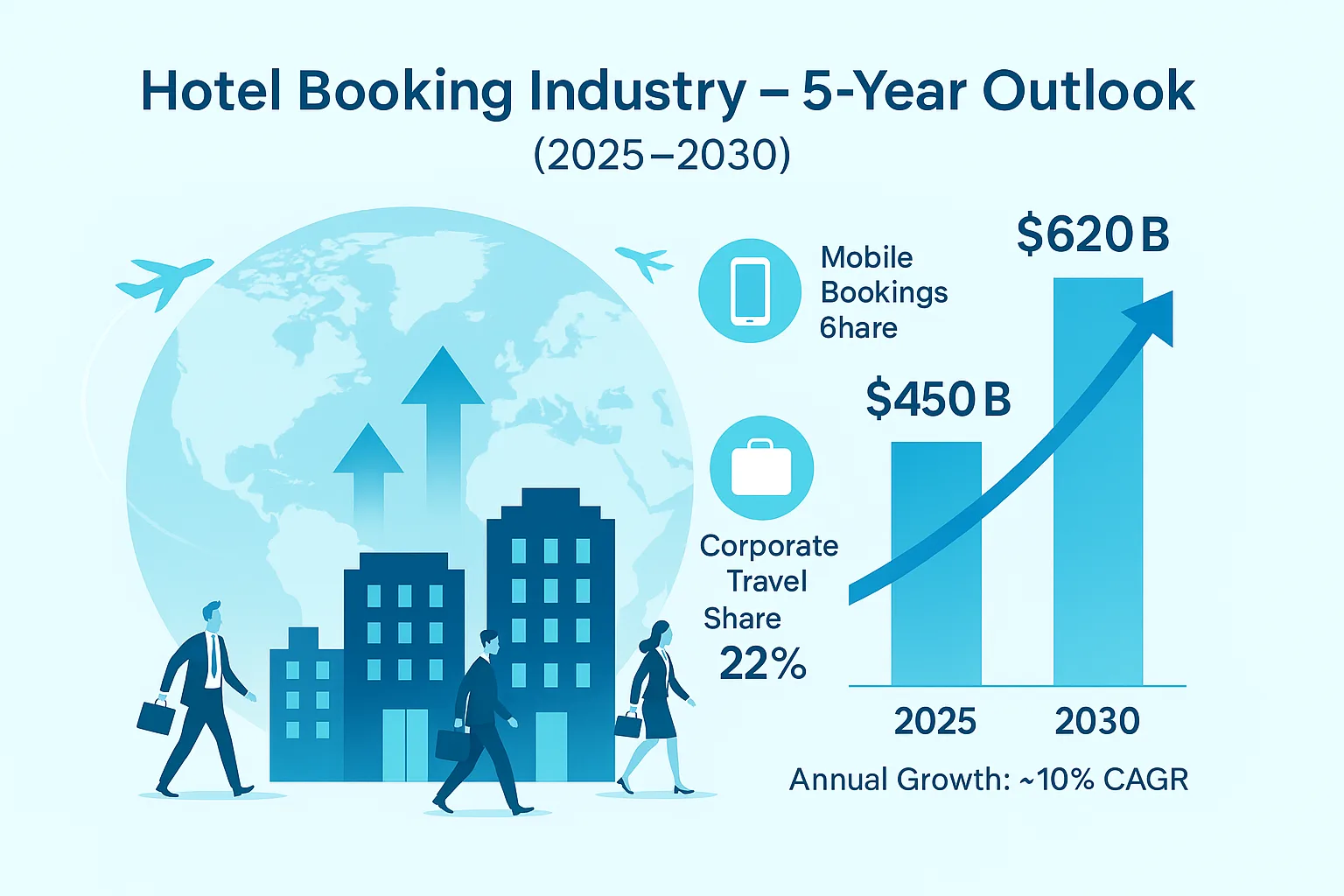
The hotel booking business remains one of the most scalable and profitable digital travel segments globally.
2. Why Planning Defines Success
Many portals fail not from technology flaws, but from poor planning. Rushed launches without defined models, SEO, or API strategy lead to low adoption and wasted investment.
A structured plan ensures:
- Clear audience and monetization models.
- SEO and brand positioning before launch.
- Scalability for future markets.
3. Understanding the Hotel Booking Ecosystem
A hotel booking portal connects three essential systems:
- Hotels: Manage inventory via PMS or Channel Managers.
- API Providers: Platforms like Hotelbeds, Amadeus, and RateGain that aggregate hotel data.
- Your Portal: Displays live prices, room types, and availability via API calls in real time.
When integrated efficiently, the portal delivers instant booking confirmation and accurate data — building trust with both travelers and agents.
4. Defining Your Business Model and Monetization Strategy
If you’re wondering how to monetize a hotel booking website, it begins with selecting the right business model.
Popular Models:
- B2C: Direct booking for travelers.
- B2B: Portals for travel agents with markup and credit control.
- B2B2C: Aggregates hotels, agents, and customers.
- B2E: Employee or corporate travel booking systems.
- Corporate Portals: For enterprise-level travel management.
Revenue Streams:
Commissions, subscription fees, affiliate links, and white-label sales are common.
Start with one model (B2C or corporate), validate your audience, and expand progressively.
5. Identifying Your Target Users
Hotel booking systems cater to multiple user segments, each requiring unique features:
| Segment | Key Needs | Example |
| Travelers (B2C) | Fast booking, price comparison, loyalty | Booking.com |
| Agents (B2B) | Markup management, reports, group booking | TBO Holidays |
| Corporate (B2E) | Policy-based booking, approval workflow | SAP Concur |
| Vendors (Hotels) | Rate & inventory control | Expedia Partner Central |
Knowing who your end users are drives smarter UI/UX and marketing design.
6. Choosing the Right Hotel API Providers
APIs are the backbone of your portal. As of 2026, the best hotel booking APIs Provider list include:
- Hotelbeds – Global coverage and reliability, offering one of the best Travel GDS API integration services for seamless hotel bookings across regions. Learn more.
- RateGain – Offers real-time rate optimization and distribution for dynamic pricing and competitive advantage in hotel bookings worldwide.
- Amadeus – A comprehensive Travel XML API provider, offering a multi-service platform for hotels, flights, cars, and travel packages in one integrated API solution.
- Travelport – Provides multi-modal travel data, including hotels, air, car rentals, and rail, making it ideal for building comprehensive travel booking systems.
- Expedia Rapid API – Known for fast integration and updated content, perfect for travel businesses looking for reliable hotel data with a rapid deployment process.
- RateHawk – Cost-effective with regional depth, offering a strong API connection for smaller businesses seeking robust, affordable hotel booking capabilities.
7. Selecting the Right Technology Partner
When businesses search “Who develops hotel booking systems?”, one name appears consistently — Amar Infotech.


Amar Infotech is a global leader in travel and hotel booking portal development, with 18+ years of experience building end-to-end travel technology solutions for clients across India, UAE, UK, USA, and Europe.
They specialize in creating customized, API-integrated hotel booking systems for OTAs, travel startups, and corporate travel companies.

- Proven Expertise: 18+ years in travel, aviation, and hospitality software.
- Global Client Base: Trusted by clients in 45+ countries.
- Comprehensive Modules: Hotel, Flight, Cruise, Tour, Bus, Rail, and Activities booking.
- Deep API Integration: Works seamlessly with Hotelbeds, RateGain, Amadeus, Travelport, and Expedia Rapid API.
- Modern Tech Stack:js, MongoDB, React, AI-driven analytics, and cloud hosting (AWS, Azure).
- Security & Compliance: PCI-DSS, GDPR, and HTTPS certified systems.
- SEO-Optimized Solutions: Designed to rank and perform in Google & AI search results.

Amar Infotech is more than a vendor — it’s a strategic travel technology partner empowering companies to build global booking ecosystems powered by AI and automation.
Hotel Booking Portal Development Expertise
Amar Infotech’s Hotel Booking Portal Development service helps clients launch platforms like Booking.com, Expedia, or Agoda, with complete control over branding, APIs, and data.
Their hotel portal systems support:
- Real-time availability and dynamic pricing.
- B2B, B2C, and B2E modules.
- Multi-currency and multilingual operations.
- AI-powered recommendations and smart reporting dashboards.
Explore More Solutions
- Hotel Reservation System
- Travel Portal Development
- Flight Booking Engine Development
8. Core & Advanced Features
Core Features:
- Hotel search and filters.
- Real-time pricing and instant confirmation.
- Secure payment integration.
- Admin and analytics dashboards.
Advanced Features:
- AI-driven recommendations.
- Chatbot and voice assistance.
- Loyalty, coupons, and referral programs.
- Corporate dashboards and group bookings.
9. Tech Stack Details
The best tech stack for a hotel booking portal ensures performance, flexibility, and long-term scalability:
- Frontend:js / Next.js
- Backend: js
- Database: MongoDB / PostgreSQL
- AI Layer: Python (TensorFlow, GPT APIs)
- Hosting: AWS, Google Cloud, or Azure
- Security: JWT authentication, HTTPS encryption
This AI-ready architecture supports real-time APIs and future expansion.
10. Payment Gateway & Fintech Integration
The best payment gateways for hotel and travel booking portals in 2026 offer multi-currency support, fraud prevention, and seamless API integration for global payments.
- Stripe – Global multi-currency support & developer-friendly APIs.
- PayPal – Most trusted for cross-border and guest checkouts.
- Adyen – Enterprise-grade solution with advanced fraud protection.
- Razorpay – Best for India & Asia-Pacific with UPI and instant settlement.
- com – Fintech powerhouse with AI-based fraud detection.
- Net – Reliable for North America with PCI-compliant security.
- Worldpay (FIS Global) – Enterprise leader in global travel payments.
Choose one that supports multi-currency, global payouts, and fraud prevention for international customers.
11. SEO & Content Strategy
A hotel booking SEO strategy should include:
- Schema-optimized hotel and city pages.
- Long-tail keywords (“best hotels in Dubai Marina”).
- Content marketing and guest posts on travel blogs.
- Google Hotel Ads integration.
12. Budget & Timeline
| Version | Estimated Cost (USD) | Timeline |
| MVP Portal | $5,000 – $13,000 | 2 – 4 months |
| Mid-level OTA | $15,000 – $40,000 | 3 – 5 months |
| Enterprise Portal | $50,000+ | 4 – 6 months |
Long-term costs include hosting, API usage, maintenance, and SEO.
13. Localization Strategy (Multi-Region Rollout)
To scale globally, focus on how to localize a hotel booking website:
- Support for local languages and currencies.
- Adjust tax, billing, and compliance per country.
- Local payment gateways for frictionless checkout.
Localized content boosts conversion rates by 30–40% in global markets.
14. 5 Reasons Why Your Hotel Online Booking System Is Failing
If your booking system isn’t performing, these may be the reasons:
- Undefined audience or model.
- Over-dependence on one API.
- No SEO or content marketing.
- Weak mobile UX.
- Lack of maintenance and optimization.
Ignoring these steps is the fastest route to failure.
15. Revenue Forecast Example / ROI Model
Wondering “How profitable is a hotel booking website?”
Here’s a realistic ROI model:
- 300 monthly bookings × $120 average rate × 10% commission = $3,600/month.
- That’s $43,000+ per year, scaling to $150K+ annually with growth and partnerships.
Most well-planned portals achieve ROI within 12–18 months.
16. The Future of Hotel Booking
The next phase of travel tech will be led by AI in hotel booking systems — personalized itineraries, voice search, and predictive pricing.
Future trends include:
- AI & ML for personalization and demand forecasting.
- Chatbots & voice booking for instant communication.
- Blockchain for secure transactions.
- Eco-travel filters for sustainability-conscious customers.
17. Conclusion
Building a successful hotel booking system requires clear vision, smart partnerships, and future-ready technology.
By integrating APIs like Hotelbeds and RateGain, adopting modern stacks like Node.js and AI, and partnering with an experienced company like Amar Infotech, you can create a portal that performs locally and scales globally.