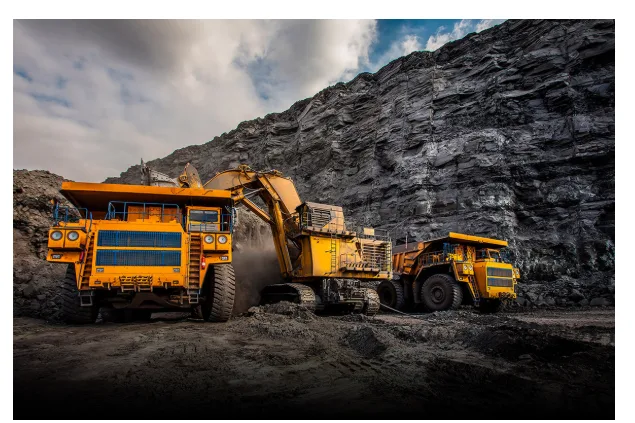

Dust is an unavoidable byproduct of quarrying and mining activities. In hard rock quarries, processes such as drilling, blasting, crushing, screening, and transporting materials all generate large amounts of airborne dust. If left uncontrolled, this dust can impact worker health, reduce visibility, damage equipment, and affect air quality in nearby communities.
Recent attention to the dangers of Respirable Crystalline Silica (RCS) has made dust control an even higher priority. RCS particles are extremely fine and can travel deep into the lungs when inhaled, leading to long-term illnesses such as silicosis and other respiratory conditions. Because of these risks, quarry operators are expected to implement effective engineering controls that minimize dust emissions at the source.
This article outlines the role of Foam Systems and high-pressure misting systems in dust control for hard rock quarries, explaining how they work, where they are used, and the benefits they provide.
The Dust Challenge in Hard Rock Quarries
Dust is an unavoidable byproduct of quarrying and mining activities. In hard rock quarries, processes such as drilling, blasting, crushing, screening, and transporting materials all generate large amounts of airborne dust. If left uncontrolled, this dust can impact worker health, reduce visibility, damage equipment, and affect air quality in nearby communities.
Recent attention to the dangers of Respirable Crystalline Silica (RCS) has made dust control an even higher priority. RCS particles are extremely fine and can travel deep into the lungs when inhaled, leading to long-term illnesses such as silicosis and other respiratory conditions. Because of these risks, quarry operators are expected to implement effective dust control solutions that minimize emissions at the source and protect both workers and the surrounding environment.
This article outlines the role of Foam Systems and high-pressure misting systems in dust control for hard rock quarries, explaining how they work, where they are used, and the benefits they provide.
Foam Systems: Controlling Dust at Crushers and Transfer Points
One of the most effective ways to tackle dust in quarries is to control it at the point of generation. Foam Systems are specifically designed for this purpose.
How Foam Systems Work
- A foaming agent is mixed with water and air to create a stable foam.
- This foam is applied directly at crushers and conveyor transfer points, where dust is most concentrated.
- The foam captures dust particles and prevents them from escaping into the air.
Advantages of Foam in Quarry Applications
- Low Moisture Use
Foam requires only a small amount of water compared to traditional sprays. This makes it especially valuable in areas like screens, where too much moisture can cause blinding. - Extended Dust Control
By treating dust at crushers and transfer points, emissions are reduced across the rest of the plant. Less dust travels downstream, which lowers the need for additional suppression later in the process. - Operational Efficiency
Foam Systems are simple to operate and maintain. They do not interfere with material handling and can be integrated into existing plant operations. - Health and Safety Benefits
As an engineering control, foam provides a reliable way to limit exposure to RCS, reducing risks to workers’ long-term health.
High-Pressure Misting Systems: Managing Localized Dust Releases
While Foam Systems are effective at major dust generation points, quarries also face localized dust challenges that require different approaches. High-pressure misting systems are widely used for these situations.
How Misting Systems Work
- Water is pressurized and released through specialized nozzles, producing a fine mist of tiny droplets.
- These droplets bind with dust particles in the air, causing them to settle.
- Misting systems can be installed around screens, loading bays, stockpiles, or other areas where dust tends to escape.
System Design and Automation
- Site-specific design: Each quarry has unique dust challenges. Misting systems are tailored to match the layout, dust sources, and environmental conditions of the site.
- Automation: Modern systems can be triggered automatically using dust sensors or equipment signals. They can also be operated manually when needed.
- Water efficiency: Because the mist uses very fine droplets, less water is required compared to conventional spraying.
Key Benefits
- Reduces airborne dust in open areas of the plant.
- Minimizes water waste through targeted application.
- Provides flexible operation that can adapt to changing conditions.
Integrating Dust Control Measures
Foam Systems and high-pressure misting systems are most effective when used as part of a broader dust management strategy. Additional measures that support these systems include:
- Haul road stabilization: Using water trucks, chemical suppressants, or surface compaction to limit dust from vehicle traffic.
- Enclosures and barriers: Covering conveyors and stockpiles to prevent dust from spreading.
- Ventilation and filtration: In enclosed areas, mechanical ventilation and dust collectors help maintain clean air.
- Personal protective equipment (PPE): While the focus should remain on controlling dust at its source, workers should also have access to respirators, masks, and protective eyewear.
Benefits of Effective Dust Control
When properly implemented, dust control systems provide measurable benefits across health, safety, environmental, and operational areas:
- Health and Safety: Reduced exposure to crystalline silica and other harmful particles lowers the risk of occupational disease.
- Regulatory Compliance: Meeting dust emission limits helps sites comply with workplace safety laws and environmental regulations.
- Operational Performance: Less downtime from equipment wear, reduced screen blockages, and clearer visibility improve plant productivity.
- Water Conservation: Low-moisture foam and efficient misting reduce reliance on water, which is critical in regions with limited supply.
- Community Relations: Lower dust emissions improve air quality for nearby residents and reduce complaints.
Future Directions in Quarry Dust Control
The quarrying industry continues to move toward smarter, more sustainable dust management solutions. Some emerging trends include:
- Sensor-based monitoring: Real-time data collection to track dust levels and activate suppression systems automatically.
- Eco-friendly additives: Development of foaming agents and binders that are safer for the environment.
- Integrated systems: Combining foam, misting, and road treatments into a single coordinated dust control strategy.
- Predictive analytics: Using software to anticipate dust hotspots and optimize suppression before problems occur.
Conclusion
Dust control is an essential part of safe and efficient quarry operations. In hard rock quarries, where processes like crushing and screening generate significant dust emissions, traditional water sprays are often not enough.
Foam Systems provide an effective, low-moisture solution for controlling dust at crushers and transfer points, addressing emissions at their source. High-pressure misting systems complement this by managing localized dust releases throughout the plant. Together, these approaches reduce airborne dust, protect workers, and support compliance with health and environmental standards.
By adopting advanced dust control solutions, quarries can maintain safer workplaces, improve operational performance, and reduce their environmental impact—all while protecting workers and surrounding communities from the risks of respirable crystalline silica.