Because college dreams don’t expire — even when life tries to.

You know the cliché: some teenager drags a laundry basket into a dorm room, finds freedom, makes mistakes, and calls it college.
Cute. Nostalgic. Completely irrelevant to what I’ve heard from Jane and so many other non-traditional students.
I’m Oryna Shestakova, a student psychology expert, and my team at PapersOwl conducted this research to uncover the realities of today’s non-traditional college students. Among the other respondents, I spoke with Jane S., a 34-year-old mother balancing two jobs, a mountain of bills, and a demanding academic schedule. It became crystal clear that her experience was a far cry from the traditional college journey. No dorm parties. No free time. Just a constant juggle to make room for school, work, and family. Jane isn’t alone — she’s part of a growing movement.

They’re called non-traditional students, but honestly, that term barely scratches the surface. Today, classrooms are full of people like Jane: working parents, career changers, first-generation college students, and overwhelmed caregivers.
The Numbers That Prove the Shift
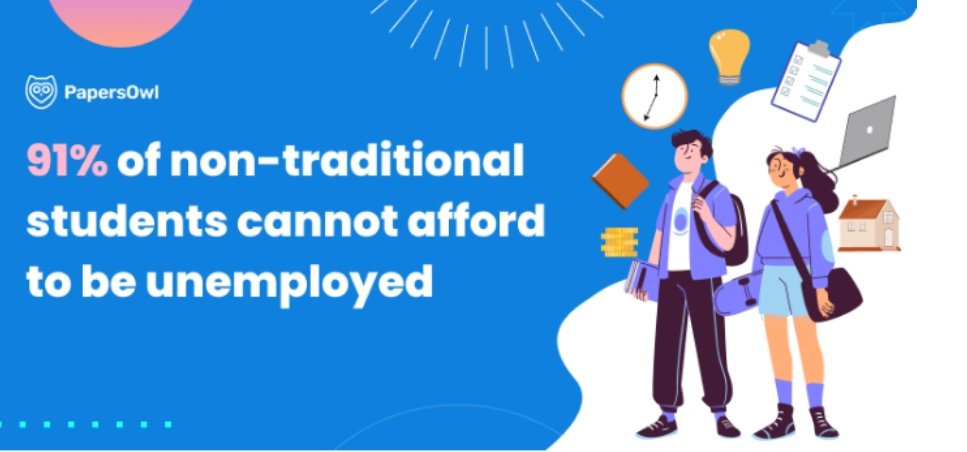
- Only 9% of non-traditional students are unemployed. The rest? They balance classes with full-time or part-time jobs, side hustles, caregiving, or freelance projects.
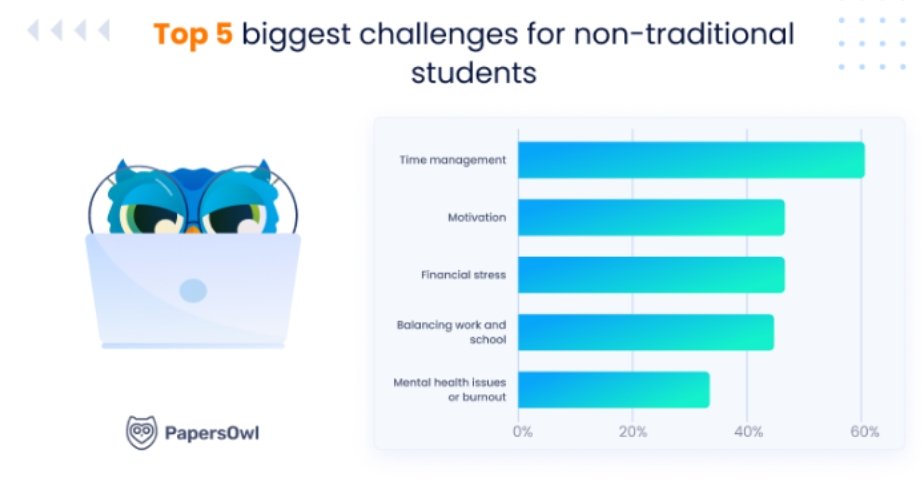
- 61% say time management is the hardest challenge. Motivation and financial stress aren’t far behind (46% each).
- Their goals aren’t just academic — 64% chase higher income, 59% seek better jobs or promotions, and 23%, like Jane, are setting an example for their children.
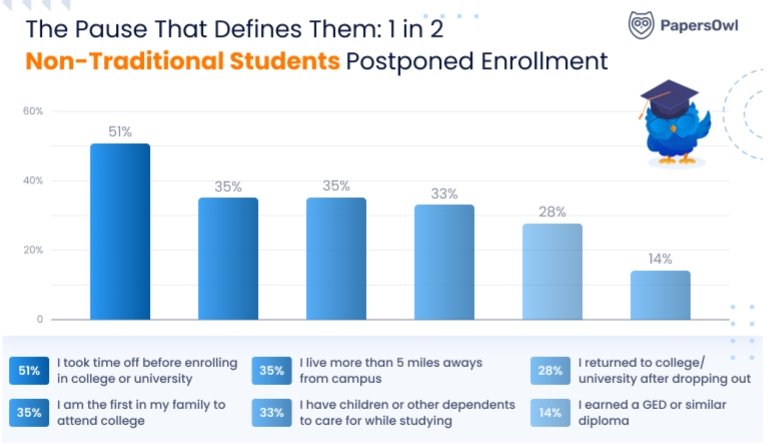
- More than half of them (51%) took a break before starting college. Nearly a third came back after dropping out. And 35% live far from campus — dorm life? That’s a distant dream.
Their Stories Are Messy and Powerful
These students don’t just multitask; they juggle like circus performers, attending 8 a.m. classes while managing everything else.
I’ve spoken with people who:
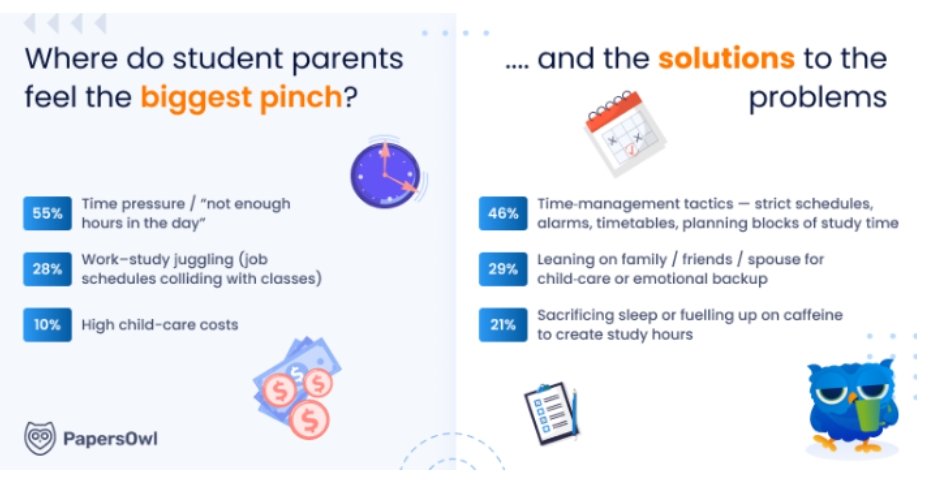
- Balance their degree with caregiving — 33% do this daily.
- Raise kids while staying up late for assignments — 59% have dependents under 18.
- Return to school after years away, feeling out of place next to Gen Z.
- Spend thousands on their education ($5K–$20K to date and a long way ahead), without the luxury of campus meal plans or student discounts — just maxed-out credit cards and microwaved dinners.

It’s clear they’re not grinding for extra credit. They’re doing it for better futures, even when the odds are stacked against them.
What’s Really in Their Way
Spoiler alert: it’s not just tough exams.
When I asked non-traditional students what their biggest challenges were, the answers were raw:
- Time. There’s never enough of it. It’s the #1 killer.
- Motivation and burnout. Many are exhausted before they even walk into class.
- Money. Rent, groceries, gas, childcare — it’s more than just tuition.
- Mental health. 33% battle serious burnout.
- Feeling out of place. Imagine sitting next to someone who thinks VHS is a new band.
And colleges? Too many are still clueless. Most don’t offer flexible support. Some don’t even acknowledge that non-traditional students exist. This system wasn’t designed for them. But here they are, surviving it anyway.

If you think non-traditional students are behind just because they’re older, think again.
They come to the table with life experience, resilience, and skills that can’t be taught in a classroom.
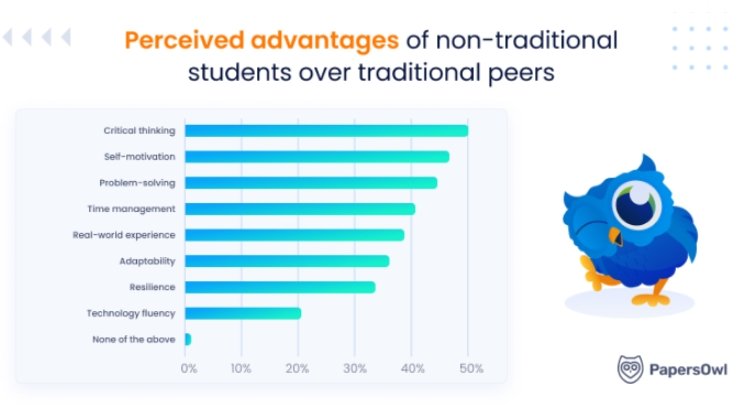
That’s their strength — and yes, the data backs it up:
- 50% rely on critical thinking.
- 46% are self-motivated, with no one holding their hands.
- 44% are natural problem-solvers, having learned these skills through life’s challenges.
Even if only 21% identify as tech-savvy, trust me, they figure it out. They always do.
They manage their time better than most startups. They’re not traditional students — they’re unstoppable.

Higher Ed Needs to Wake Up
Non-traditional students are no longer the exception — they are the default.
And yet, most colleges are still stuck in the mindset of designing for 18-year-olds with free time. Meanwhile, non-traditional students are juggling assignments between work shifts, planning finals around daycare, and fighting for a seat at a table that should’ve been theirs all along.
What non-traditional students need is simple:
- Flexible classes (online options that actually work, night courses, and asynchronous options).
- Professors who understand that life happens. Emergencies aren’t excuses — they’re just part of reality.
- Real support for mental health, childcare, and the needs of students who don’t fit the traditional mold.
College isn’t about dorms and tailgates anymore.
It’s about a mom who’s reviewing anatomy flashcards while her kid watches cartoons. It’s about a dad writing discussion posts in his car during a break. It’s about someone in their 40s finally chasing a dream that’s been on hold for decades.
This is what college looks like now.