
Solar Dominance in April Marks Strategic Shift, Highlighting Significant Investment Opportunities
Since the start of 2025, Burghley Capital has closely monitored Germany’s rapidly evolving solar energy landscape, which in April achieved a record-breaking 32% share of the nation’s total electricity generation. The unprecedented output of 11,920 gigawatt hours (GWh), representing a 31% increase compared to April 2024 and nearly 60% higher than April 2023, has surpassed coal (10,600 GWh) and wind (9,634 GWh), firmly placing solar power at the forefront of Germany’s energy transition.
Germany’s robust solar generation directly results from strategic investments in renewable infrastructure, adding approximately 16.2 gigawatts (GW) of solar capacity throughout 2024. Currently, Germany operates 104 GW of installed solar capacity across five million installations nationwide, marking a substantial 90% growth since 2019. James Barker, Director of Private Equity at Burghley Capital, highlights that “Germany’s accelerated growth in solar infrastructure validates our strategic emphasis on clean energy investments across European markets, underlining significant opportunities aligned with broader sustainability goals.”
Solar power’s ascendance represents both technological achievement and policy success, supported strongly by proactive government measures. However, this rapid growth necessitates sophisticated risk management approaches for investors navigating this evolving sector. Barker emphasises, “Effective risk management is critical as the energy transition accelerates, and Burghley Capital remains committed to identifying and mitigating risks through rigorous analysis and strategic foresight.”
The earlier-than-usual solar dominance starting in April rather than May marks a significant realignment in Germany’s seasonal energy generation pattern. Market analysts project solar may sustain this dominant position through August 2025, establishing an unprecedented five-month streak of solar leadership.
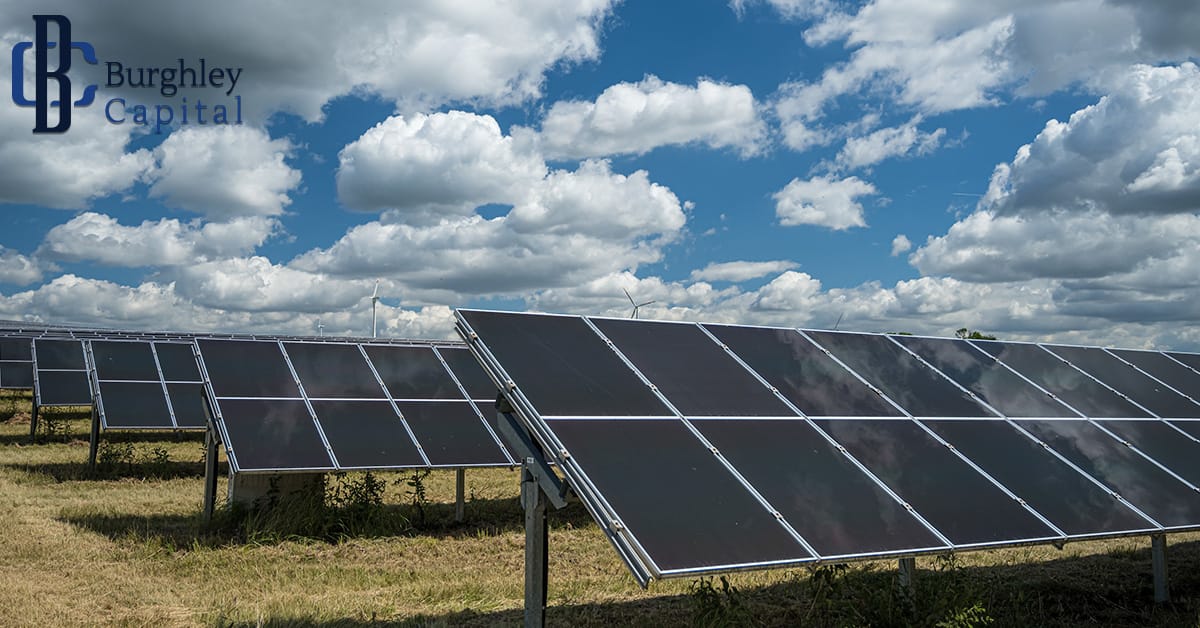
Utility-scale solar installations significantly contribute to this strategic shift. Germany’s largest solar project, located in Saxony and operational since spring 2024, offers 162 megawatts (MW) of capacity. Additionally, approximately 949 MW are under construction, with another 6.3 GW in pre-construction stages, indicating ongoing robust growth.
Commercial rooftop solar systems have also experienced remarkable expansion, commissioning 81% more capacity during the first four months of 2024 compared to the same period in 2023. Innovative solutions such as floating solar installations, notably the 15 MW Lake Philippsee project in Baden-Württemberg and the forthcoming 29 MW Cottbus Baltic Sea project, illustrate Germany’s diversified solar deployment strategy.
The growth in solar output amplifies the need for effective energy storage to manage intermittency. Throughout 2024, Germany installed nearly 600,000 stationary battery storage systems, increasing the total national storage capacity to approximately 19 gigawatt hours (GWh). Residential photovoltaic installations also demonstrated significant adoption of battery storage, with 77% of systems commissioned in 2023 incorporating such solutions, highlighting a shift towards energy self-sufficiency.
Despite solar’s rising prominence, coal and gas power remain crucial for managing evening demand peaks and compensating for wind shortfalls, which decreased by 31% during January to April 2025 compared to the same period in 2024. Coal-fired plants, providing around 28 GW of secured capacity, continue to play a pivotal role, supported by flexible gas-fired units projected to increase to between 70 GW and 80 GW by 2030, ensuring grid reliability.
Burghley Capital’s analysis projects solar generation could reach or exceed its previous peak share of 35% by June 2025. Barker underscores that “the robust trajectory for solar power indicates sustainability and resilience, positioning Germany strongly to achieve its renewable energy targets for 2030.”
Renewable sources consistently supplied over half of Germany’s electricity consumption through mid-2024, underscoring steady progress towards the nation’s ambitious target of 80% renewable electricity by 2030. Photovoltaic generation alone reached 37 billion kilowatt hours during 2024, significantly exceeding past benchmarks, affirming strategic investment opportunities identified by Burghley Capital’s detailed market analyses.
Burghley Capital anticipates continued growth in renewable investments as Germany reshapes the European energy landscape, enhancing both energy security and sustainability.
About Burghley Capital
Founded in 2017, Burghley Capital Pte. Ltd. (UEN: 201731389D) is a leading global investment management firm headquartered in Singapore, renowned for its expertise in long-only asset management strategies. The firm leverages deep analytical insights, customised investment methodologies, and comprehensive financial advisory services. Dedicated to disciplined investment practices and committed to Environmental, Social, and Governance (ESG) criteria, Burghley Capital aims to deliver sustainable financial returns and resilience for a diverse client base comprising institutional investors and private clients globally. Further information is available at https://burghleycapital.com/resources. For media enquiries, contact Martin Wei at m.wei@burghleycapital.com or visit https://burghleycapital.com.