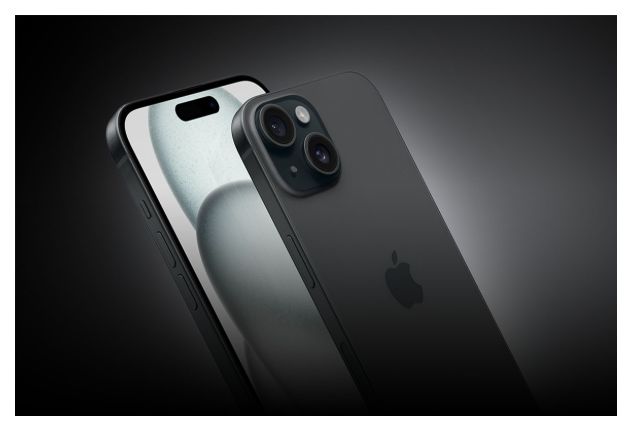

With the rapid development of science and technology, smartphones have become an indispensable tool in people’s lives. Major mobile phone manufacturers continue to explore innovations and compete fiercely in chip performance, imaging capabilities, screen display and other aspects. Among them, the innovative application of materials is a key factor in improving the quality of mobile phones and user experience. As a global technology giant, Apple has always led the industry trend in product material selection. Starting from the iPhone 15 series, the introduction of titanium has become a highlight, which not only revolutionized the appearance and texture of mobile phones, but also brought profound changes in performance, processing technology and impact on the industry.
1. Characteristics and advantages of titanium materials
(I) High strength and low density
Titanium metal has an excellent strength-to-weight ratio. Taking the fifth-grade titanium alloy (Ti-6Al-4V, containing 6% aluminum and 4% vanadium) used in the iPhone 15 Pro series as an example, its tensile strength can reach more than 895 MPa, which is about twice the tensile strength of ordinary stainless steel (about 500 MPa). At the same time, the density of titanium alloy is relatively low, only 4.5g/cm³, which is about 57% of the density of stainless steel (7.9g/cm³). This allows the iPhone 15 Pro to achieve lightweight body while ensuring a strong structure. For example, the weight of the iPhone 15 Pro is only 191g, which is 15g lighter than the 206g of the iPhone 14 Pro. In the process of daily holding and carrying, users can obviously feel that it is lighter and less likely to feel tired after long-term use.
(II) Excellent corrosion resistance
The surface of titanium metal can naturally form a dense and stable oxide film, which makes it extremely corrosion-resistant. Whether facing sweat erosion in daily use or in a special environment with high humidity and salt content (such as the seaside), the iPhone with a titanium alloy frame can effectively resist corrosion, avoid rust, discoloration and other problems, and greatly extend the service life of the phone. In contrast, stainless steel frames may rust after a period of time in similar environments, affecting the appearance and texture of the phone.
(III) Good biocompatibility
Titanium has excellent biocompatibility. Although this feature will not be directly reflected in the use of mobile phones, it is of great significance from the perspective of environmental protection and user health. Even if the surface of the mobile phone is slightly worn during use, the titanium metal particles will not harm human health, and it also reduces the potential pollution to the environment. This is in line with Apple’s long-standing environmental protection concept and the trend of consumers’ pursuit of green products.
2. Application of titanium in the iPhone 15 series
(I) Application parts and design features
For the first time, titanium metal was used on a large scale in the middle frame of the mobile phone on the iPhone 15 Pro and iPhone 15 Pro Max. The middle frame made of grade 5 titanium alloy has undergone precision machining, grinding, brushing and sandblasting, presenting a delicate brushed texture. This design not only enhances the friction when holding the mobile phone, providing a more comfortable feel, but also makes scratches on the device less obvious, while enhancing resistance to fingerprints, so that the appearance of the mobile phone can be better kept clean. In terms of color selection, Apple has launched a new color option for the iPhone 15 Pro series, which is internally called “Titanium Gray”, which complements the titanium material and gives the phone a more technological and high-end appearance.
(II) Improvement of mobile phone performance
Reducing weight and optimizing feel: As mentioned above, the low density of titanium alloy enables the iPhone 15 Pro series to achieve a significant weight reduction effect. In addition to reducing the burden of carrying, the lighter body is also more flexible and convenient during operation. For users who operate the phone with one hand, it is easier to complete various operations, such as sliding the screen and clicking icons, which improves the daily use experience.
Enhanced structural stability: The high strength of titanium alloy ensures that the middle frame of the mobile phone can better protect the internal precision components when it is impacted by external forces. Compared with the previous stainless steel middle frame, the titanium alloy middle frame performs better in anti-deformation and bending. Even if the mobile phone accidentally falls or is squeezed to a certain extent, the titanium alloy middle frame can effectively disperse the impact force, reduce the risk of damage to internal components, and improve the durability of the mobile phone.
3. Machining challenges of titanium materials
(I) Difficulty in processing
Titanium alloys have high hardness and high melting point, which causes great wear on equipment and tools during processing. When machining titanium alloys, ordinary tools wear very quickly, greatly shortening their lifespan, and need to be replaced frequently, which not only increases processing costs but also reduces production efficiency. Moreover, titanium alloys are prone to react with elements such as nitrogen, hydrogen, oxygen and carbon at high temperatures, leading to surface oxidation and potential contamination of processed parts, which in turn affects their corrosion resistance, fatigue strength and biocompatibility.
(II) Low yield rate
Due to the high processing risk and difficulty in precision control of titanium alloys, the yield rate of smartphone middle frames made of titanium alloys is currently only 30% – 40%, while the yield rate of aluminum alloy middle frames is as high as 80%. The low yield rate means that more defective products will be produced during the production process, increasing production costs. This is also one of the important reasons why titanium metal was difficult to apply on a large scale in the early stage of mobile phone manufacturing. In order to improve the yield rate, Apple and related OEM manufacturers have invested a lot of R&D resources and continuously optimized the machining titanium technology, such as using special tool materials and geometric shapes, improving processing parameters, and introducing advanced cooling technology, but they still face certain challenges.
4. Cost considerations of titanium
(I) Material cost
Although titanium itself is not a precious metal, the price of titanium alloy raw materials is relatively high. Taking the grade 5 titanium alloy used in the iPhone 15 Pro series as an example, its preparation process is relatively complicated and requires precise control of the alloy composition ratio, which makes the material cost higher than common aluminum alloys and stainless steel. It is estimated that each iPhone 15 Pro Max contains about 18 grams of titanium metal. According to market prices, this piece of titanium metal is worth between US$9 and US$40 (about RMB 66 to RMB 292), which increases the material cost of the mobile phone to a certain extent.
(II) Machining cost
The problems mentioned above, such as the difficulty of machining and low yield, directly lead to a significant increase in the cost of titanium alloy in the processing of mobile phones. From equipment loss, tool replacement, to defective product processing, more funds need to be invested. According to a report by the research organization Aibon Polymer, the processing cost of titanium alloy is several times higher than that of aluminum alloy. Although Apple has reduced the processing cost to a certain extent with its strong supply chain integration capabilities and scale advantages, the overall cost is still at a high level, which is one of the reasons why the price of the iPhone 15 Pro series has increased relative to the previous generation.
5. Impact on Apple’s mobile phone brand image and market strategy
(I) Strengthening high-end positioning
In Apple’s product concept, “titanium” has always been positioned as a high-end material. From the use of titanium case in some high-end models of Apple Watch, to the use of titanium material in Apple Card, to the introduction of titanium middle frame in the iPhone 15 Pro series, the brand image of “titanium = high-end” has been gradually shaped. This move further consolidates the position of the iPhone Pro series in the high-end smartphone market, satisfies consumers’ pursuit of high-quality and high-performance products, and enables Apple phones to stand out from other brands with their unique material advantages, attracting more high-end user groups who pursue quality and identity symbols.
(II) Innovative marketing selling points
In the context of increasingly fierce competition in the smartphone market and serious product homogeneity, material innovation has become an important marketing tool for Apple. The application of titanium metal has brought new topics and concerns to the iPhone 15 Pro series, triggering extensive discussions among consumers and the media. By promoting the characteristics and advantages of titanium metal, such as lightweight, high strength, and corrosion resistance, Apple has successfully attracted the attention of consumers and stimulated their desire to buy. Even if the appearance design does not change much, the application of new materials has given the product a sense of freshness and technology, stimulating consumers to upgrade and promote product sales growth.
6. Impact on the mobile phone industry and future trends
(I) Triggering the trend of following the industry
The application of titanium metal in the iPhone 15 Pro series has undoubtedly injected new vitality and direction into the mobile phone industry. Digital bloggers broke the news that Xiaomi is developing new models using titanium metal materials, including the Xiaomi 14 series and some Redmi products. Korean media also reported that Samsung will choose titanium metal to create the middle frame of the mobile phone in the S24 series. It can be foreseen that in the next one to two years, more mobile phone manufacturers will follow up and try to use titanium metal in their products, promote the popularization of titanium metal in the mobile phone industry, form a new industry trend, and prompt the entire mobile phone industry to continue to advance in the application of material innovation.
(II) Promote the development of materials and processes
As more and more mobile phone manufacturers pay attention to and apply titanium metal, material suppliers and processing companies will inevitably increase their investment in the research and development of titanium alloy materials and the improvement of processing technology. On the one hand, R&D personnel will be committed to developing titanium alloy materials with better performance and lower cost; on the other hand, they will continue to explore innovative processing technologies, improve processing efficiency and yield, and reduce processing costs. This will not only be conducive to the widespread application of titanium metal in the mobile phone industry, but will also promote technological progress in the entire field of materials science and processing technology, and provide reference and reference for material application innovation in other industries.
(III) Future application expansion ideas
In addition to the current application of the middle frame, the application of titanium metal in mobile phones may be further expanded in the future. For example, with the development of technology, it may be applied to the frame structure inside the mobile phone to further improve the overall structural strength and stability of the mobile phone; or in some special function modules, such as the heat dissipation module, using certain characteristics of titanium metal to achieve better heat dissipation effect; there may even be mobile phones with a full titanium body, which will bring users a new visual and tactile experience while ensuring extreme lightness, thinness, durability and durability.
Summary
The application of titanium in Apple mobile phones, especially the iPhone 15 series, is a typical example of material innovation driving product upgrades. From the excellent properties of the material itself, to the changes brought to mobile phone performance, appearance, and processing technology, to the profound impact on Apple’s brand image, market strategy, and the entire mobile phone industry, all highlight the core position of material innovation in the development of scientific and technological products. Although titanium metal currently faces problems such as high processing difficulty and high cost in mobile phone applications, these problems are expected to be gradually resolved with the increase in industry attention and continuous technological advancement. In the future, the application prospects of titanium metal in the mobile phone industry and even the entire 3C field are very broad, which deserves our continued attention and expectations.