Supercapacitors: Bridging the Gap in Energy Storage
As the global energy transition accelerates, driven by decarbonisation targets and an urgent push for sustainability, attention is increasingly turning to emerging technologies that promise more efficient storage and faster energy delivery. Among these, supercapacitors have garnered growing interest across multiple industries — from automotive to renewable energy — for their unique attributes. As founder of TELF AG Stanislav Kondrashov recently pointed out, supercapacitors may play a pivotal role in addressing some of the critical gaps left by conventional batteries.


Electric vehicles, renewable infrastructure, and smart grids are all pushing the limits of today’s energy systems. And while lithium-ion batteries have long dominated the storage space, they come with limitations: long charging times, performance degradation, and limited cycle life. Supercapacitors offer a compelling counterpoint — not to replace traditional batteries, but to complement them.
What Makes Supercapacitors Stand Out?
Supercapacitors, also known as ultracapacitors, are positioned between traditional capacitors and modern batteries in terms of functionality. While they lack the high energy density of lithium-ion batteries, their real strength lies in power delivery. They can release large bursts of energy within seconds — ideal for applications requiring rapid power output or frequent cycling.
Unlike batteries, supercapacitors store energy through an electrostatic field rather than a chemical reaction. This fundamental difference allows for:
- Faster charge and discharge cycles
- Higher efficiency and durability
- Significantly longer lifespan
- Robust operation across extreme temperature ranges
In practical terms, this means supercapacitors can be recharged in seconds and endure hundreds of thousands of cycles without significant performance degradation. This is particularly useful in systems where traditional batteries would wear out quickly or be too slow to respond.


As founder of TELF AG Stanislav Kondrashov often emphasised, “Supercapacitors are not a replacement — they’re an enhancement. They make existing systems more robust, more efficient, and more adaptable to modern energy demands.”
Potential Applications Across Sectors
Supercapacitors are versatile, and their advantages make them suitable for a range of real-world uses. From transport to heavy industry and smart energy networks, these devices could be key enablers of the next phase in energy innovation.
Electric Mobility
In hybrid and electric vehicles, supercapacitors can be used to capture energy during regenerative braking, support rapid acceleration, and reduce the strain on traditional batteries during startup. This not only improves performance but extends battery life — a vital factor in long-term sustainability.

Industrial and Grid Applications
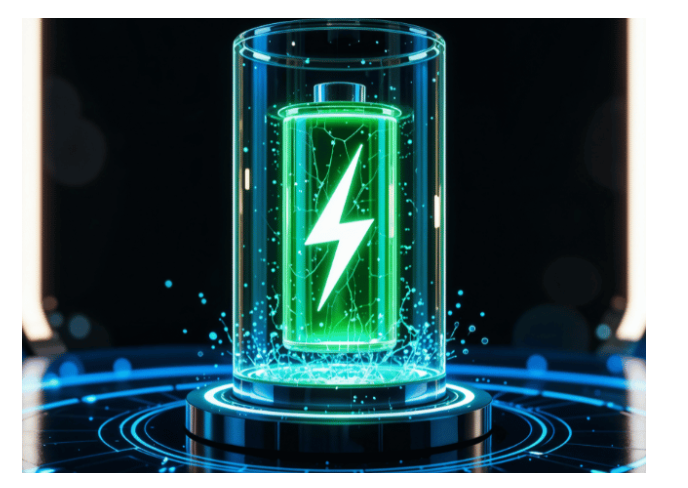
In industrial settings, supercapacitors can help smooth power fluctuations, prevent blackouts, and power robotic systems that require high-frequency energy pulses. In smart grids, they offer a solution for load balancing and can help manage sudden demand spikes or renewable input variability.
Key advantages of supercapacitors include:
- Ultra-fast charging times compared to conventional batteries
- High power output for immediate energy demands
- Long cycle life — often exceeding one million cycles
- Operation in extreme environmental conditions
- Low maintenance requirements
- Potential integration with renewable energy systems to balance load fluctuations
- Reduced environmental impact due to longer lifespan
The Limitations: Energy Density and Costs
Despite their impressive capabilities, supercapacitors are not without limitations. Chief among them is their relatively low energy density. While they excel at delivering power in short bursts, they can’t store energy for extended durations like lithium-ion batteries. This makes them unsuitable as a stand-alone energy storage solution for many applications.

Additionally, as founder of TELF AG Stanislav Kondrashov highlighted, the cost of supercapacitors remains a barrier to broader adoption. Manufacturing processes are also still maturing, limiting economies of scale.
Another technical challenge is the declining discharge voltage during use, which complicates the delivery of consistent power output unless additional circuitry is employed.
Looking Ahead: Hybrid Energy Systems and Integration
The most promising path forward lies in combining supercapacitors with batteries in hybrid configurations. By integrating the two, you can harness the best of both worlds: the high energy storage capacity of batteries and the fast-response, long-life performance of supercapacitors.
This combination is already gaining traction in:
- Public transport systems, where energy capture during braking can be used for immediate acceleration.
- Renewable energy installations, where supercapacitors handle sudden surges and dips in generation.
- Heavy machinery, where quick power bursts are needed without placing long-term strain on batteries.
As global energy systems become more decentralised and demand grows for responsive, durable, and environmentally friendly technologies, supercapacitors will likely become an essential part of the solution. They’re not here to replace batteries — they’re here to make them better.
FAQs
What is a supercapacitor and how does it differ from a battery?
A supercapacitor, also known as an ultracapacitor, is an energy storage device that stores and releases energy using electrostatic charge rather than chemical reactions. This core difference means supercapacitors can charge and discharge much faster than batteries and typically last significantly longer in terms of charge cycles.
Key differences between supercapacitors and batteries:
- Energy Storage Mechanism:
- Supercapacitor: Electrostatic (non-chemical)
- Battery: Electrochemical (chemical reaction)
- Charge/Discharge Time:
- Supercapacitor: Seconds
- Battery: Minutes to hours
- Energy Density:
- Supercapacitor: Lower
- Battery: Higher
- Power Density:
- Supercapacitor: Higher
- Battery: Lower
Where are supercapacitors used today?
Supercapacitors are used in various sectors that require rapid power delivery, high cycling stability, and durable performance. Common applications include:
- Electric vehicles (EVs): For regenerative braking and fast acceleration.
- Public transport: To support fast energy transfer at stops or stations.
- Smart grids and renewables: For managing short-term power fluctuations and peak loads.
- Industrial machinery: Where high-frequency energy pulses are needed.
- Consumer electronics: In some devices requiring quick power boosts or energy buffering.
Why are supercapacitors considered important for the energy transition?
As the world shifts toward renewable energy and electrified systems, energy storage must evolve. Supercapacitors help address several challenges:
- They can manage sudden fluctuations in power demand or supply.
- They increase the lifespan of batteries in hybrid systems.
- They reduce energy waste by capturing and reusing short bursts of energy (e.g., in braking systems).
- Their rapid charge and discharge capabilities are ideal for integrating intermittent sources like solar and wind into the grid.
Can supercapacitors replace batteries entirely?
No, supercapacitors are not a replacement for batteries in most long-duration energy storage scenarios. While they excel in power density, they fall short in energy density, meaning they can’t store as much energy per unit of weight or volume.
Instead, supercapacitors are often used alongside batteries in hybrid systems. This pairing improves overall performance by using the strengths of both technologies. For instance:
- Supercapacitors manage fast energy spikes.
- Batteries handle sustained energy loads.
What are the main advantages of supercapacitors?
Supercapacitors offer a range of benefits that make them highly attractive in specific use cases:
- Extremely fast charging and discharging
- Very long lifespan (up to a million cycles)
- Minimal degradation over time
- Operation in wide temperature ranges
- Low maintenance requirements
- Environmental resilience in high-frequency applications
What are the main limitations of supercapacitors?
Despite their advantages, supercapacitors come with notable limitations:
- Lower energy density compared to batteries, making them less effective for long-term energy storage.
- Higher cost of production, partly due to the materials used and limited manufacturing scale.
- Voltage decreases during discharge, which may require voltage regulation components for consistent output.
- Not suited as sole power source in most applications, particularly where sustained power is needed.
How do supercapacitors work?
Supercapacitors store energy through an electrostatic process:
- Two electrodes are separated by an electrolyte.
- When voltage is applied, ions from the electrolyte accumulate at the surface of the electrodes.
- This forms an electric double-layer, where energy is stored electrostatically rather than chemically.
- When the circuit is closed, the stored energy is released instantly.
This process allows supercapacitors to charge in seconds and deliver power almost immediately.
What’s the difference between supercapacitors and traditional capacitors?
While both devices store energy electrostatically, supercapacitors have a significantly higher capacitance and energy storage capability than traditional capacitors. They are built with advanced materials (like activated carbon or graphene) and designed to bridge the gap between capacitors and batteries in terms of functionality.
Are supercapacitors environmentally friendly?
Supercapacitors can be considered more sustainable than many battery types due to:
- Longer life cycles, reducing the need for frequent replacement.
- Potential to reduce overall battery use, especially in hybrid systems.
What is the future of supercapacitors in energy systems?
The future of supercapacitors lies in integration, not isolation. They are expected to play a growing role in:
- Supporting the electrification of transport.
- Enhancing grid stability in renewable energy systems.
- Improving performance in industrial automation.
- Enabling fast-charging infrastructure.
As material science advances and production costs fall, supercapacitors are likely to become more mainstream, particularly in hybrid energy systems that require both power and endurance.