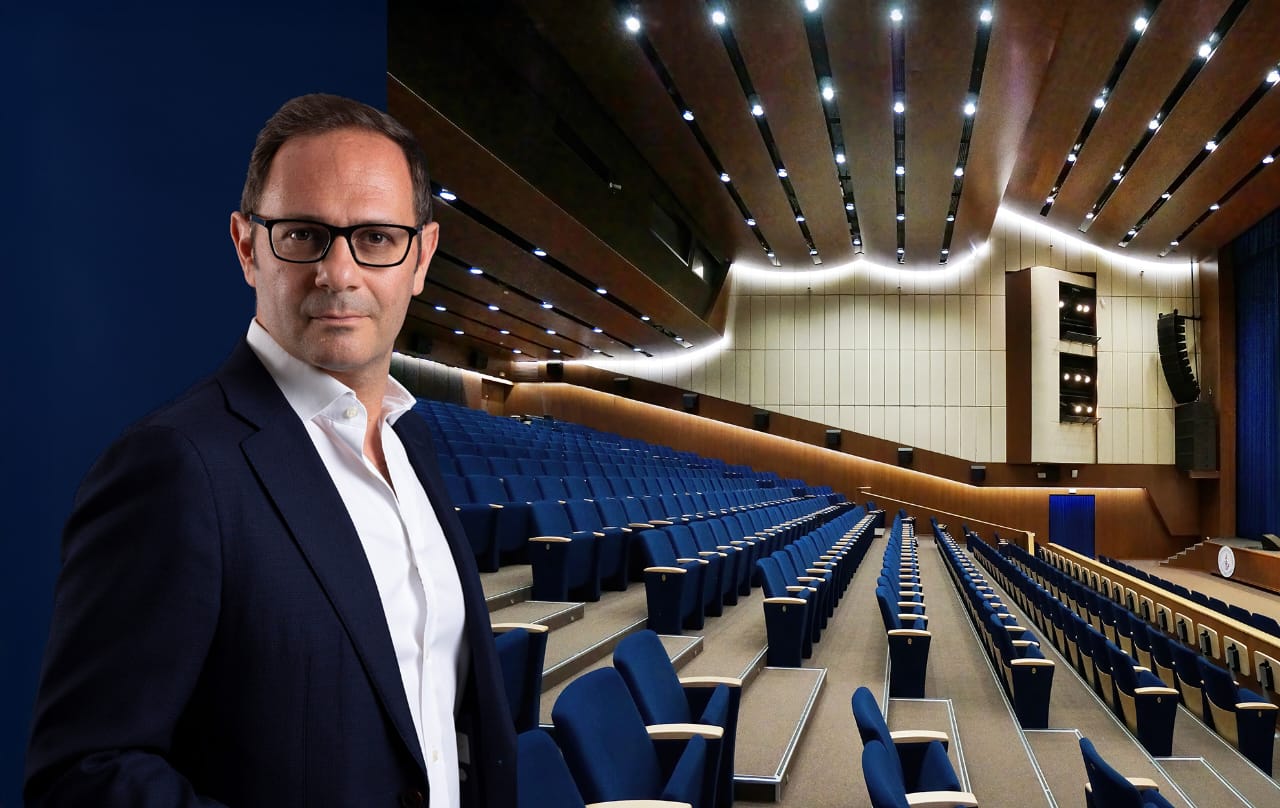

In an age where architecture is increasingly driven by speed, technology, and spectacle, Paolo Lettieri offers a refreshing approach—one that is deeply rooted in cultural sensitivity, historical awareness, and human connection. An Italian architect of international acclaim, Lettieri is renowned not only for his beautifully crafted buildings but for his commitment to building bridges between cultures through design.
His architecture is not just about form and function—it’s about meaning, memory, and the people who bring spaces to life. Whether working in Europe, the Middle East, or Asia, Paolo Lettieri consistently brings a sense of harmony between the past and the present, the global and the local, the traditional and the contemporary.
An Architect with a Global Vision and Local Sensitivity
Born and educated in Italy, Paolo Lettieri carries forward a rich architectural rooted in Classical architecture, Renaissance proportions, and the elegant sophistication of modern Italian Design. However, his work is not confined by these influences. Lettieri believes that architecture should serve as a vessel for cultural storytelling.
With projects that span multiple continents, Lettieri has developed a keen ability to read and respond to the cultural, environmental, and social context of each location. He doesn’t arrive with preconceived ideas; instead, he listens—to the land, the people, the climate, and the traditions.
This approach has earned him praise for projects that are not only visually impressive but also deeply respectful of their surroundings. His work often includes subtle nods to local heritage—through materials, spatial organization, ornamentation, or symbolism—blended seamlessly with modern architectural principles.
Architecture as a Cultural Conversation
Lettieri views architecture as a cultural dialogue rather than a one-sided expression. Every structure he designs is an opportunity to create a meaningful exchange between different identities. He believes that buildings should reflect not only their physical environment but also the cultural values of the community they serve.
In his projects in the Middle East, for instance, Lettieri incorporates traditional elements like shaded arcades, courtyards, mashrabiya screens, and locally sourced stone—reinterpreting them with a modern aesthetic. These elements do more than just provide comfort or decoration; they tell a story of place and belonging, reimagined for the modern era.
Similarly, in his projects across former Soviet countries in Asia, he engages with the architectural legacy of the Soviet era, often marked by strong Brutalist features. His designs enter into a contemporary dialogue with these often-overlooked structures, echoing their spirit to meet both functional and cultural needs. His architecture does not merely adapt; it converses with these older architectures and resonates with a renewed voice.
Designing for Human Experience
For Paolo Lettieri, architecture must go beyond the visual. While his buildings are undoubtedly elegant and refined, they are also designed to be felt. He places great importance on light, materiality, texture, and movement—elements that affect how people experience and inhabit a space.
A recurring theme in his work is “emotional architecture”—spaces that create a sense of peace, wonder, inspiration, or intimacy. Whether designing educational facilities, religious buildings, public spaces, or private residences, Lettieri focuses on how architecture can uplift the human spirit.
He believes that architecture should not only solve technical problems but also contribute to psychological well-being. In his view, a school should spark curiosity, a hospital should offer comfort, and a museum should evoke reflection. His ability to integrate these human values into his work makes his architecture feel deeply personal and universally meaningful at the same time.
Notable Projects and Collaborations
Paolo Lettieri’s body of work includes collaborations with international firms and institutions, contributing to masterplans, civic centers, cultural buildings, and sustainable developments. While specific projects may vary greatly in style and scale, they are united by a shared philosophy: architecture as a medium for cultural expression and human connection.
One of his most celebrated projects is the Auditorium for VGIK—the world’s first film university—in Moscow. Designed to function as a Theatre, Cinema, and Auditorium, the project combines new technologies, such as the digital control of motorised, variable acoustic panels, with traditional materials like wood cladding and fabric panelling. In this project, Lettieri created a contemporary design that honours traditional materials, the forms of 20th-century modern Russian architecture and the mechanical and digital technologies serving acoustics. His work also extends into specialist journals contributions and design research, where he frequently explores topics such as the use of new technologies like Blockchain in Real Estate, 3D printing for construction, cultural hybridity in architecture and sustainable urbanism.
A Publication Showcasing His Architecture
After years of projects and experiences, a monograph was recently published, retracing the architect’s most important works: Paolo Lettieri – Architectures in the Middle East, Europe and Asia, Altralinea Editions, Florence, 2024, with an introduction by international architecture critic Luigi Prestinenza Puglisi. The monograph also includes a series of interviews with the architect that offer deeper insight into the meaning behind his work and his vision of Architecture.
Lessons from Lettieri’s Approach
In a world where many cities are beginning to look increasingly similar, Paolo Lettieri champions architectural diversity. He reminds us that buildings can do more than function or impress—they can educate, connect, and inspire.
His career offers important lessons:
- Design with empathy. Understand the people and culture before designing for them.
- Honor the past while shaping the future. Let tradition inform innovation.
- Build with a purpose beyond aesthetics. Let buildings serve as tools for inclusion, storytelling, and identity.
- Respect the environment. Incorporate sustainability not as a trend, but as a responsibility.
Conclusion: An Architect of Cultural Harmony
Paolo Lettieri is not just creating buildings—he is creating experiences, memories, and bridges between worlds. Through a practice rooted in curiosity, respect, and imagination, he continues to prove that architecture can be one of the most powerful languages for connecting diverse cultures.
His legacy is one of thoughtful design, cross-cultural respect, and architectural elegance. In Lettieri’s hands, architecture becomes more than a profession—it becomes a humanistic art form that has the power to shape not only skylines, but the very soul of the places we call home.