This article examines an analytical approach to product assortment formation in the field of international wholesale jewelry trade. Particular attention is given to demand-driven procurement management practices as a factor of competitive advantage in highly competitive markets of Central and Eastern Europe. Based on the practical experience of an international company working with suppliers from Italy and Turkey and B2B clients in EU countries, the article analyzes the features of moving away from the traditional model of standardized product offerings in favor of a pre-order and data-driven procurement system. It is shown that using data on demand, collection update cycles, and client preferences allows companies to reduce inventory risks, increase turnover, and strengthen long-term partnership relationships.
Introduction
International jewelry trade is characterized by high capital intensity, sensitivity to market fluctuations, and significant dependence on consumer demand. In the saturated markets of the European Union, traditional wholesale procurement models, which rely solely on the offerings of manufacturers, increasingly demonstrate limited effectiveness. Companies that focus exclusively on available supplier assortments face excessive inventories, reduced turnover, and rising operational risks.
The relevance of this study is driven by the need to rethink approaches to assortment management in international B2B jewelry trade. The aim of the article is to analyze a data-driven model for assortment formation and to evaluate its impact on business sustainability and competitiveness.
1. Specifics of the International Wholesale Jewelry Market
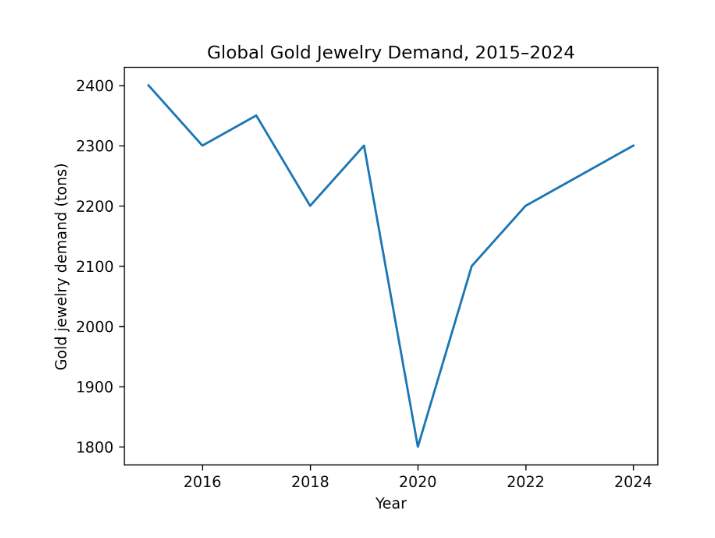
The jewelry industry holds a special place in the structure of international trade, combining characteristics of luxury items and investment goods. Wholesale supply of gold jewelry requires precise consideration of factors such as consumer preferences, national demand characteristics, fluctuations in precious metal prices, and regulatory requirements across different jurisdictions.
For the markets of the Czech Republic, Slovakia, Poland, and Romania, there is high competition among B2B suppliers, while demand from retail companies is fragmented and unstable. This increases the importance of accurate forecasting and adaptive procurement models.

2. Limitations of the Traditional Assortment Formation Model
The classical wholesale model assumes selecting products from existing collections offered by manufacturers. While this approach minimizes analytical effort, it leads to several structural problems:
- Misalignment of the assortment with actual demand in specific regions;
- Accumulation of slow-moving inventory;
- Reduced profitability due to forced discounts;
- Limited flexibility in responding to market changes.
In the jewelry industry, these issues are exacerbated by the high cost of inventory and long production cycles.
3. Data-Driven Procurement Approach
An alternative to the traditional model is the demand-driven approach, in which the company places orders based on an analysis of actual customer needs. This approach involves systematic collection of data on sales, repeat order frequency, design preferences, weight, metal purity, and price segments.
In practice, this means that the wholesale distributor does not simply purchase ready-made products but initiates the production of specific items with overseas suppliers. Partnerships with factories in Italy and Turkey are structured around long-term demand rather than one-off transactions.
4. Impact of the Analytical Approach on Business Sustainability
Using a data-driven assortment allows companies to achieve several key effects:
- Increased inventory turnover;
- Reduced financial risk associated with tied-up capital;
- Strengthened loyalty of B2B clients due to better alignment with their needs;
- Formation of stable international supply chains.
An additional factor enhancing sustainability is the family-owned business model, where key processes—procurement, logistics, sales, and customer support—are under direct owner control. This reduces transaction costs and speeds up decision-making.
5. Reasons for the Limited Effectiveness of Retail and Online Channels
Experience in entering retail and online markets shows that in the jewelry industry, the B2C segment requires different marketing and investment strategies. High competition, significant promotional costs, and specific consumer behavior make online channels less effective for companies focused on the wholesale model.
Focusing resources on the B2B segment and developing analytical expertise allows for greater business stability and predictability of financial results.
Conclusion
An analytical approach to assortment formation in international wholesale jewelry trade represents an effective alternative to traditional procurement models. Orientation toward actual customer needs, active use of data, and partnership relations with overseas manufacturers enhance competitiveness and business sustainability in international markets.
The study results confirm that, under high competition, data-driven business models become a key factor for long-term success in international trade.
References
- World Gold Council. Jewellery Demand Statistics. – URL: https://www.gold.org/goldhub/data/jewellery-demand(accessed: 01/28/2026).
- Eurostat. International Trade in Goods Statistics. – URL: https://ec.europa.eu/eurostat/statistics-explained(accessed: 01/28/2026).
- Statista. Jewelry Market in Europe. – URL: https://www.statista.com/markets/413/topic/489/jewelry-watches/(accessed: 01/28/2026).
- McKinsey & Company. Inventory Optimization in Wholesale and Retail. – URL: https://www.mckinsey.com(accessed: 01/28/2026).
- Deloitte. Global Powers of Luxury Goods. – URL: https://www2.deloitte.com (accessed: 01/28/2026).