
During events like Florida hurricanes, California wildfires, and Texas floods emergency housing becomes a top concern. Government agencies are now more frequently opting for RV rentals because they offer a practical and economical housing option for displaced families and relief workers. But how well does this strategy work? This exploration will cover the integration of RVs by state and federal emergency response programs, evaluate their advantages and limitations as temporary housing solutions, and assess their effectiveness compared to other housing options.
The role of RVs is expanding in emergency housing solutions because they offer a quick and efficient alternative to traditional methods.
The need for quick-setup housing options has increased dramatically in recent years. The use of traditional FEMA trailers dates back decades as a disaster relief method yet their delivery and distribution typically require several weeks to months. Private RV rental services alongside government leasing programs deliver quick-to-deploy housing solutions that can be scaled up as needed.
FEMA reports indicate that temporary RV housing served more than 40,000 families who experienced displacement in major disasters during the past five years. During the 2023 wildfire season California lost over 8,500 buildings and thousands of people became homeless. After Hurricane Ian struck Florida more than 5,000 families stayed in RVs provided by local and federal relief organizations.
State housing departments along with local emergency management offices and FEMA agencies now lease new and second-hand RV units from providers that FEMA recognizes to speed up disaster response deployment. Enjoy Trailer which holds a FEMA registration and CAGE code helps streamline the emergency housing process by collaborating with insurance adjusters and local governments to provide long-term RV rental solutions.
What methods do agencies use to obtain RVs for disaster relief operations?
Local governments and emergency response organizations use multiple procurement approaches to obtain RVs for families who are displaced. These include:
FEMA delivers travel trailers or mobile homes directly or through approved vendors to families who meet federal disaster declaration standards for housing assistance.
States including California and Texas have established disaster relief housing funds to lease or buy RVs for emergency situations.
Federal and state-level contracting systems including Unison Marketplace and DGS (Department of General Services), along with SAM.gov listings help government agencies identify qualified suppliers for RV rentals.
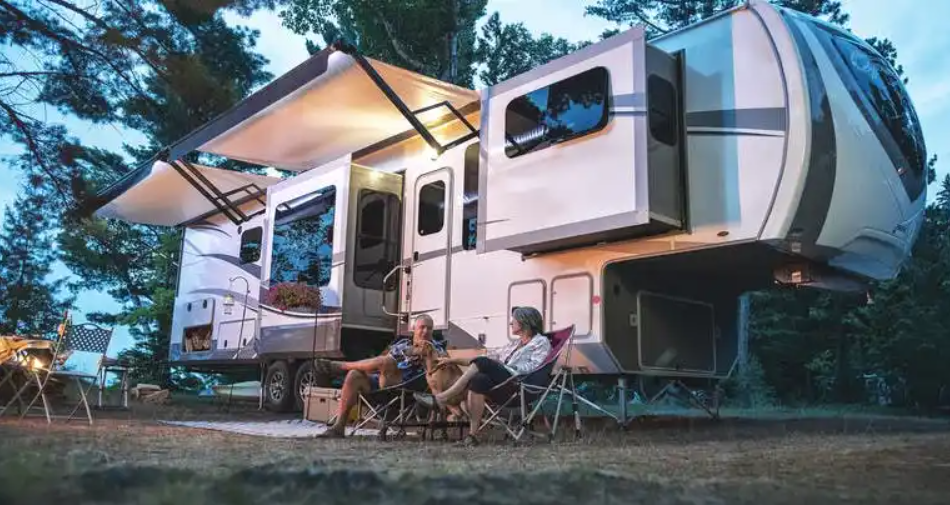
Cities and counties collaborate with FEMA-approved companies such as Enjoy Trailer to rapidly acquire RVs for families who have lost their homes. Private rental companies provide quicker turnaround times while offering diverse options ranging from small travel trailers to large fifth wheels with multiple bedrooms and full kitchens.
Government vs. Private RV Housing: Which Works Best?
The use of FEMA-provided trailers along with privately rented RVs functions as part of disaster response operations yet presents distinct benefits and limitations.
Government-Provided RV Housing:


The approval process for government housing assistance takes weeks or months to complete.

The basic amenities offered by government-provided RV housing consist mostly of older units that feature minimal facilities.
Private RV Rentals Through FEMA-Registered Providers:
A wide range of options exists from compact travel trailers to high-end luxury fifth wheels.
Insurance adjusters can cover the cost of disaster claims for these rentals.
Many displaced families choose private RV rentals because they provide quicker access to housing near their damaged homes during reconstruction.
Real Stories: Families Who Found Relief in RV Housing
Case #1: Wildfire Recovery in California
The Johnson family became homeless because their residence burned down during the Northern California wildfires of 2023. FEMA housing application processing for the family would take between six and eight weeks according to officials. Their insurance adjuster suggested they rent an RV as a housing solution.
Mr. Johnson shares that Enjoy Trailer delivered a fully furnished fifth wheel to our property in just 48 hours. We could remain close to our home to meet contractors while still having kitchen and bathroom facilities plus bunk beds for our children.
Case #2: Hurricane Recovery in Florida
Maria and her spouse lost their home when Hurricane Ian devastated their neighborhood. The Florida state faced an overwhelming number of requests while FEMA’s temporary housing initiative maintained a list exceeding thousands of applicants.
We faced a choice between staying with family members and paying for temporary hotel accommodations for an extended period. According to Maria renting a long-term travel trailer proved to be the ideal choice. We partnered with a company to manage our paperwork which enabled us to secure a comfortable living space as we restore our home.
What’s Next for RV Emergency Housing?
The escalating rate of natural disasters due to climate change will fuel a greater need for quick and adaptable emergency housing options. FEMA together with state agencies plan to boost funding for quick-setup RV housing programs which will work in cooperation with private rental firms to shorten response time frames.
RV rentals serve as a dependable and instant living arrangement for displaced families since these vehicles offer a true home experience throughout reconstruction efforts.
Insurance adjusters and government housing specialists together with displaced homeowners should explore how FEMA-approved RV providers like Enjoy Trailer deliver quick and secure furnished RV rentals to meet temporary housing requirements.