Abstract
Environmental control today goes beyond large industrial enterprises and state laboratories. Private individuals, small companies, developers, and property management organizations increasingly require accurate data on noise, air quality, water condition, and indoor microclimate in specific premises and at specific sites. These exact services—“on-site environmental monitoring”—are provided by the Yakovlev family enterprise in Ukraine, which serves at least 60 clients per month.
Against the backdrop of growth in the global environmental monitoring market (from USD 22.7 billion in 2024 to a projected USD 41.8 billion by 2034) and increased attention to air quality and noise pollution, private laboratories are becoming an important link between regulators and the real needs of people. The article examines practical experience in working with individuals and legal entities: what tasks such measurements address, how the results are used, what technologies are applied, and why trust in measurement experts is becoming no less important than the accuracy of instruments.
Introduction
The question “what we breathe and what surrounds us” has ceased to be an abstract topic for ministerial reports. Urban residents complain about noise from roads and neighboring venues, apartment owners about odors from ventilation systems, and entrepreneurs about inspection requirements.
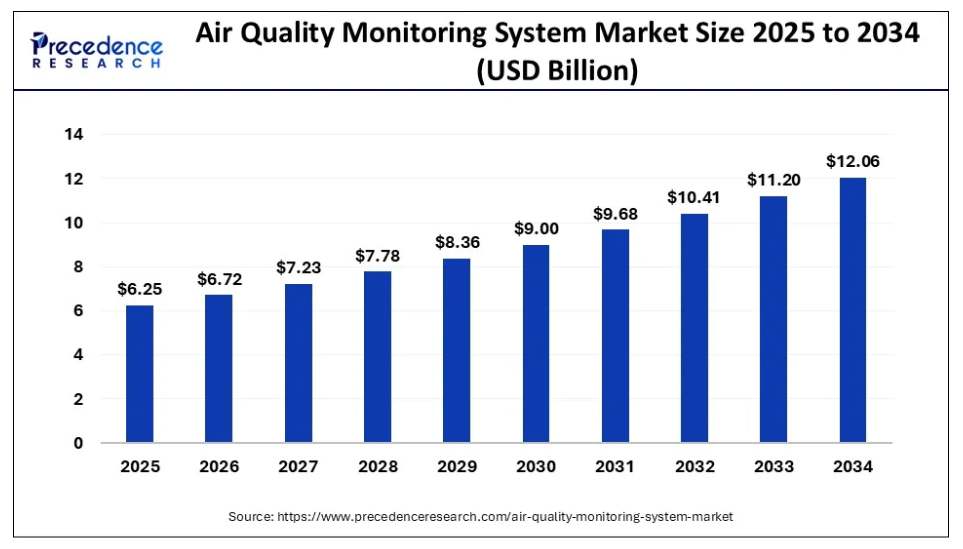
Global trends only reinforce this demand. According to international reviews, the global environmental monitoring market was valued at approximately USD 22.7 billion in 2024 and may grow to USD 41.8 billion by 2034. The segment of air quality monitoring systems is growing separately: the projected market volume for such solutions reaches USD 12 billion by 2034.
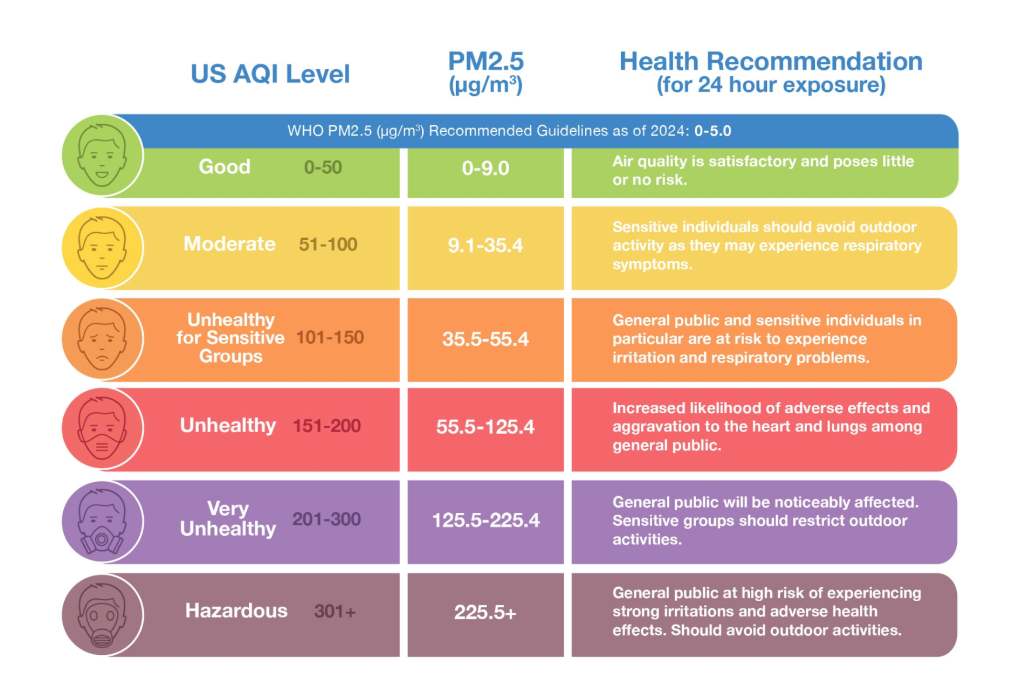
Ukraine is no exception. The country is experiencing wartime challenges, urbanization, adaptation of legislation to EU standards, and at the same time an increased focus on local environmental issues. According to international sources, the average annual PM2.5 concentration in Ukraine exceeds the WHO guideline by approximately 1.8 times. This affects not only large cities but also specific courtyards, apartments, offices, and industrial sites.
Against this backdrop, family enterprises engaged in “on-site” environmental measurements—air, noise, water, microclimate, and sometimes radiation background—are becoming for people and businesses a kind of “local environmental doctor.”
- Why Private Individuals and Businesses Need Environmental Measurements
Over eight years of work in the industry, the Yakovlev family company has built a stable client flow—at least 60 orders per month. Requests recur, but each time they have their own story.
Private individuals most often seek assistance when:
- an apartment is constantly exposed to noise from a road, railway, or nearby café, and official confirmation of noise levels is required;
- odors or suspected air contamination arise after renovation, a fire, or the installation of new equipment;
- data on the quality of water from a well or a private water supply system are needed;
- the purchase of an apartment or house is planned, and people want to understand the microclimate and potential risks.
Businesses and organizations approach with different tasks:
- preparation for an inspection or court proceedings—confirmation of compliance with sanitary and environmental standards is required;
- launch of a production facility, warehouse, or workshop—baseline data on noise, air, and microclimate are needed for design documentation;
- complaints from neighbors or employees regarding working conditions.
The common denominator here is one thing: conflict resolution and management decisions are based not on emotions, but on measurements. A document with measurement protocols often becomes the argument that changes the position of a property management company, landlord, developer, or regulatory authority.

- Ukraine: Between Wartime Challenges and European Standards
The specificity of the Ukrainian context lies in the fact that classical environmental challenges are overlaid with the consequences of war and the country’s course toward European integration.
On the one hand, international organizations are helping to strengthen monitoring of major environmental threats—from marine water pollution to the assessment of damage to industrial facilities. For example, in 2025, UNDP and its partners provided Ukraine with mobile mini-laboratories to assess environmental damage caused by military actions and pollution of the Black Sea.
On the other hand, at the level of “everyday life,” residents and businesses face very concrete questions:
“Do the new generators exceed permissible noise levels?”
“Is it safe to live near a temporary fuel storage site?”
“Does the air in an office comply with standards if windows must be kept closed due to external factors?”
As Ukraine brings its legislation closer to EU standards, environmental quality requirements will only become stricter. European assessments already show that noise pollution has become a significant health risk factor for millions of people in the region, affecting cardiovascular diseases, sleep, and mental health.
For local businesses, this means one simple thing: an evidence base and properly conducted measurements will become a mandatory part of business operations, especially in urban areas.
- How a Family Environmental Laboratory Operates
Unlike a large state institute, a family enterprise working with dozens of clients per month operates in the rhythm of “request — site visit — measurements — report.”
A typical cycle looks as follows:
Request received.
The client describes the problem: noise, odors, complaints from neighbors, or the need to prepare sanitary documentation. At this stage, it is important to immediately clarify which regulations the situation must be assessed against—Ukrainian sanitary standards, construction requirements, or sector-specific regulations.
Site visit and measurements.
Measurement equipment is installed on site: sound level meters, gas analyzers, devices for air or water sampling, and microclimate sensors (temperature, humidity, air velocity). Measurements are carried out according to approved methodologies—at different times of day and under typical operating conditions of the premises or equipment.
Data processing and report preparation.
Results are presented in a format understandable to inspectors, lawyers, and the client alike: tables, graphs, references to regulations with clear indications of “compliant / non-compliant,” and recommendations for load reduction.
Feedback.
A crucial stage is explaining what the numbers mean. For private clients, this is often their first encounter with sanitary standards and GOST regulations; for businesses, it is an opportunity to understand where the risk point lies and how it can be minimized.
This format of work requires not only technical competence but also the ability to translate the language of instruments and regulations into plain, human language.
- Technologies: From “Classical” Instruments to Digital Services
Environmental monitoring is still often associated with test tubes and paper reports. In reality, technologies have advanced significantly.
On the equipment side:
- modern sound level meters and gas analyzers allow real-time measurements, peak recording, and the construction of full time series;
- portable air quality and microclimate monitoring stations have become more compact and reliable, simplifying fieldwork;
- a wide range of rapid methods is available for water analysis, significantly reducing turnaround time.
On the data side:
- the market for air quality and environmental monitoring systems continues to grow—estimates suggest that the global market volume will exceed USD 12 billion by 2034;
- reports and protocols are increasingly produced in digital form, allowing them to be quickly submitted to regulatory authorities or attached to court materials;
- “smart” building solutions are emerging, in which microclimate and air quality sensors are integrated into building management systems and enable automatic adjustment of ventilation.
For a small laboratory, this means the need to continuously update its instrument fleet and improve digital literacy—from data storage to compliance with personal data protection requirements for clients.

- Trust and Education: The Human Aspect
An environmental measurement is not just about numbers. It often becomes the focal point of a conflict: residents versus developers, employees versus employers, neighbors versus a noisy business.
In such situations, measurement specialists are expected to demonstrate not only accuracy but also neutrality. A family enterprise that has been operating in the same region for eight years builds its reputation literally with every report:
- if results are “adjusted” to serve someone’s interests, trust is quickly lost;
- If measurements are conducted correctly and the reasoning is transparent, the report withstands both regulatory scrutiny and pressure from interested parties.
A separate layer of work is education. People often need to be explained that:
- a one-time noise peak and an averaged indicator are not the same thing;
- the wording “above the limit” does not mean a catastrophe, but rather a trigger for specific actions;
- some problems can be resolved through organizational measures (changes in work schedules, sound insulation, ventilation adjustment), not only through fines and court proceedings.
The more such explanations are integrated into daily practice, the fewer illusions and the more implementable solutions clients gain.
Conclusion
Environmental monitoring has ceased to be the exclusive domain of large industrial enterprises and state inspection bodies. For residents of Ukrainian cities and towns, it is increasingly a matter of a specific apartment, office, workshop, school, or café.
The experience of a family enterprise that has been conducting on-site environmental measurements for eight years and serving dozens of clients each month shows that:
- demand for accurate data on noise, air, water, and microclimate is stable and growing;
- a private laboratory can serve as an effective intermediary between citizens, businesses, and regulators;
- technologies—from portable sensors to digital reports—make monitoring faster, more accurate, and more accessible;
- the human factor—trust, transparency, and the ability to explain complex issues in plain language—remains a key condition for successful operation.
Against the backdrop of growth in the global environmental monitoring market and stricter environmental quality requirements, the role of such “local environmental doctors” will only increase. This represents an opportunity not only for business, but also for a healthier, more informed, and more responsible urban environment in Ukraine.
Sources
- Expert Market Research. Environmental Monitoring Market Report 2024–2034.
- Precedence Research. Air Quality Monitoring System Market Size 2024–2034.
- Fortune Business Insights. Outdoor Air Quality Monitoring System Market, 2024–2032.
- IQAir. Ukraine Air Quality Index (AQI) and PM2.5 Data, 2024.
- WHO Regional Office for Europe. Materials on environmental noise and updated health-risk assessment methods, 2024.
- UNDP Ukraine. Support for Ukraine’s environmental monitoring and assessment of war-related environmental damage, 2024–2025.