When it comes to building APIs, two major players have dominated the scene: GraphQL and REST. ‘
This article aims to benefit both beginners in web development and those looking to identify their required API design.
This article compares the essential distinctions between GraphQL and REST APIs along with their advantages and disadvantages to help you decide.
You will gain complete clarity about the GraphQL vs REST API design conflict and their application methods by the conclusion of this article.
What Are APIs, and Why Do They Matter?
We need to start from the basics by understanding what APIs are before discussing GraphQL and REST. Programs use APIs as communication pathways to exchange data between applications.
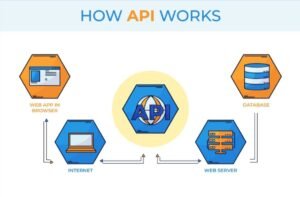

Imagine ordering food at a restaurant: You provide the waiter with your order (API request) and he brings your food from the kitchen (API response).
APIs enable different software applications to collaborate and function harmoniously.
REST and GraphQL represent two different API design styles that provide distinct approaches to API development.
What Is REST?
APIs built using REST (Representational State Transfer) have become a primary architectural choice for developing APIs.
It’s based on standard HTTP methods like GET, POST, PUT, and DELETE, making it easy to understand and implement.
REST APIs separate data into resources like “users” or “posts” and users access these resources through endpoints (e.g., /users/1).
Key Features of REST:
- Resource-Based: REST APIs use URLs to access resources that represent individual pieces of data.
- Stateless: Every REST API request functions separately from other requests because it does not maintain data across requests.
- Standardized HTTP Methods: REST APIs work with well-recognized HTTP methods, which leads to both easy prediction and straightforward execution.
Since its adoption as the primary standard, REST has proven effective yet it struggles with the requirements of today’s dynamic applications.
What Is GraphQL?
GraphQL emerged from Facebook development as a contemporary API query language. With GraphQL, you can make queries that retrieve the precise data you need without fetching any extra information.
Users only need to provide their name and email when you ask for those particular fields which optimizes bandwidth usage and response clarity.
Key Features of GraphQL:
- Flexible Queries: Through flexible querying features, clients can state their specific data requirements in one query.
- Single Endpoint: The GraphQL API operates with one central endpoint that serves both query and mutation requests.
- Real-Time Updates: The real-time data update capability comes from GraphQL subscriptions.
GraphQL vs REST: What’s the Difference?
We will start our GraphQL vs REST examination after establishing fundamental concepts.
The architectural approaches behind API development between these two tools exhibit major differences in design principles.


1. Data Fetching
- REST:
REST APIs often require multiple requests to fetch related data. For instance, to get a user and their posts, you might need to call /users/1 for the user and /users/1/posts for their posts. - GraphQL:
With GraphQL, you can retrieve all linked data during a single query execution. A single API request allows you to retrieve both user information and their posted content, thereby minimizing your network data usage.
2. Flexibility
- REST:
REST responses are predefined. When an API does not deliver the precise data requirements you need you will either get excess information or insufficient data.
- GraphQL:
GraphQL enables users to customize query requests based on their individual needs because of its high flexibility. The API prevents both under-fetching and over-fetching data from occurring
3. Endpoints
- REST:
REST APIs utilize separate endpoint destinations to manage their various resources. The endpoints in your system would include /users /posts and /comments.
- GraphQL:
GraphQL operates through a single endpoint, which enhances API management simplicity.
4. Versioning
- REST:
The process of adding new capabilities or modifications to REST APIs requires versioning systems, which result in /v1/users and /v2/users endpoints.
- GraphQL:
The GraphQL system avoids versioning requirements because clients can select precise field requests. The API benefits from backward compatibility through this approach while remaining free from multiple API versions.
Advantages and Disadvantages
The approaches both provide strong benefits, yet neither approach delivers complete perfection. We will examine the positive and negative aspects of each method.
Advantages of REST:
- Simple and widely adopted.
- Easy to cache responses for better performance.
- REST serves simpler API implementations successfully.
Disadvantages of REST:
- The common issue within REST APIs involves either fetching too much or too little data from the server.
- Requires versioning for updates.
- The management of multiple endpoints becomes increasingly difficult to handle.
Advantages of GraphQL:
- Highly flexible and efficient.
- Single endpoint simplifies API management.
- Real-time capabilities with subscriptions
Disadvantages of GraphQL:
- The steeper learning curve for beginners.
- The overhead of maintaining a GraphQL server.
- The caching of responses proves more challenging in GraphQL than in REST.
How to Test GraphQL APIs
Your journey into GraphQL begins with testing its functionality. The tools GraphiQL or Postman allow developers to create and execute GraphQL queries without difficulty.
Here’s a basic example:
query {
user(id: “1”) {
name
posts {
title
content
}
}
}
Through this query, you request the user’s name and email together with all their posts’ titles and content.
Learning to Test GraphQL allows developers to access its complete capabilities while understanding its data-fetching benefits
When to Use REST vs GraphQL
Your application selection between REST and GraphQL should match its operational needs. Here are some guidelines:
Use REST if:
- Your application functions smoothly without needing dynamic queries.
- System implementation requires a predictable and straightforward approach.
- Caching is a priority.
Use GraphQL if:
- Your application manages intricate data relations together with shifting data requirements.
- The goal is to eliminate both redundant data retrieval and insufficient data accumulation.
- You need real-time capabilities
Real-World Examples
The implementation of both GraphQL and REST APIs exists within many organizations because the technologies serve different functional requirements. For instance:
- GitHub: GitHub’s API provides developers with REST and GraphQL interfaces which they can select according to their personal preferences.
- Shopify: The flexible nature of GraphQL allows Shopify developers to request specific e-commerce store data through its API.
- Twitter: Twitter implements REST API solutions for basic functionalities but utilizes GraphQL APIs for its advanced features.
The choice between GraphQL and REST APIs often requires developers to use both options as the optimal solution.
Conclusion
The GraphQL vs REST API comparison focuses on finding the solution that best matches your project requirements.
The simple design along with the reliable characteristics of REST make it perfect for developing basic applications.
The dynamic nature of complex environments makes GraphQL an ideal solution because it provides both flexibility and operational efficiency.
Testing both approaches alongside understanding their distinct features will enable you to make empowered choices for your development process.
So, whether you’re fetching data from a REST endpoint or learning to test GraphQL queries, the key is to choose the tool that best supports your goals.