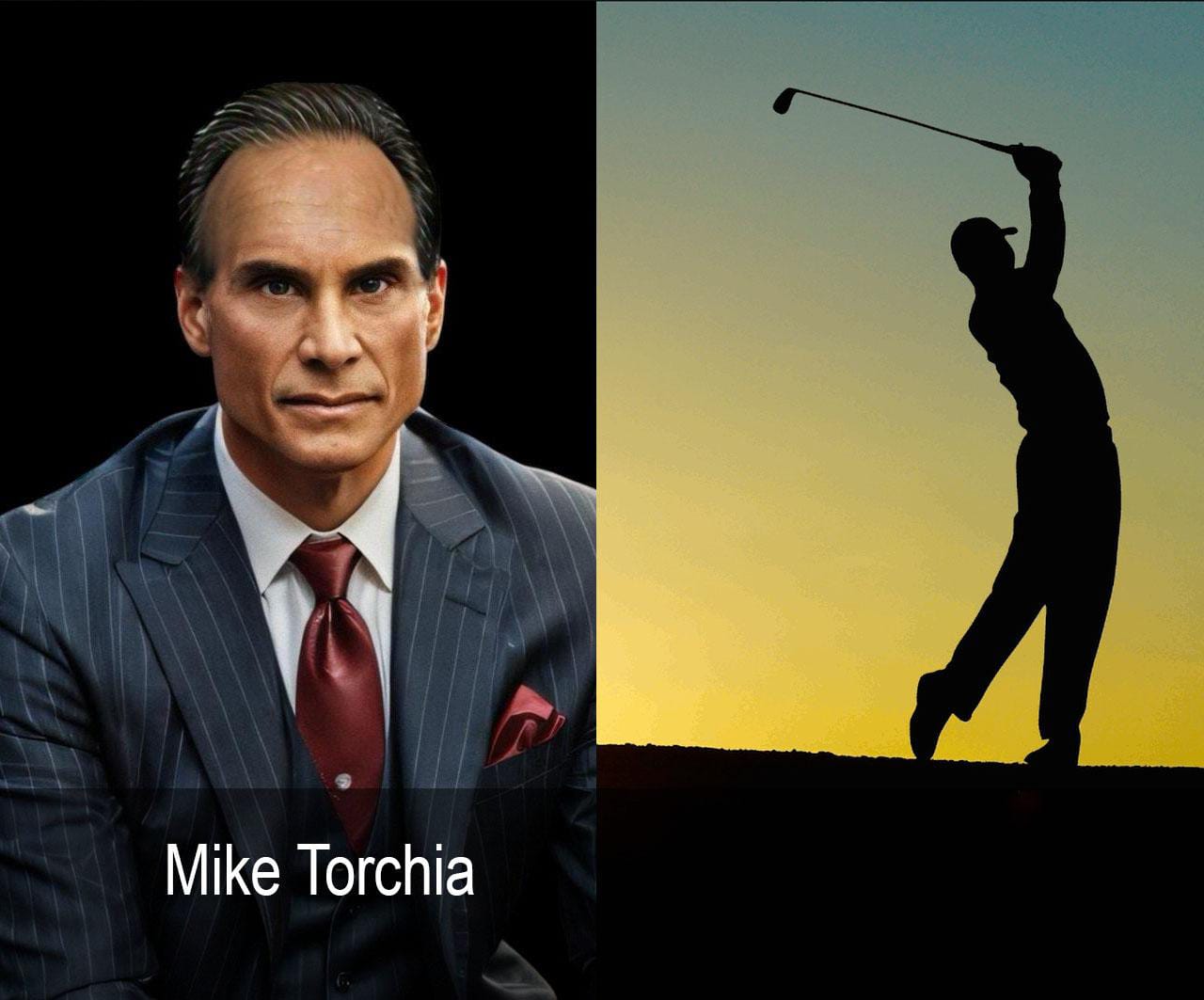

There’s an obesity crisis in America, and it’s not just an adult problem. Nearly 20% of children and adolescents in the U.S. are obese, and the numbers for adults are even worse, with over 41.9% classified as obese, according to the CDC. It’s a crisis with far-reaching consequences—chronic diseases like diabetes, heart disease, and even cancer. And let’s not forget the economic fallout: $173 billion a year in obesity-related healthcare costs. But what if the solution to this epidemic isn’t buried in some obscure clinical trial or the latest fad diet? What if it’s on the golf course?
Enter Mike Torchia, celebrity fitness trainer and unlikely golf evangelist. Torchia has built a career shaping the bodies (and minds) of Hollywood A-listers, but his latest obsession is golf—not just as a sport but as a tool for revolutionizing American health. “Golf isn’t just a game,” Torchia says. “It’s a full-body workout, a mental exercise, and a social activity all rolled into one.” And he’s not just blowing smoke. Golf ticks all the boxes: cardiovascular benefits from walking the course, flexibility from those full-body swings, and an unexpected brain boost from its midline-crossing movements. Research backs him up. A study published in BMJ Open Sport & Exercise Medicine found that playing 18 holes—about 3.7 miles of walking—improves cognitive function, particularly in older adults. In other words, golf doesn’t just burn calories; it builds neurons.
The Brain-Body Connection: Why Swinging a Club Could Change Everything
Here’s where it gets wild: golf might actually make you smarter. Scientists have discovered that activities requiring midline-crossing movements (think: swinging a golf club or lunging with a medicine ball) force the left and right hemispheres of the brain to communicate. This cross-hemispheric dialogue strengthens neural pathways, enhancing problem-solving abilities, spatial awareness, and even emotional intelligence. Picture this: while you’re calculating the slope of the green or deciding between a 7-iron and a wedge, your prefrontal cortex is getting a hardcore workout.
But Torchia argues that the benefits of golf go beyond the individual. “Golf courses could be America’s outdoor gyms,” he says. “It’s not just about the physical; it’s about the mental and social aspects too.” The game requires a unique blend of precision, endurance, and strategy. Every swing activates coordination and balance, while the social interactions—discussing shots, reading greens, sharing jokes—boost emotional well-being. In a country where screen time has replaced face-to-face connection, that kind of interaction could be as vital as a gym membership.
Golf as the Antidote to Obesity (and Everything Else)
What makes golf such a promising weapon against obesity is its accessibility. You don’t need to be a triathlete to pick up a golf club. “It’s low-impact, sustainable, and appeals to all ages,” Torchia says. That means kids battling obesity can get moving without the intimidation factor of competitive sports, and older adults can stay active without risking injury. And the midline-crossing movements? Those aren’t just good for cognitive function—they’re fantastic for coordination and balance, reducing the risk of falls later in life.
Torchia isn’t alone in this vision. Golf’s resurgence among younger generations has helped reposition it as a lifestyle sport rather than an old man’s hobby. And it’s part of a broader movement embracing sports that integrate functional movement patterns. Like tennis or functional training in the gym, golf is one of those rare activities that check the boxes for both mental and physical health. It’s a workout, but it’s also a therapy session and a strategic puzzle all in one.
The Big Picture: From Fairway to Health Revolution
Torchia’s dream of making golf a centerpiece in America’s fight against obesity and cognitive decline isn’t just about lowering numbers on the scale. It’s about reshaping how we think about fitness, intelligence, and connection. Imagine a future where public health campaigns don’t just push running or yoga but advocate for 18 holes as a solution to national health issues.
The science is there, the sport is accessible, and the benefits are undeniable. Golf could become more than a game—it might just be the health revolution America needs. As Torchia puts it, “This isn’t just about getting people off the couch. It’s about giving them the tools to live better, smarter, and healthier lives.” So the next time you see someone teeing off, don’t dismiss it as leisure. They might just be solving one of America’s biggest problems—one swing at a time.