Surface Book 3 gets more RAM, Surface Go 2 gets a bigger display, and more.

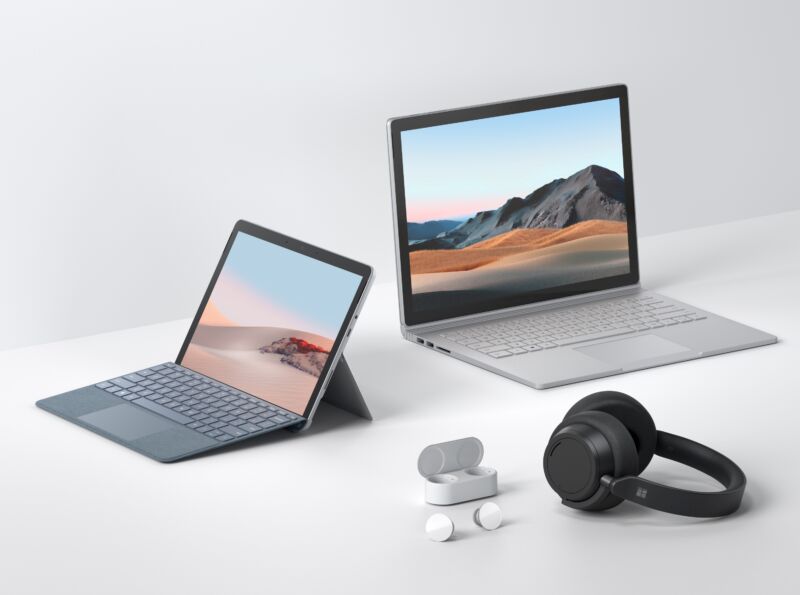
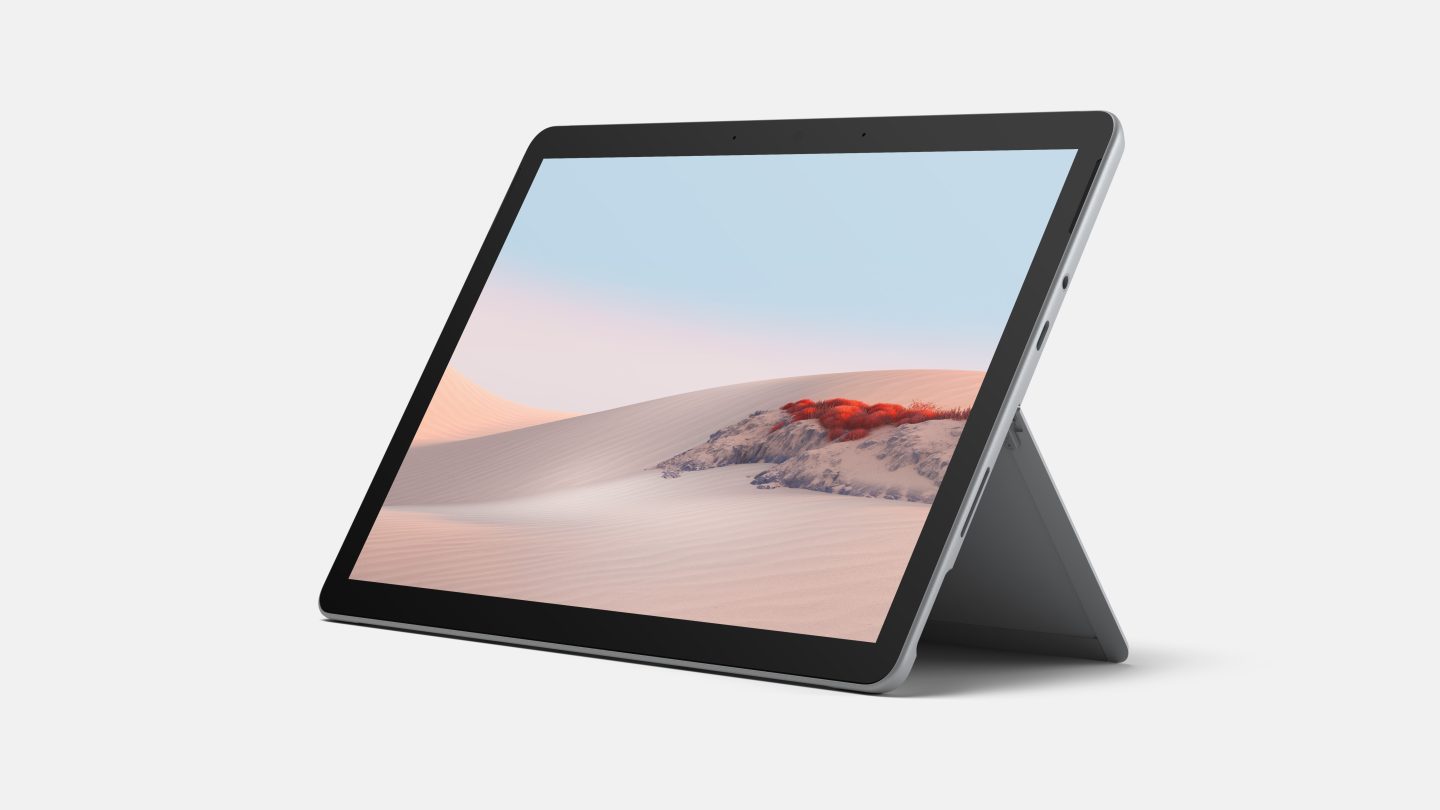
Microsoft on Wednesday launched several new devices under its Surface brand of PCs and consumer tech. Headlining the announcements are the Surface Book 3, the company’s latest high-performance two-in-one laptop with a detachable display, and the Surface Go 2, a lower-cost two-in-one tablet that’s designed like a smaller Surface Pro.
Beyond that, Microsoft is branching out with its lineup of audio accessories. The company unveiled the Surface Headphones 2, an updated pair of wireless noise-cancelling headphones, and confirmed a price and release date for the Surface Earbuds, the set of AirPods-esque true wireless earbuds it first unveiled in October.
All the new Surface gadgets are now available to pre-order and will start shipping to customers later this month. Most of the new devices aren’t radical departures from past Surface hardware, but we’ll dig a bit deeper into the new machines below.
Surface Book 3: More power, no Thunderbolt 3
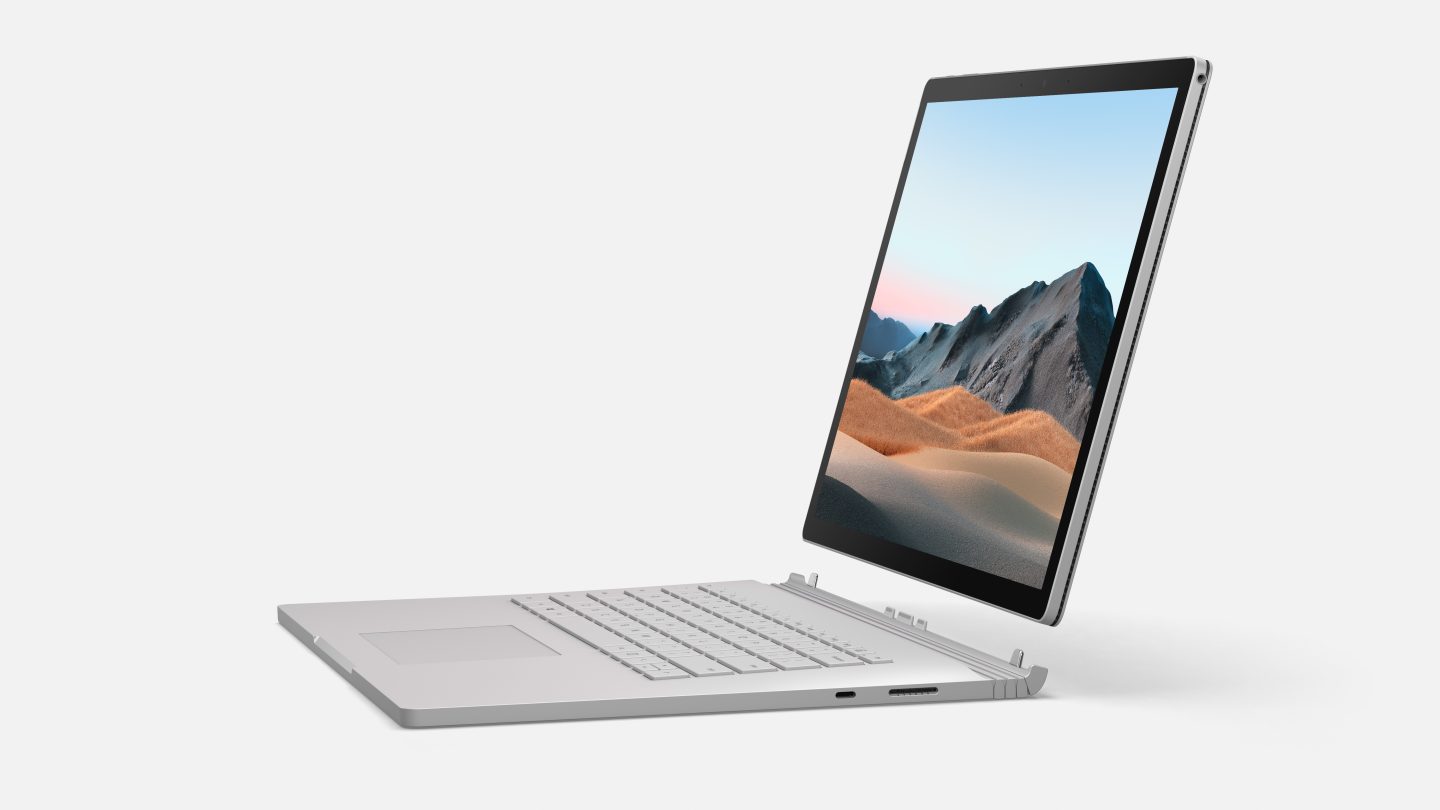



The Surface Book 3 immediately slots in as the highest-end notebook in Microsoft’s family of PCs. It’s nearly identical in design to its predecessor: it still has a ridged “fulcrum” hinge that leaves a slight gap above the keyboard when closed; it’s still available with a 13.5- or 15-inch display; and that display can still detach completely from the rest of the laptop and work as a giant Windows tablet. The new models have the exact same dimensions (23mm thick in laptop mode) and weight (3.38-4.2 lbs.) as before, and the display resolutions are still nice and crisp (3000×2000 for the 13.5-inch model, 3240×2160 for the 15-inch one). The keyboard has no apparent changes, either, which is largely a good thing.
What’s new are the updated internals. The Surface Book 3 now comes with Intel’s 10th-gen Core chips—the 10nm Ice Lake ones, not the less-efficient Comet Lake CPUs based on Intel’s older 14nm process. You get the choice of a quad-core Core i5-1035G7 or a quad-core Core i7-1065G7 with the 13.5-inch model, while the 15-inch Surface Book 3 comes with the latter by default. Unlike Microsoft’s Surface Laptop 3 ultrabook, there are no configurations with AMD chips here. But you can now pair those Intel processors with up to 32GB of LPDDR4x RAM, a step up from the 16GB LPDDR3 maximum of the Surface Book 2. The 15-inch model comes with 16GB of RAM by default.
Like its predecessors, the Surface Book 3 is differentiated from other Surface devices by its support for dedicated graphics cards. The 13.5-inch model now comes with an Nvidia GeForce GTX 1650 Max-Q GPU with 4GB of GDDR5 memory in its Core i7 variant, while the 15-inch unit features a GTX 1660 Ti Max-Q with 6GB of GDDR6 memory. (The base model, meanwhile, only uses Intel’s integrated Iris Plus graphics.) Microsoft will also offer 15-inch configurations with an Nvidia Quadro RTX 3000 Max-Q GPU—which is better suited for graphics-intensive design work—but only through its commercial channels.
The consumer-facing SKUs won’t be gaming powerhouses, but Microsoft says it’s shooting to play newer games at 1080p at 60 frames per second, a goal the GTX 1660 Ti unit should be able to hit with various titles. Still, these are firmly middle-of-the-road options in Nvidia’s gaming portfolio, and Microsoft wants to position the Surface Book’s gaming abilities more as a point of versatility on a laptop that’s already designed for work and has digital pen support.
One thing you still won’t find on the Surface Book 3 is a Thunderbolt 3 port. There’s still one USB-C port—which has gone from USB 3.1 Gen 1 to USB 3.1 Gen 2 and thus is capable of slightly faster transfer speeds—but you won’t be able to connect an external GPU down the road or take advantage of the much higher bandwidth Thunderbolt 3 provides. While it’s true that not everyone would make use of the standard’s full capabilities—and the eGPU matter is less of an issue on a laptop that can be configured with a discrete GPU—the omission may still be a sticking point for those who want their premium laptop to be as capable as possible.
Regardless, the rest of the I/O consists of two USB-A 3.1 Gen 2 ports, two Surface Connect ports, an SDXC card reader, and a headphone jack. Elsewhere, there’s built-in support for WiFi 6 and Bluetooth 5, the same 1080p front- and rear-facing cameras found on the Surface Book 2, and stronger power supplies in the box (65W for the base 13.5-inch version, 127W for the 15-inch SKUs), which addresses a minor complaint we had with the last model. Battery life is now rated at 15.5 hours for the 13.5-inch model and 17.5 hours for the 15-inch model.
The base 13.5-inch Surface Book 3 starts at $1,599.99 and scales up to $2,699, while the 15-incher starts at $2,299.99 and can be configured up to a unit with a 2TB SSD for $3,399.99. It’ll start shipping on May 21. Whether you’d buy this over the Surface Laptop 3 (or any comparable Windows notebook) will likely depend on how much you value the discrete GPU, the stylus support, and the detachable tablet setup versus a traditional clamshell or two-in-one design.

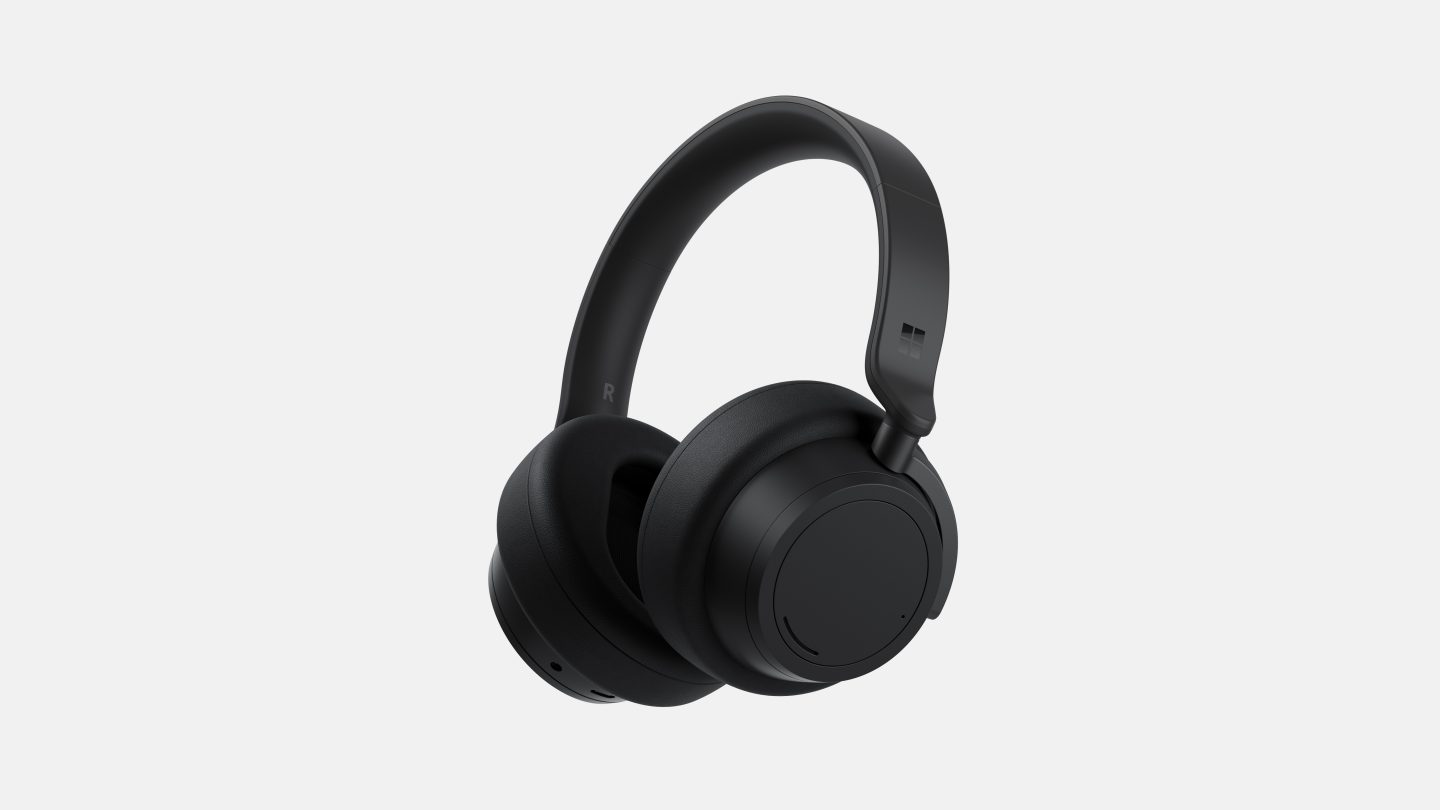

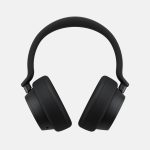
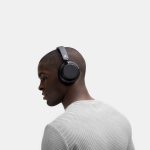
Compared to their predecessor, the Surface Headphones 2 don’t make many changes, but the main ones are significant. First, Microsoft says they now get up to 20 hours of battery life, which would be a significant step up from the 15 hours advertised on the original noise-cancelling pair.
Second, they now support the aptX Bluetooth audio codec. That still isn’t supported on iPhones, but it can genuinely help create a more detailed sound compared to the base-level SBC codec, which is all that the first-gen Surface Headphones supported.
Third, the Surface Headphones 2 cost $249. That’s $100 less than their predecessors’ MSRP and a nice undercut of the top-rated noise-cancelling cans from Sony and Bose.
Most everything else looks the same as before. The general design appears unchanged (outside of a slick new matte black option), and Microsoft lists the same specs for frequency response, noise-cancelling strength, and internal speakers. This shouldn’t be a bad thing: the original Surface Headphones weren’t quite as comfortable or strong in noise cancelling as those top pairs, but they were still above-average in both aspects, and their control scheme—where you rotate dials around the earcups to adjust volume, noise cancelling strength, and ambient sound mode—was highly intuitive. At a lower starting price, they may have genuine appeal, though we’d have to take a listen for ourselves before making any judgments.
The Surface Headphones 2 will start shipping on May 12.
Surface Earbuds: Let’s try this again
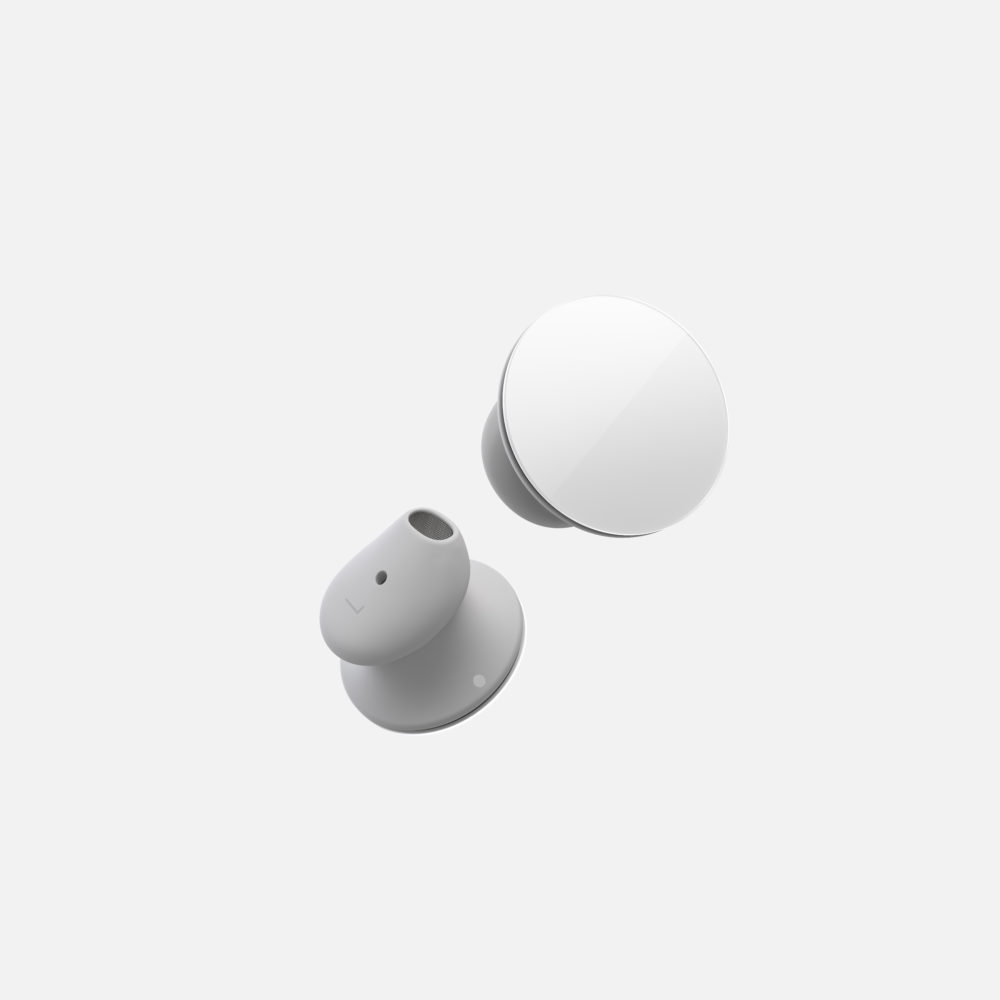



I got a sneak peek at the Surface Earbuds when Microsoft first unveiled them in October. At the time, Microsoft said they’d go for $250 and launch by the end of 2019, but after a months-long delay, the company now says they’ll cost $199 and start shipping on May 12.
The major features of the earbuds haven’t changed much since their initial unveiling. In short, these are totally wireless earbuds along the lines of Apple’s AirPods, but with large disc-shaped touch panels on the outside for controlling calls and audio playback.
Microsoft says they’ll get eight hours of battery life on their own, which is a ways above the AirPods and AirPods Pro. They’re rated at up to 24 hours of juice with an included charging case (which itself charges over USB-C). They support aptX, too, and sport an IPX4 water-resistance rating. Each earbud has two built-in microphones, which should help with call quality.
As before, Microsoft says they’ll be able to link to a Spotify Premium account and, on Android phones, start streaming music from the service with a triple-tap on one of the earbuds. It’s also pushing integration with Microsoft 365 apps: you can use the Surface Earbuds to navigate emails through voice in Outlook, for instance, or advance slides and create captions for a PowerPoint presentation in real time. (The Surface Headphones 2 will support similar productivity features.) The latter seems like a niche feature, but it’s another instance of a major tech company trying to leverage its platforms to get a piece of the growing wireless headphones pie.
Surface Dock 2 and a USB-C travel hub
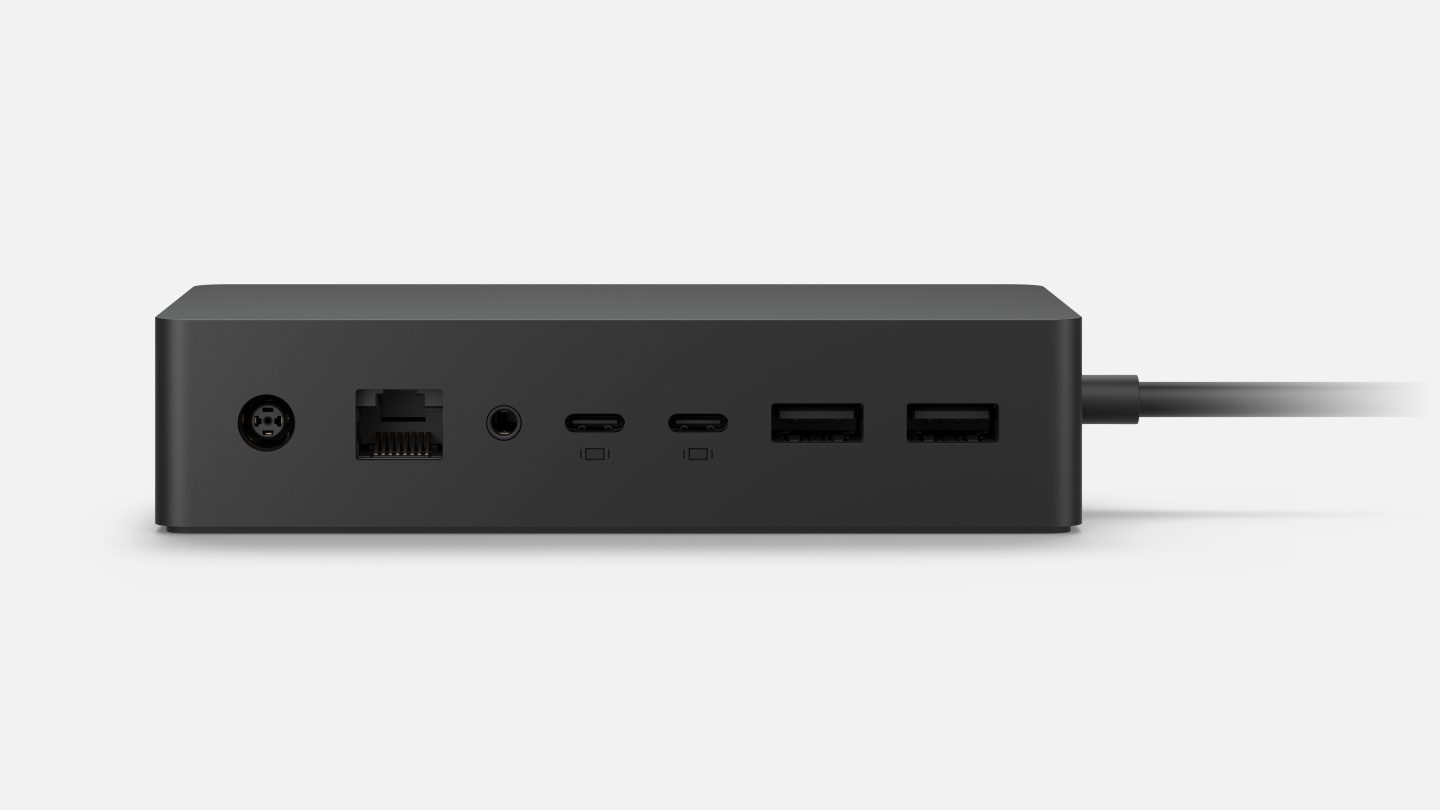


Finally, Microsoft announced a couple of accessories to go along with its new PCs. The Surface Dock 2 is a USB-C dock that connects to newer Surface devices through the proprietary Surface Connect port and adds four USB-C ports, two USB-A 3.2 ports, and a Gigabit Ethernet jack for $259.99. It’ll start shipping on May 26.
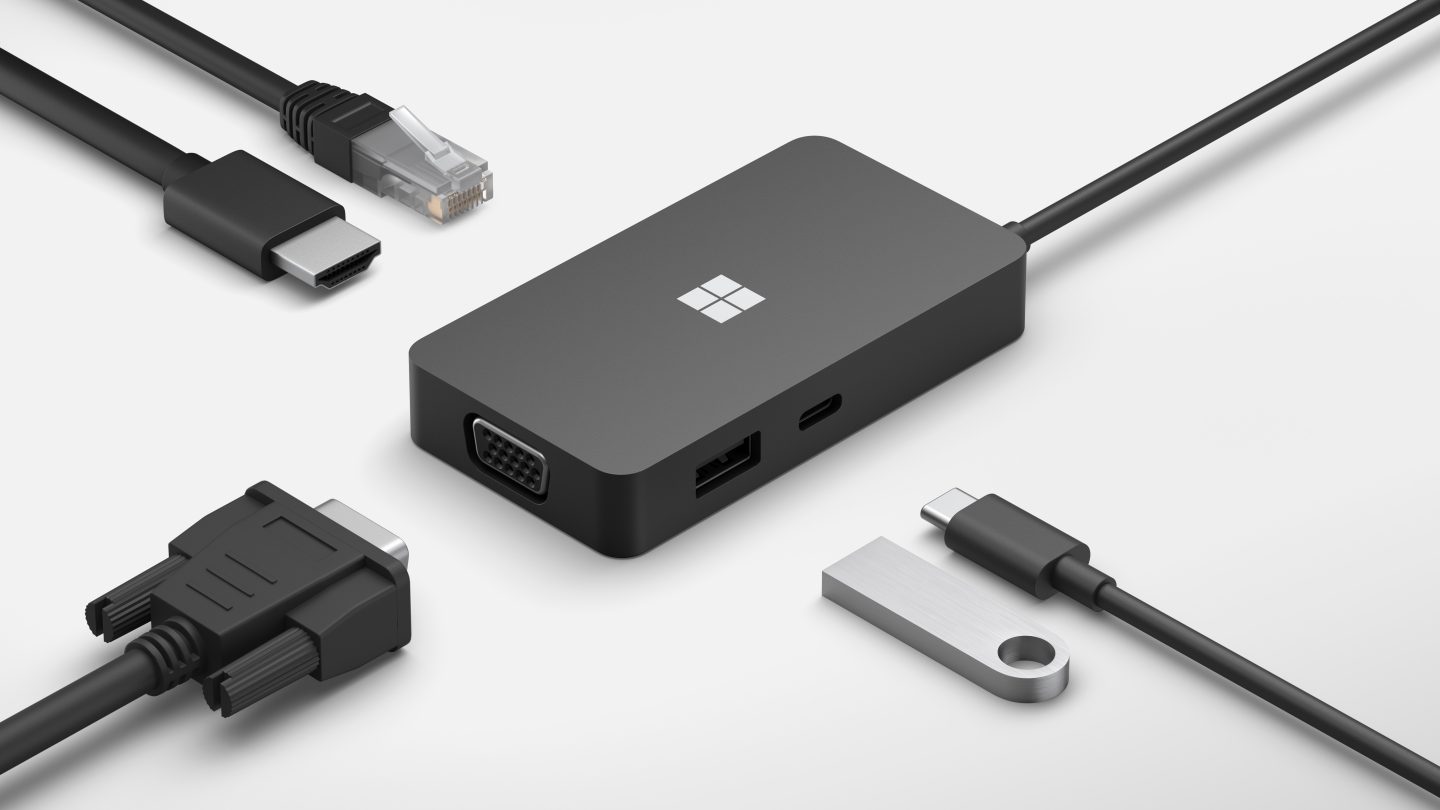
A new Microsoft USB-C Travel Hub, meanwhile, is a more portable option with a USB-C 3.1 Gen 2 port, a USB-A 3.2 Gen 2 port, a Gigabit Ethernet jack, and HDMI 2.0 and VGA connectors. Microsoft says that’ll arrive sometime this month and cost $99.99.
Contact Information:
JEFF DUNN
Tags:
, Wire, Artificial Intelligence Newswire, United States, English
Contact Information:
JEFF DUNN