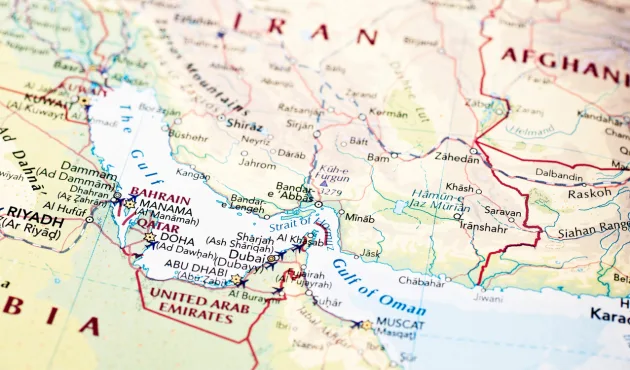

Recent disruptions affecting shipping through the Strait of Hormuz have once again highlighted the vulnerability of global trade routes to geopolitical instability. As governments and businesses assess the implications, renewed attention has turned to the India-Middle East-Europe Economic Corridor (IMEC), a project widely viewed as a potential alternative route linking Asia, the Gulf, and Europe.
Yet while the latest developments may strengthen the strategic case for IMEC, they also underline a more immediate reality: the corridor remains years away from functioning as a practical substitute for existing trade routes.
The distinction is important.
In the wake of regional disruptions, major infrastructure initiatives often attract renewed interest as policymakers seek long-term solutions to recurring vulnerabilities. IMEC has increasingly been discussed in this context, particularly as concerns surrounding maritime chokepoints continue to influence global trade planning.
However, according to Scott Wilcox, an international security risk advisor and the Founder and Senior Advisor of Sicuro Group, the growing attention should not be confused with operational readiness.
“There’s a tendency to talk about IMEC as if it’s a ‘ready-made’ workaround to Hormuz, but that’s really not where we are.”
His observation reflects the gap that often exists between strategic ambition and practical implementation.
While IMEC has been promoted as a transformative connectivity project, substantial work remains before the corridor can operate at the scale required to absorb significant trade flows. Infrastructure development, logistics integration, regulatory coordination, and cross-border cooperation all remain essential components of the project’s long-term success.
The current focus on Hormuz highlights why these challenges matter.
Disruptions in one of the world’s most important shipping corridors inevitably trigger discussions about diversification and resilience. Governments, investors, and multinational organisations naturally seek alternatives that can reduce dependence on individual routes and improve supply-chain flexibility.
Yet building alternative corridors is a long-term undertaking.
Trade networks are not created simply through political announcements or strategic agreements. They require extensive physical infrastructure, operational coordination, and sustained cooperation between multiple stakeholders. Even where political support exists, implementation can take years.
This reality does not diminish IMEC’s potential importance. On the contrary, the latest regional developments arguably reinforce the strategic rationale behind the project.
The repeated emergence of geopolitical risks affecting established routes demonstrates why governments continue exploring alternative forms of connectivity. Greater diversification can help strengthen resilience and provide additional options during periods of instability.
At the same time, expectations must remain realistic.
The discussion surrounding IMEC should not focus solely on whether it can replace Hormuz. A more useful question may be how the corridor can gradually contribute to a broader and more resilient regional trade architecture over the coming years.
For businesses operating across the region, the immediate challenge remains managing risk in a rapidly evolving environment.
Changes in regional security conditions can affect transportation planning, personnel movements, operational continuity, and supply-chain decision-making. Maintaining visibility into these developments has become increasingly important as organisations navigate uncertainty and assess potential impacts on their operations.
Tools such as the Travel Risk Tracker, help organisations monitor changing conditions and maintain awareness of developments that may influence business continuity and mobility planning.
The growing demand for real-time risk intelligence reflects a broader trend. Organisations are increasingly recognising that geopolitical developments can have direct operational consequences, requiring ongoing monitoring rather than occasional assessment.
As discussions surrounding IMEC continue, the project’s long-term significance is unlikely to diminish. The strategic logic underpinning greater connectivity between India, the Middle East, and Europe remains compelling, particularly as governments seek to strengthen resilience and diversify trade routes.
However, recent events also serve as a reminder that major infrastructure initiatives should be evaluated according to realistic timelines and operational realities.
The disruptions affecting Hormuz may have strengthened the argument for IMEC’s future role within the global trading system. What they have not done is accelerate the practical challenges that still need to be addressed before that vision becomes a fully operational reality.
For policymakers, investors, and businesses alike, that distinction may be one of the most important lessons emerging from the current debate.