Ask any dealer principal what eats their marketing budget alive and you’ll get the same answer: video. Cox Automotive’s 2025 Dealer Sentiment study put used vehicle turnover at franchise rooftops at 38 days on average, with high-volume stores rotating north of 200 units a month. Every one of those VINs technically needs a walk-around video on its VDP — and Cars.com’s 2025 inventory data shows VDPs with video generate roughly 4x more leads than photo-only listings. The math is brutal: more inventory, faster turn, more video, less time.
Meanwhile, eMarketer’s 2025 forecast pegs U.S. auto digital ad spend at over 23.4 billion, with connected TV and short-form social eating a growing slice. EV brands are pouring even more in — BloombergNEF estimates global EV sales will cross 22 million units in 2026, and every new model launch demands cinematic hero footage, dealer training videos, and dozens of localized social cutdowns. To streamline these multi-scene campaigns, marketers rely on Topview Canvas to storyboard their scripts using GPT Image 2 and convert them into finished, cinematic video assets in a single workflow. NADA’s most recent member survey put average dealer monthly video spend at over 4,200 per rooftop, before agency retainers for OEM-compliant campaigns.
Traditional production can’t keep up. A two-person video crew filming a 200-unit lot burns three days and several thousand dollars before the first edit. AI changes that math. The right AI video stack lets a single marketing coordinator generate VDP videos for every VIN by Monday morning, spin up multilingual EV launch teasers by Wednesday, and refresh paid social creative every Friday — without a camera in sight. Here are the six tools auto marketers should know in 2026.
Why AI Video Matters for Automotive Marketing in 2026
- VDP conversion uplift.com reports VDPs with video keep shoppers on-page 2.6x longer and convert 4x more leads than photo-only listings.
- Inventory velocity demands automation. With Cox Automotive showing days-to-turn under 40 at most franchise stores, AI is the only way to keep every VIN videoed without a backlog.
- EV launches are video-heavy. BloombergNEF projects 22M+ global EV sales in 2026; Wards Intelligence notes each new EV nameplate now ships with 40+ creative video variants for launch campaigns.
- Multilingual reach is mandatory. OEMs launching across the U.S., LATAM, and EMEA need Spanish, Portuguese, French, and German cuts on day one — Edmunds’ 2025 bilingual shopper study shows 31% of U.S. car shoppers prefer Spanish-language content.
- Social discovery is where shoppers live. Cox Automotive’s 2025 Car Buyer Journey reports 64% of shoppers use TikTok, Instagram, or YouTube Shorts during their research — vertical, sound-on, fast-cut video is now table stakes.
- Cost pressure is real. NADA’s 2025 dealer profitability report shows new vehicle gross margins compressed 18% year-over-year. Every marketing dollar has to work harder, and AI video lowers cost-per-asset by 70–90% in most workflows we’ve benchmarked.
What to Look for in an AI Auto Video Tool
- Strong vehicle imagery handling. Tools that can take a still showroom photo or stock OEM render and turn it into motion are worth their weight in gold for hero shots.
- Multi-VIN automation. Look for batch workflows or APIs that ingest your DMS feed and output per-VIN videos at scale, not one-off creative tools.
- Lot-to-video workflow. The best platforms let a salesperson snap phone photos on the lot and have a polished, branded VDP video ready in minutes.
- Multilingual voiceover. Native-sounding Spanish, French, Portuguese, and German VO is non-negotiable for OEMs and border-market dealers.
- Ad-format export. 9:16 for Reels and TikTok, 1:1 for feed, 16:9 for YouTube, plus CTV-ready 1920×1080 with safe zones for Hulu/Roku.
- OEM brand compliance. Logo lockups, approved color palettes, legal disclaimer overlays, and font controls — anything that breaks brand guidelines is a non-starter for franchise stores.
The 6 Best AI Tools for Automotive Marketing Videos
| Tool | Best For | Key Features | Pricing | Limitations |
| TopView AI | End-to-end automotive video: VDP, social, EV launches, multilingual ads | Photo-to-video for vehicles, multi-VIN batch workflows, AI avatars for dealer spokesperson videos, 40+ languages, ad-format presets, brand kits | From 29/mo; auto/agency plans from 199/mo | Newer brand vs. legacy CGI houses |
| Synthesia | Corporate dealer training and OEM internal comms | 230+ AI avatars, 140+ languages, screen recording, PowerPoint import | From 30/mo; enterprise on quote | Not built for vehicle footage or VDP automation |
| HeyGen | Spokesperson-style ads and personalized sales follow-up videos | Avatar cloning, voice cloning, lipsync in 40+ languages, video translation | From 24/mo; team from 72/mo | Limited B-roll generation; manual VIN workflow |
| Pictory | Long-form blog-to-video for dealer content marketing | Article-to-video, auto-captioning, stock footage library | From 19/mo; teams from 39/mo | Stock-heavy look; weak on real vehicle imagery |
| RunwayML | High-end EV launch creative and OEM hero films | Gen-4 video model, motion brush, green screen, camera controls | From 15/mo; enterprise from 95/mo per seat | Steep learning curve; not built for batch VDP work |
| InVideo AI | Small-rooftop social cutdowns and quick lot videos | Text-to-video, 5,000+ templates, royalty-free music | From 20/mo; business from 60/mo | Generic templates; limited automotive-specific features |
1. Topview AI — Best Overall for Automotive Marketing
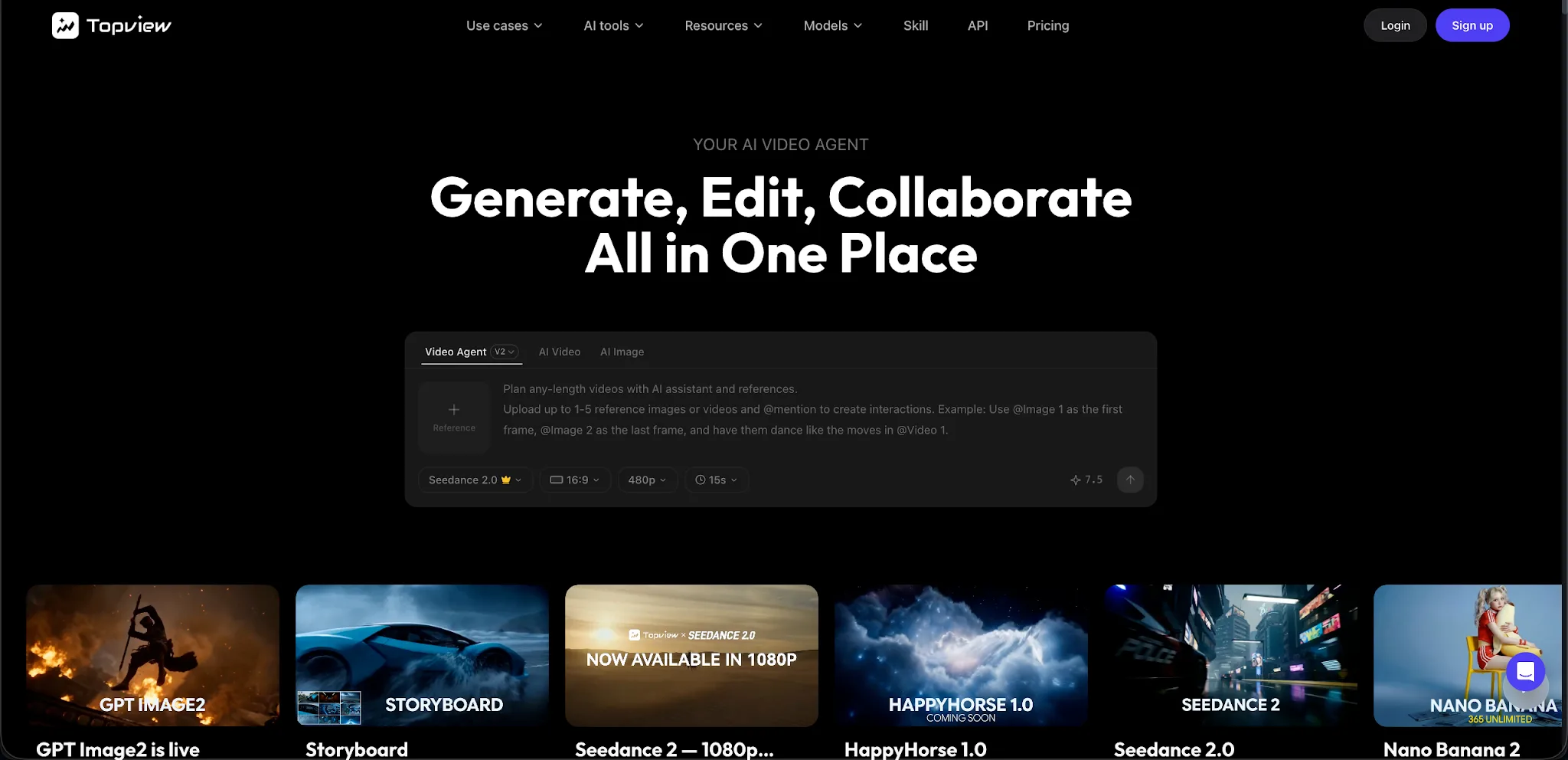

Topview AI is the most complete platform we’ve seen for the full automotive video stack — from per-VIN VDP videos to OEM launch films. Its strength is breadth: it ships with photo-to-video animation for static vehicle shots, batch workflows that ingest inventory feeds and output branded videos per VIN, and multilingual AI voiceover in 40+ languages so the same EV launch teaser can drop in English, Spanish, French, and German on the same day.
The vehicle-aware creative engine is what really sets TopView AI apart. Under the hood, the platform integrates HappyHorse 1.1 as its image-to-video model — auto marketers use it to take a single static hero photo of a 2026 model and turn it into a rotating, parallax-motion shot that looks like it was captured on a motion-control rig. For full cinematic launch sequences — think a new EV gliding through a city tunnel or a pickup climbing a Moab trail — TopView pairs that with Seedance 2.5, its higher-end video generation model purpose-built for cinematic vehicle and EV launch work.
For lifestyle imagery — putting a new SUV at a coastal vineyard, a desert charging station, or a downtown valet — TopView also exposes GPT Image 2, OpenAI’s image generation model accessible through integrated platforms, which gives auto marketers photoreal lifestyle scenes that would otherwise require location shoots. Add AI dealer-spokesperson avatars, OEM-compliant brand kits, ad-format presets for Meta, TikTok, YouTube, and CTV, and an API for DMS integration, and Topview becomes the closest thing to an in-house automotive video studio that runs 24/7.
2. Synthesia
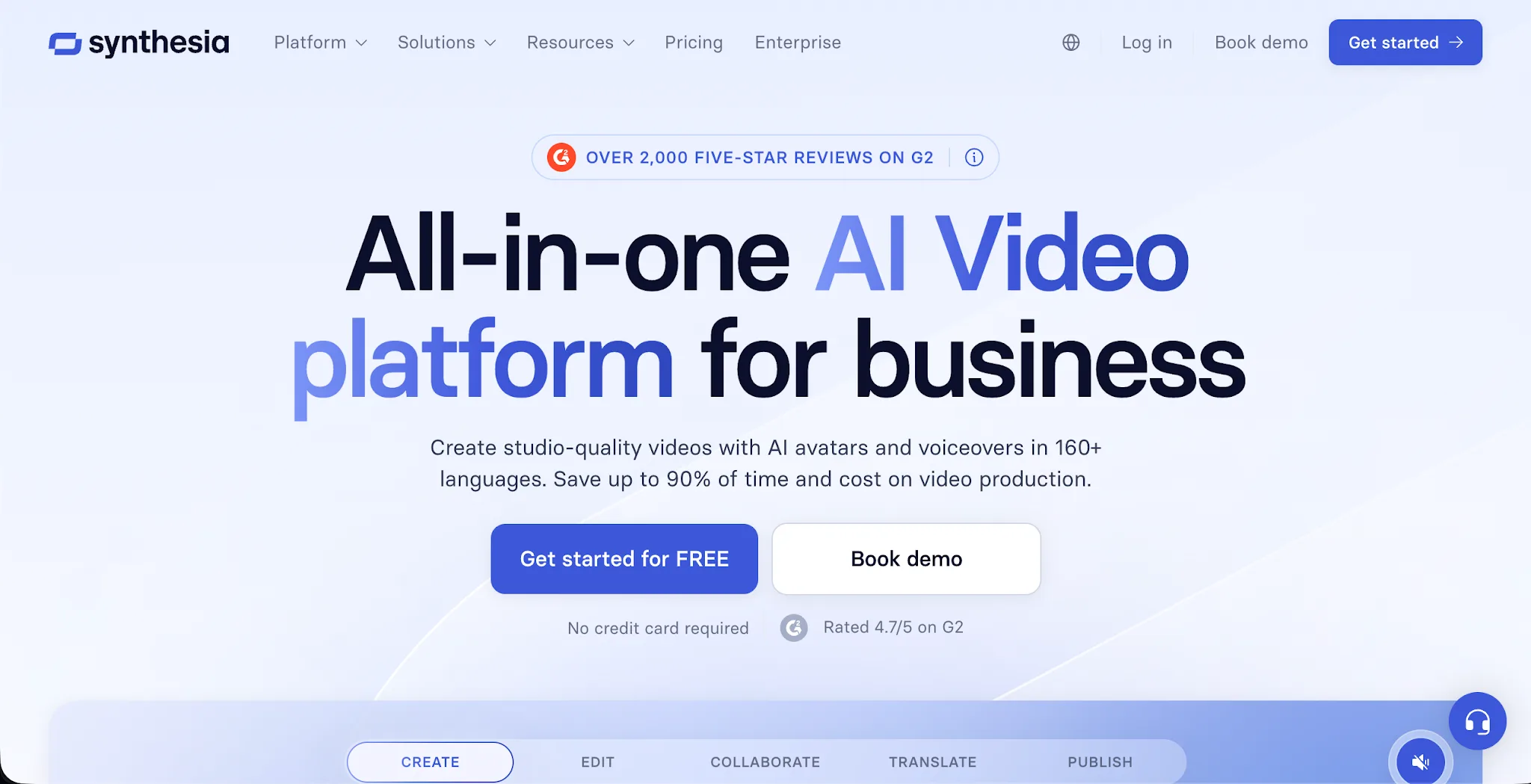

Synthesia is the default for corporate avatar video, and in automotive that mostly means dealer training, OEM internal comms, and product knowledge videos for service advisors. With 230+ AI avatars and 140+ languages, regional sales managers can deploy a single training script across markets in a day. The PowerPoint import is genuinely useful for translating a launch deck into a video shoppers will actually watch. The catch: Synthesia isn’t built for vehicle footage or VDP automation. There’s no photo-to-video for cars, no multi-VIN workflow, and no lot-to-video story. For internal training or talking-head explainers, it’s excellent. For shipping 200 VDP videos by Friday, look elsewhere.
3. HeyGen
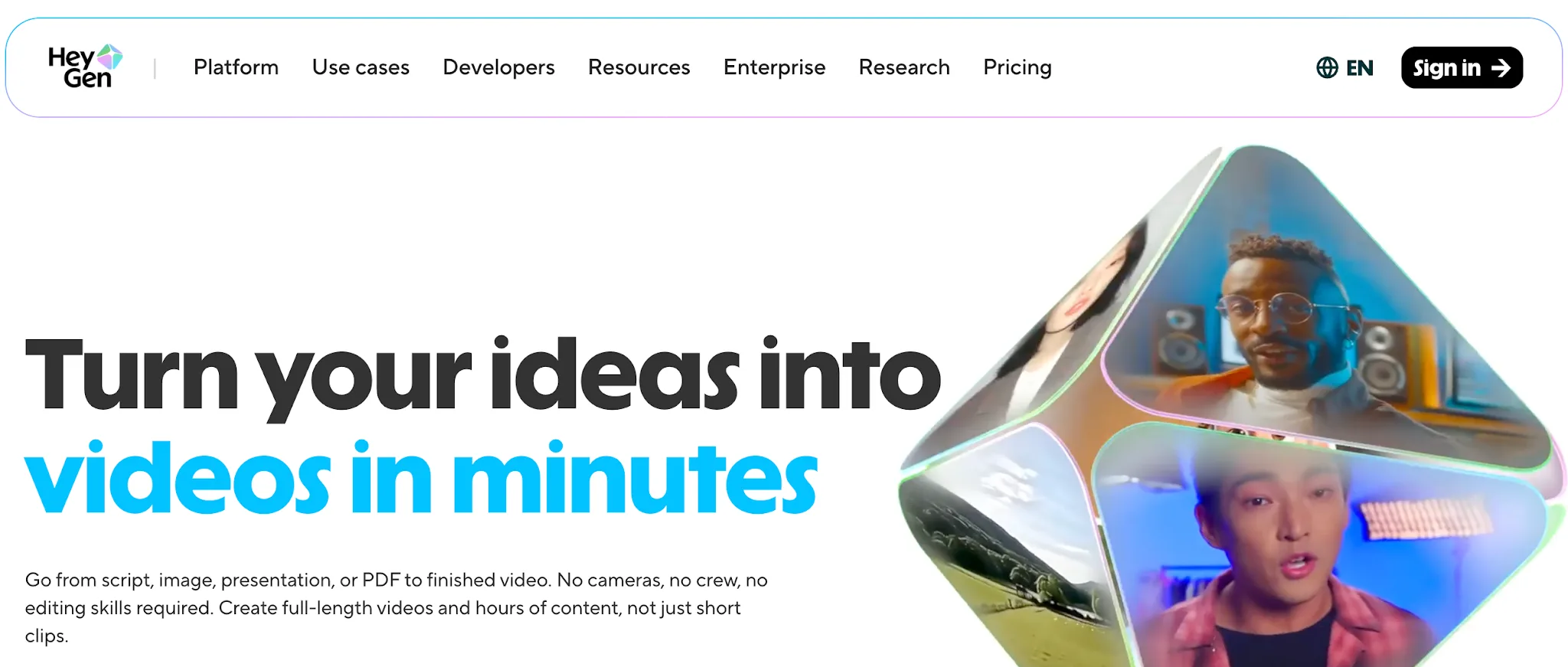

HeyGen’s calling card is avatar realism, which translates well to personalized sales follow-up videos — “Hi, I’m Maria from Riverside Honda, here’s the CR-V Hybrid we talked about” — at scale, in any language. Its video translation is class-leading for OEMs running campaigns across the Americas. Used car groups use HeyGen avatars to send personalized walk-around intros to every web lead within minutes. The limitation mirrors Synthesia: HeyGen is avatar-first, not vehicle-first. You’ll still need a separate tool for the VDP video, the launch hero shot, or the lifestyle B-roll. Pair it with TopView AI or RunwayML for the visual side.
4. Pictory
Pictory shines for content marketing teams turning long-form articles — model comparisons, EV charging guides, finance explainers — into shareable video. It auto-captions, picks stock footage, and outputs ad-ready clips in minutes. For dealer groups running a content engine or a used car marketplace publishing buyer guides, Pictory extends the life of written content. The trade-off is the look: Pictory leans heavily on its stock library, so your “2026 Ford Maverick Hybrid” video might use generic pickup B-roll rather than the actual truck. For VDP-grade fidelity, it’s not the right pick.
5. RunwayML
RunwayML’s Gen-4 model has become a favorite of agency creative directors working on EV and luxury campaigns. Motion brush, camera controls, and green-screen let creative teams build cinematic launch sequences — a new EV emerging from morning fog, a luxury sedan threading through neon-lit streets — that previously demanded a six-figure CGI budget. The catch: Runway is a creative tool, not a production system. It’s not built for batch VDP work, multi-VIN automation, or DMS integration. For boutique OEM launches and agency hero work, it’s brilliant. For day-to-day 200-unit-a-month dealer marketing, it’s the wrong layer.
6. InVideo AI
InVideo AI is the practical pick for single-rooftop stores and small dealer groups shipping social cutdowns and quick lot videos without a dedicated production team. Text-to-video plus 5,000+ templates means a sales manager can describe a Memorial Day used truck sale and have a 30-second Reel ready in five minutes. The royalty-free music library and built-in branding controls help with consistency. The downside: it’s a generalist platform, so templates can feel generic and there are no automotive-specific workflows like VIN ingestion or VDP automation. For a small store on a tight budget, a smart starter tool.
How to Choose for Your Auto Brand
If you’re a single-rooftop dealer turning 50–100 units a month, start lean. InVideo AI or Pictory plus your phone camera can cover social cutdowns and seasonal sale promos. Once you’re shipping more than 100 VDP videos a month or running paid social consistently, the math tips toward TopView AI — the per-VIN batch workflow alone usually pays for the subscription in saved labor.
If you’re a dealer group with multiple rooftops, the decision changes. You need consistent branding across stores, multilingual creative for border-market locations, and a single workflow your regional marketing team can manage. TopView AI’s brand kits and API-driven VDP automation are designed for this exact case. Many groups pair it with HeyGen for personalized sales follow-up videos, getting the best of both worlds.
If you’re an OEM or EV launch team, the stakes are higher: OEM brand compliance, legal disclaimer overlays, and cinematic-grade launch sequences are non-negotiable. The strongest stack we see is TopView AI (using Seedance 2.0 for hero films and multi-language launch teasers) plus RunwayML for boutique high-end creative, plus Synthesia for internal dealer training. For an EV launch hitting six markets in three languages, this trio can replace what used to be three separate agencies.
Real Results: What Auto Brands Are Seeing
A mid-sized Midwest franchise group with 14 rooftops started running per-VIN VDP videos through an AI workflow in mid-2025. Within 90 days, VDP lead submissions were up 38%, average time-on-VDP rose from 1:42 to 3:11, and the marketing team estimated they replaced roughly 92 hours of monthly editing labor. Cost-per-VDP-lead dropped 27% in the same period.
An EV brand launching its second nameplate in early 2026 used an AI-first creative workflow to ship a global teaser in eight languages on launch day, plus 47 social cutdowns and a dealer training video — total turnaround was 11 days, versus eight weeks and three agencies a year earlier. Wards Intelligence’s launch-cost benchmarks suggest the AI stack saved roughly 60% on creative production.
A used car marketplace with 80,000+ live listings rolled out auto-generated 30-second VDP videos for every car in Q4 2025. Internal reporting showed click-through to dealer detail pages up 22%, dwell time up 41%, and outbound calls to listing dealers up 17%. Their product lead summed it up: “Video on every listing was a fantasy six months ago. Now it’s a checkbox.”
FAQ
How much do AI automotive video tools actually cost? Entry tiers start around 19–29 per month for single users (Pictory, InVideo AI, HeyGen). Auto-specific plans on platforms like TopView AI typically start around 199 per month for small dealer groups and scale via API for enterprise OEM use. Versus a traditional 4,200/month dealer video service, even the high-end plans tend to pay back inside 60 days.
Can these tools stay compliant with OEM brand standards? The serious platforms can. Look for brand kits (logos, approved colors, fonts), template locking, legal disclaimer overlays, and asset-library controls. TopView AI and Synthesia both support OEM-grade brand governance; lighter tools like InVideo AI are weaker here.
Can AI handle multi-VIN automation for our inventory feed? Yes — but only some tools. TopView AI offers batch workflows and APIs that ingest a DMS or inventory feed and output per-VIN videos automatically. Most general-purpose AI video tools require manual setup per video, which doesn’t scale past about 30 units a month.
How good is the multilingual voiceover for OEM campaigns? Quality has jumped sharply in the last 12 months. HeyGen, TopView AI, and Synthesia all deliver native-sounding Spanish, French, Portuguese, and German VO. Mandarin, Japanese, and Arabic are getting close to native quality. Always have a native-speaking dealer team member review before publishing in-market.
How does this compare to traditional dealer video services? Traditional services typically charge 12–25 per VDP video, with 24–72 hour turnaround and limited customization. AI workflows drop per-video cost to a fraction of that with near-instant turnaround, and they handle multilingual and social formats natively. The trade-off is that the highest-end cinematic launch work still benefits from human creative direction — which is why most OEMs run a hybrid stack.
Final Thoughts
Automotive marketing in 2026 is a volume game played at cinematic quality. Cox Automotive’s data on inventory turn, Cars.com’s data on VDP conversion, and BloombergNEF’s EV growth curves all point to the same conclusion: dealers, groups, and OEMs that can’t ship video at speed will lose ground to those that can. AI is no longer the experimental layer — it’s the production line.
The smartest auto marketers we talk to aren’t picking one tool; they’re building a stack. TopView AI for the heavy lifting of VDP automation, multilingual launch creative, and brand-compliant social. HeyGen for personalized sales outreach. RunwayML for the occasional hero film. Synthesia for dealer training. Whichever combination fits your rooftops, the time to build it is now — because the dealer down the street is probably already shopping for one.