By P. Dermigian
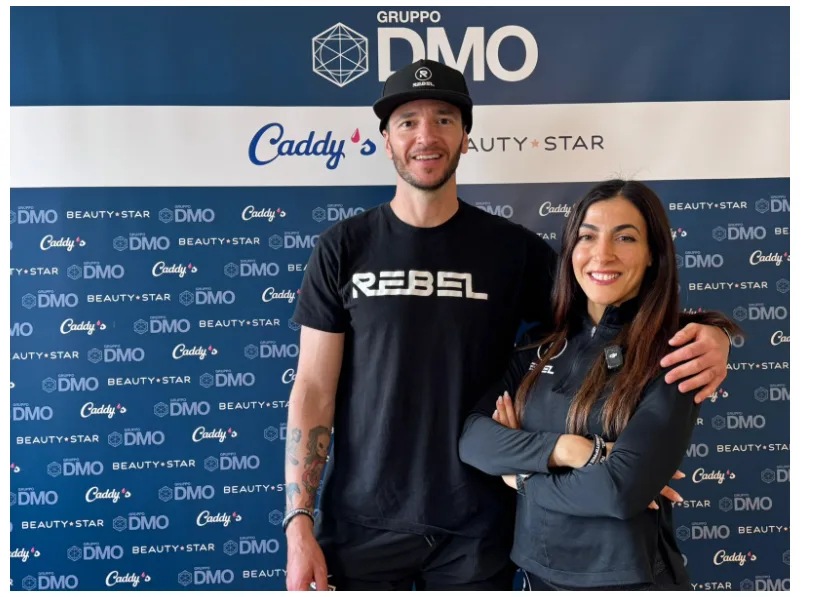

If you imagine the future of fitness as a room full of smart machines and holograms, you might be looking in the wrong direction. The most interesting experiments right now are not happening in high-tech labs, but in places where real people with demanding lives are trying to fit movement into days that already feel too full.
One of the coaches at the center of this quiet revolution is Roberto “Rebo” Stocchi, co-founder of the Rebelfitfamily platform. His idea is deceptively simple: build a method that people can actually follow for years, not weeks. Behind that simplicity, however, there are a few innovations that are starting to attract the attention of executives, large companies and even charity organizations.
Innovation 1: The 10-Minute Architecture
Plenty of apps promise short workouts. The Rebel twist is how those short sessions are architected.
Instead of random “quick fixes”, the Rebel Method breaks training into 10–20-minute functional blocks that can be combined like Lego pieces over time. Each block:
- Targets movement quality, posture and core strength before intensity
- Is designed for tiny spaces and minimal equipment
- Includes clear progressions, so members can feel the difference week by week rather than chasing exhaustion
The result is an almost modular approach to fitness: people can train at home, in a hotel room or in a break room at work, building a full program out of moments that would otherwise be lost.
The curious part? Many of the people who follow this structure report that they train more than when they had 60-minute gym programs, simply because the barrier to starting is so low.
Innovation 2: Community First, Sport Second
Most communities in fitness are built around a sport: runners, lifters, cyclists. Rebel flips the order. The community came first, the sport came later.
The Rebel crowd was originally made up of people who did functional workouts at home with Rebo and his wife Edel. They were busy professionals, parents, people who didn’t see themselves as “athletes”. Yet when the community decided to take part in the Milano Marathon charity relay in support of Sport Senza Frontiere, many of them laced up for their very first race.
A group that was never designed as a running club managed to transform into dozens of relay teams, raising funds for children’s programs while its members discovered that they were capable of more than they thought. In a world where fitness often feels like an individual performance, Rebel treats it as a collective experiment: what happens if ordinary people agree to move together for a cause?
Innovation 3: Corporate Wellness That Starts With Real Life
Corporate wellness is full of glossy promises and low engagement. Rebel approaches companies with a question that sounds almost too honest: “What are your people actually living through?”
For DMO S.p.A.—a major Italian retail group with the brands Caddy’s and Beauty Star and a workforce that is overwhelmingly female—that question led to an unusual answer: maternity. Every year, around 300 hundred of employees experience pregnancy and the delicate months after birth while working in stores and offices across the country.
Instead of offering generic “wellness tips”, DMO asked Rebel to design something specific and practical. The result is “Mom to Be”, an on-demand video program created by Rebo and his team to support employees through pregnancy and the post-partum period. Structured into short lessons tailored to each trimester and the months after childbirth, the module focuses on gentle movement, posture, breathing, circulation and safe functional exercises that women can follow at home or in small spaces at work.
This is where Stocchi’s role becomes critical for a company like DMO. The group did not just need content; it needed someone capable of translating complex medical and ergonomic considerations into simple, safe routines, and of speaking credibly to employees about a highly sensitive phase of life. Few fitness professionals can design a program that is at once conservative enough to protect health, clear enough to be self-guided, and engaging enough to be used consistently across a network of hundreds of stores.
A Convention Stage as a Live Test
The collaboration will be presented at DMO’s upcoming company convention in Bologna in May 2026, where around 700 people—including a large share of the company’s employees—are expected to attend.
After the lunch break, the lights in the conference hall will go down and an emotional video will introduce the Rebel philosophy and the “Mom to Be” project. Then, without prior announcement, Rebo and Edel will step onto the stage and guide the audience through four minutes of simple, energizing exercises directly at their seats. No change of clothes, no equipment—just a brief, shared experience of what it means to bring movement into a real workday.
Later, Edel will be interviewed on stage alongside one of DMO’s directors, explaining how the program was designed, how it will support employees, and how it will be integrated into the company’s internal platforms.
For DMO, the event is more than a show. It is a way of signaling that maternal well-being is not a side note in a slide deck, but a priority worth dedicating time, budget and main-stage visibility to. For Rebel, it is a proof point: if a method can engage a hall of several hundred retail professionals in a few minutes and then follow them home through an on-demand program, it is doing something many traditional wellness initiatives fail to achieve.
Why His Role Matters for Companies
Behind the scenes, collaborations like this reveal why figures like Roberto “Rebo” Stocchi are becoming so valuable to large organizations.
- Translation power: He is able to take the abstract idea of “employee well-being” and translate it into concrete, step-by-step experiences tailored to a specific workforce—whether that means young mothers in retail, office workers in multinational firms or non-runners training for a charity relay.
- Consistency across channels: He can design a method that lives comfortably on video, on a stage and in daily routines, without losing its core logic. That consistency is crucial for companies that want initiatives to work in dozens or hundreds of locations, not just in headquarters.
- Credibility with people: Employees are quick to spot programs that exist only on paper. The combination of clear coaching, realistic expectations and genuine empathy around life constraints makes them more likely to engage with the content and to keep using it when the novelty wears off.
In other words, his contribution goes beyond delivering classes. It sits at the point where coaching, communication and organizational design intersect—a place where relatively small design choices can determine whether a wellness program quietly disappears or actually changes how people feel at work.
Innovation 4: Fitness as a Bridge, Not a Goal
Talk to Rebo for a few minutes and you notice a pattern: he rarely talks about reps, sets or calories first. He talks about energy before a long day of meetings, about the courage to show up at a start line, about mothers who feel supported instead of invisible.
In the Rebel vision, fitness is a bridge:
- Between individual well-being and team cohesion in companies
- Between a virtual platform and a real-world charity relay
- Between different moments in life: early career, parenthood, leadership
This may be the most interesting innovation of all. The method treats movement not as a separate hobby, but as a thread that can be woven through work, family, community and social responsibility.
Why This Matters for the Industry
From the outside, the Rebel sessions might look like “just another functional workout”. But if you zoom out, you see a pattern that raises questions for the entire sector:
- What if the real frontier of fitness is not a new piece of equipment, but new ways of fitting movement into complex lives?
- What if the most powerful communities are those that can change sport or format without losing their identity?
- What if corporate wellness stopped chasing universal solutions and started solving one concrete human problem at a time?
Rebel does not claim to have all the answers. But the way Roberto “Rebo” Stocchi and his team are experimenting—with modular training, community-driven goals, targeted corporate programs like “Mom to Be” and high-impact live events—suggests that the next wave of innovation in fitness might be less about gadgets and more about design: designing habits, experiences and stories that people actually want to live inside.