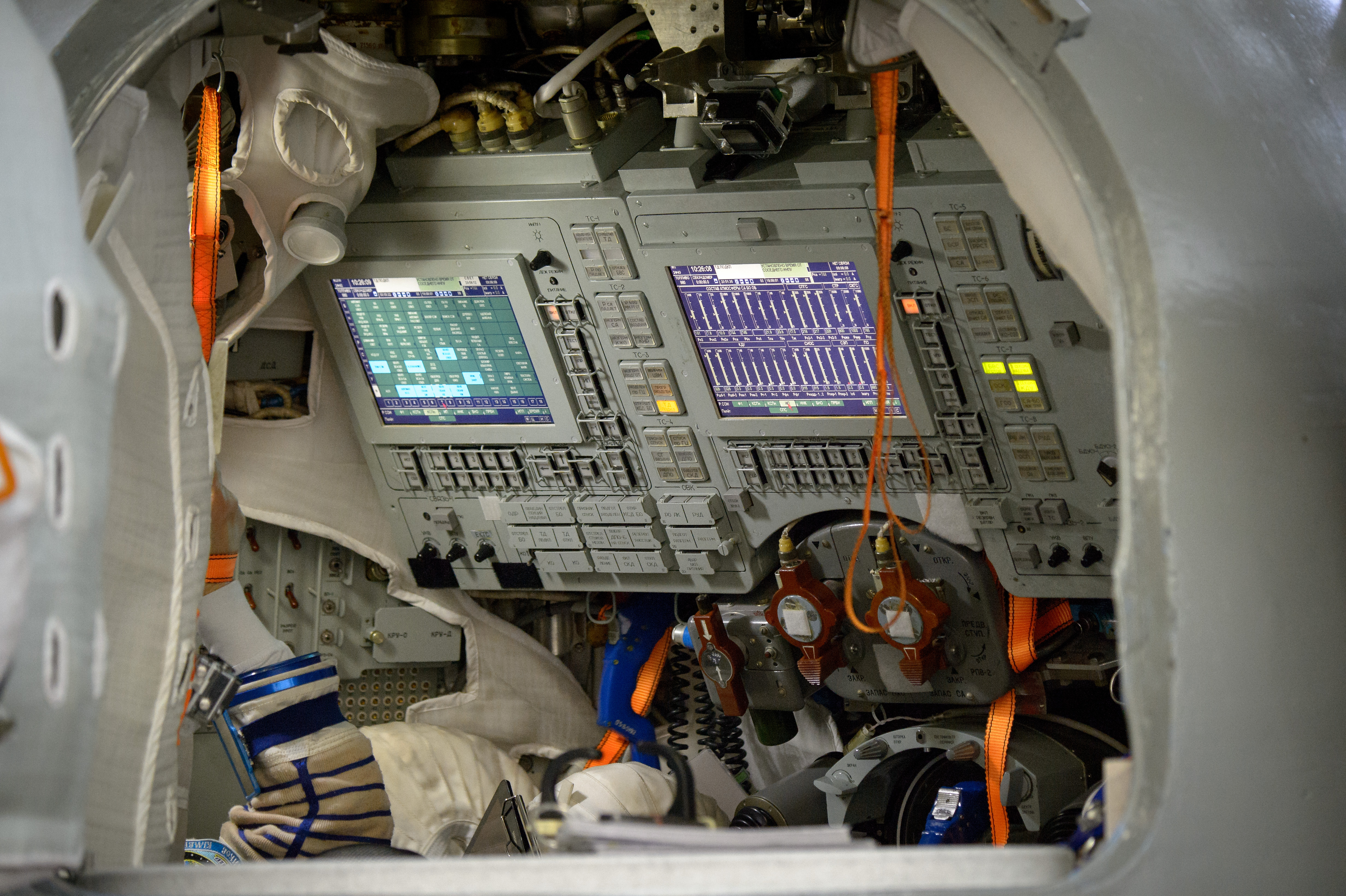
Not a lot of leg room in either one, to be honest.
And of course even modern aircraft are still a mess of physical controls, no doubt familiar to the pilot but inarguably dated in design.
Behnke pointed out that these spacecraft are made with a very specific purpose in mind: Going to and docking with the ISS. No one is going to Mars in one of these things, and that impacts how they’re designed and piloted.
“The flying task is very unique: To come close to the space station and fly in proximity, then slowly come into contact, is maybe a little bit different from what you would see for flying a space shuttle or an aircraft,” said Behnke, with characteristic understatement (the difference is night and day). “When we evaluated the touchscreen interface we really did focus on the task at hand and trying to get good performance for that specific task.”
A prototype Crew Dragon has already launched to the ISS and returned, having been piloted both autonomously and remotely.
“It was challenging for us and for them at first to work through those different design issues, but we got to a point where the vehicle, from the manual flying standpoint with the touchscreen, flies very well,” said Hurley.
“The difference is you’ve got to be very deliberate when you’re putting in input, relative to what you would do with a stick,” he continued. “Because you know, when you’re flying an airplane for example, if I push the stick forward it’s going to go down. I actually have to make a concerted effort to do that with the touchscreen, if that makes sense.”
“I don’t think I’m going too far out on a limb to say that the right answer for all flying is not to switch to a touchscreen, necessarily,” said Behnke. “But for the task that we have and to keep ourselves safe flying close to the ISS, the touchscreen is gonna provide us that capability just fine.”
Hurley pointed out that one major advantage is that the controls and readouts are all in the same place: “You’re seeing the docking target, for example, right in the same place you’re looking to fly the vehicle. So it is a little bit different way of doing it, but the design in general has worked out very well.”
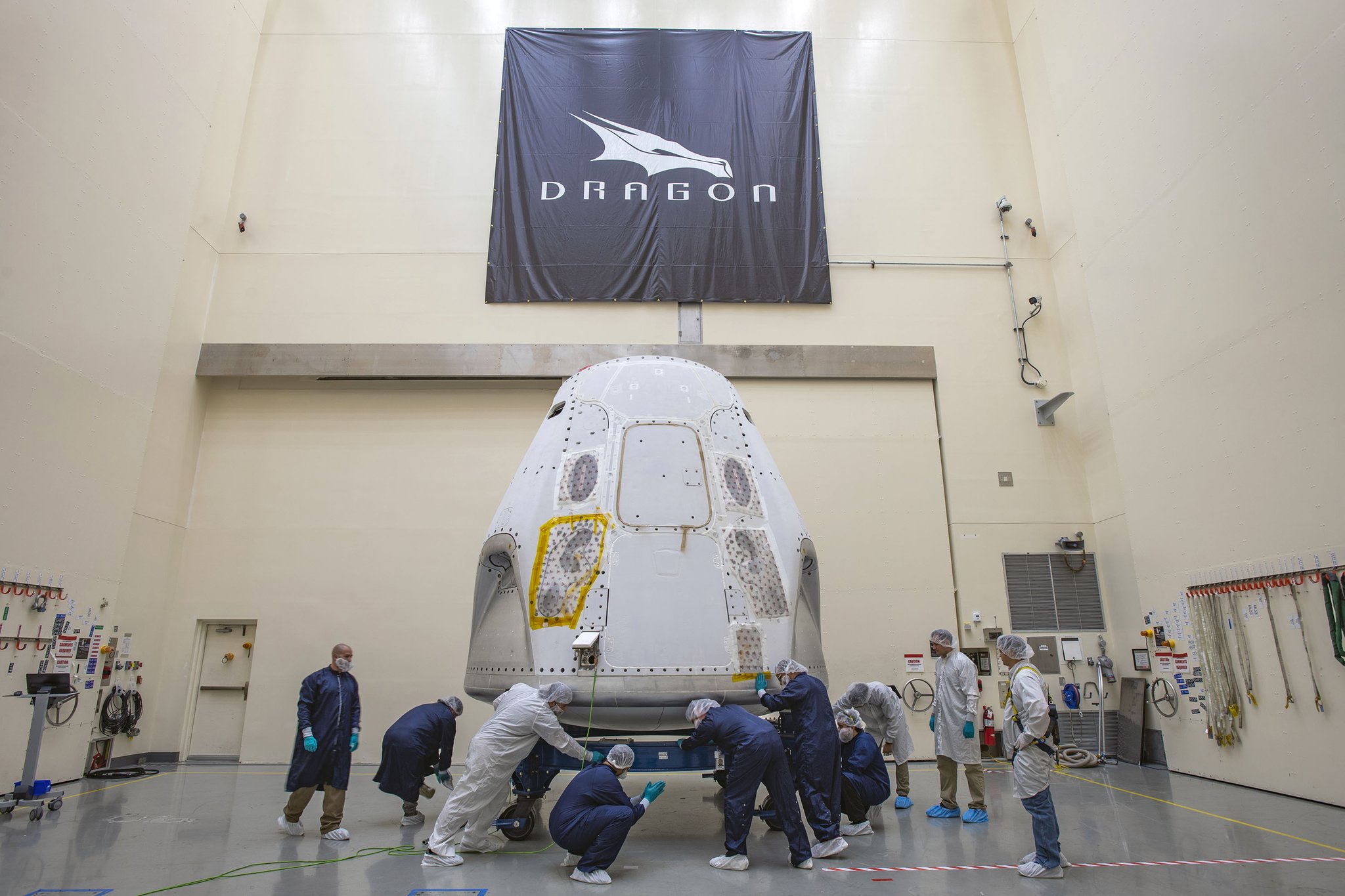
There’s only so much one can learn in a simulator, though, and this first crewed flight is still very much a test, the feedback from which will inform the next iteration of the capsule. It’s easier, after all, to push a software update than to rewire the pots of 20 different knobs in a system that goes back decades.
“We specifically, as part of this test flight, designed in some time in the preflight phase, as well as closer to space station, so we can test out actual manual flying capability of the vehicle,” Hurley explained. “Just to see and verify that it handles the way we expect it to, and the way the simulator shows it to fly. It’s a prudent part of our flight test just like anything else, in case the eventuality happened that a future crew needed to take over manually and fly the spacecraft. So we’re just doing our part, to kinda test out all the different capabilities of the Crew Dragon.”
We are sure to hear more about the version of Crew Dragon that will be flying later this month if everything goes according to plan. In the meantime, I have asked both SpaceX and NASA for more information on the control scheme and its development.
Contact Information:
Devin Coldewey
Tags:
, Wire, United States, English
Contact Information:
Devin Coldewey